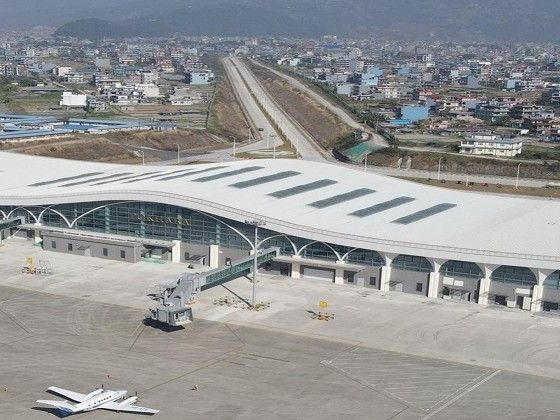













Article Summary:
The article reports on corruption exposed in the construction of Nepal’s Pokhara International Airport, a project that began in 2023. The project, initially estimated at 620 crore rupees in 2012, has since escalated to 892 crore rupees. Following an investigation, the Nepal Commission for Investigation of Abuse of Authority (CIAA) filed a corruption case against 55 individuals, including former ministers, secretaries, and a Chinese company, China CAMC Engineering. Despite the airport’s inauguration, only 45 international flights have operated in two and a half years, highlighting the project’s significant delays and financial mismanagement.
Key Points:
- Corruption case filed against 55 individuals, including 5 former ministers, 10 former secretaries, and the Chinese company China CAMC Engineering, in connection with the Pokhara International Airport project.
- The airport project, initially estimated at 620 crore rupees, has escalated to 892 crore rupees, indicating significant cost overruns.
- Despite the airport’s inauguration in 2023, only 45 international flights have operated in two and a half years, underscoring operational delays and inefficiencies.
- The project’s financial mismanagement and operational failures have raised concerns about the integrity of public sector infrastructure projects in Nepal.
Actionable Takeaways:
- Investigation and Accountability: The filing of a corruption case against 55 individuals underscores the importance of robust investigative mechanisms in public sector projects. This serves as a reminder for stakeholders to ensure transparency and accountability in large-scale infrastructure projects to prevent financial mismanagement and corruption.
- Project Oversight and Monitoring: The delays and cost overruns in the Pokhara International Airport project highlight the necessity for stringent project oversight and monitoring. Implementing real-time project tracking systems and regular audits can help mitigate financial risks and ensure projects stay on schedule and within budget.
- Focus on Operational Efficiency: The low number of international flights operating from the newly inaugurated airport suggests a need for enhanced operational efficiency. Travel industry stakeholders should prioritize operational improvements, such as optimizing flight schedules and improving airport infrastructure, to ensure the airport meets its intended capacity and attracts tourists.
Contextual Insights:
The corruption case against key individuals involved in the Pokhara International Airport project reflects broader issues of governance and accountability within the Nepalese public sector. This case is indicative of the challenges faced by developing countries in managing large-scale infrastructure projects, where financial mismanagement and corruption can lead to significant delays and operational failures. In the context of the travel industry, such projects are crucial for enhancing connectivity and boosting tourism, but they require stringent oversight to ensure they deliver on their promises.
The project’s financial mismanagement and operational inefficiencies also highlight broader trends in the travel sector, where infrastructure development is often a key driver of growth. Thought leaders in the travel industry emphasize the importance of leveraging technology and innovation to streamline operations and enhance the travel experience. For instance, the adoption of advanced airport management systems, AI-driven flight scheduling, and sustainable infrastructure practices can help mitigate the risks highlighted in this case. By integrating these technologies, travel startups and established players can ensure that infrastructure projects like the Pokhara International Airport are built on a foundation of transparency, efficiency, and innovation, ultimately benefiting the travel industry and its stakeholders.
Read the Complete Article.



