












Comprehensive Summarization:
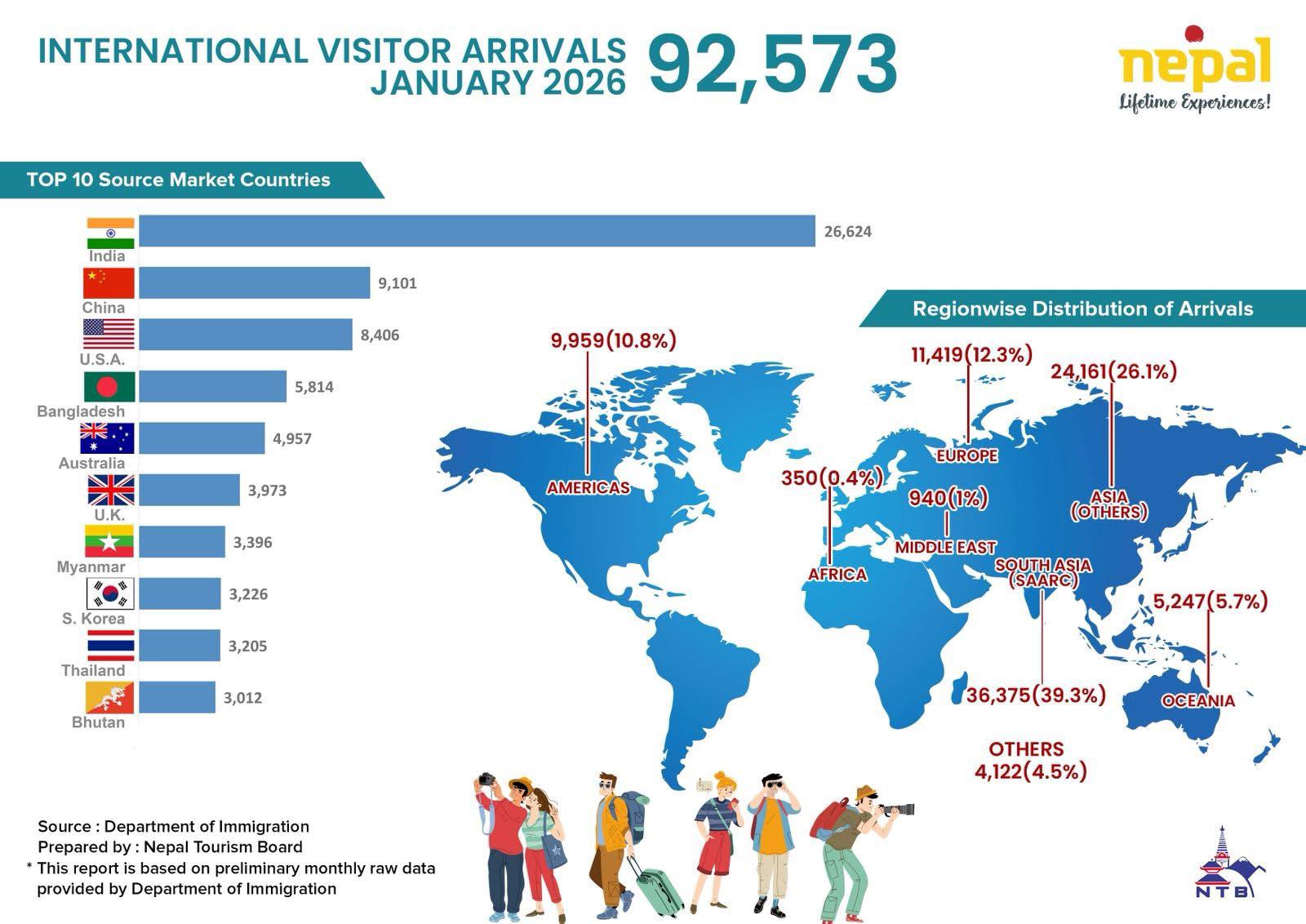
In January 2026, Nepal experienced a robust start to the year in international tourism, welcoming 92,573 international visitor arrivals. This marked a 15% increase compared to January 2025 and a 14% rise from pre-pandemic levels in January 2019. The growth underscores the sustained momentum in Nepal’s tourism sector following the pandemic-induced downturn. India was the largest source market, contributing 26,624 visitors. The article highlights the recovery and renewed confidence in Nepal as a major travel destination, reflecting positive trends in the global travel industry.
Key Points:
- Nepal recorded 92,573 international visitor arrivals in January 2026, marking a 15% increase from January 2025 and a 14% rise from January 2019.
- Visitor arrivals in January 2026 were 14% higher than pre-pandemic levels in January 2019.
- India was the largest source market for Nepal’s tourism in January 2026, contributing 26,624 visitors.
- The increase in visitor numbers highlights the sustained recovery and renewed confidence in Nepal as a major travel destination post-pandemic.
Actionable Takeaways:
-
Recovery Momentum in Nepal’s Tourism: The significant increase in visitor arrivals indicates a strong recovery in Nepal’s tourism sector. This momentum suggests that the country is regaining its position as a major travel destination, which could be attributed to effective recovery strategies, improved safety measures, and enhanced travel experiences. For stakeholders in the travel industry, this presents an opportunity to capitalize on the growing interest in Nepal by developing targeted marketing campaigns and enhancing service offerings to attract more international visitors.
-
India as a Key Source Market: India’s contribution of 26,624 visitors to Nepal’s tourism in January 2026 underscores its importance as a source market. This trend highlights the strong cultural and economic ties between the two countries. For travel agencies and service providers, focusing on Indian tourists could be a strategic move. This includes tailoring travel packages that cater to Indian preferences, leveraging digital platforms for targeted marketing, and ensuring seamless travel experiences to encourage repeat visits and referrals.
Contextual Understanding:
The article reflects the ongoing recovery of the global tourism industry, particularly in countries like Nepal that have faced significant disruptions due to the pandemic. The 15% increase in visitor arrivals, coupled with the 14% rise from pre-pandemic levels, indicates a positive trend in international travel confidence. This recovery is crucial for countries heavily reliant on tourism for economic growth. The fact that India remains the largest source market suggests that regional connectivity and cultural affinity continue to play a pivotal role in travel decisions. As the travel industry evolves, leveraging digital platforms for marketing and enhancing service quality will be essential to sustain this growth. Thought leaders emphasize the importance of sustainable tourism practices and the integration of technology to improve the travel experience, which aligns with the recovery observed in Nepal.
Handling Different Article Types:
The article is a news brief providing factual information about Nepal’s tourism recovery. It does not present opinions or feature in-depth analyses. Therefore, the structured output focuses on summarizing the key developments and extracting actionable insights directly from the provided facts.
markdown
Comprehensive Summarization:
Nepal recorded a strong start to the year in international tourism, welcoming 92,573 international visitor arrivals in January 2026, indicating a continued recovery and renewed confidence in the country as a major travel destination. India remained Nepal’s largest source market during the month, contributing 26,624 visitors.
Key Points:
- Nepal recorded 92,573 international visitor arrivals in January 2026, marking a 15% increase from January 2025 and a 14% rise from January 2019.
- Visitor arrivals in January 2026 were 14% higher than pre-pandemic levels in January 2019.
- India was the largest source market for Nepal’s tourism in January 2026, contributing 26,624 visitors.
- The increase in visitor numbers highlights the sustained recovery and renewed confidence in Nepal as a major travel destination post-pandemic.
Actionable Takeaways:
- Recovery Momentum in Nepal’s Tourism: The significant increase in visitor arrivals indicates a strong recovery in Nepal’s tourism sector. This momentum suggests that the country is regaining its position as a major travel destination, which could be attributed to effective recovery strategies, improved safety measures, and enhanced travel experiences. For stakeholders in the travel industry, this presents an opportunity to capitalize on the growing interest in Nepal by developing targeted marketing campaigns and enhancing service offerings to attract more international visitors.
- India as a Key Source Market: India’s contribution of 26,624 visitors to Nepal’s tourism in January 2026 underscores its importance as a source market. This trend highlights the strong cultural and economic ties between the two countries. For travel agencies and service providers, focusing on Indian tourists could be a strategic move. This includes tailoring travel packages that cater to Indian preferences, leveraging digital platforms for targeted marketing, and ensuring seamless travel experiences to encourage repeat visits and referrals.
Contextual Insights:
The article reflects the ongoing recovery of the global tourism industry, particularly in countries like Nepal that have faced significant disruptions due to the pandemic. The 15% increase in visitor arrivals, coupled with the 14% rise from pre-pandemic levels, indicates a positive trend in international travel confidence. This recovery is crucial for countries heavily reliant on tourism for economic growth. The fact that India remains the largest source market suggests that regional connectivity and cultural affinity continue to play a pivotal role in travel decisions. As the travel industry evolves, leveraging digital platforms for marketing and enhancing service quality will be essential to sustain this growth. Thought leaders emphasize the importance of sustainable tourism practices and the integration of technology to improve the travel experience, which aligns with the recovery observed in Nepal.
Read the Complete Article.



