













Article Summary:
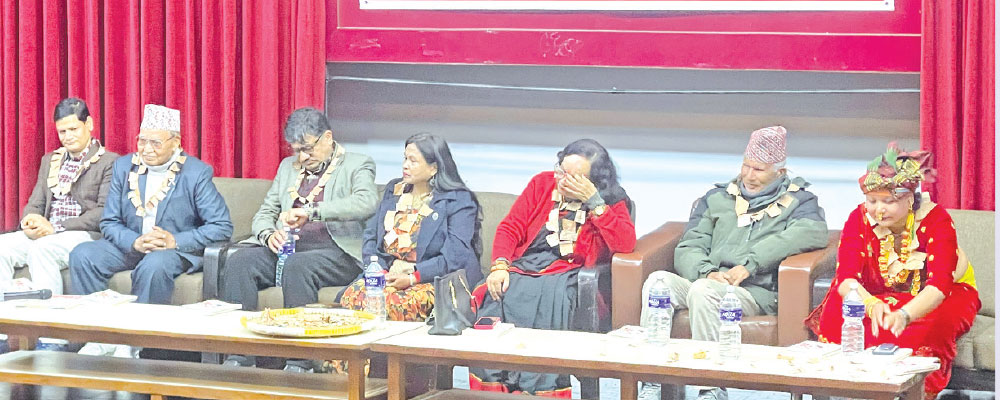
The article reports the launch of a comprehensive book titled “Dalits’ (Shilpees’) Glorious Arts and Artefacts Under Socio-cultural Shackles” at the Nepal Tourism Board (NTB) Hall in Kathmandu. Authored by scholar Dr. Govinda Sarki Nepali and social activist Indira Ghale, with editing by Fraid Kalantari, the book is the result of over three decades of extensive field research and documentation. The book challenges conventional narratives that have historically marginalized Nepal’s Dalit community, presenting them as pioneers of indigenous arts, technology, and culture. The launch took place at the NTB Hall in Kathmandu, highlighting the book’s significance in the context of Nepal’s tourism industry and cultural heritage.
Key Points:
- The book “Dalits’ (Shilpees’) Glorious Arts and Artefacts Under Socio-cultural Shackles” was launched at the Nepal Tourism Board (NTB) Hall in Kathmandu.
- The book is a collaborative effort by Dr. Govinda Sarki Nepali, Indira Ghale, and Fraid Kalantari, based on more than three decades of field research.
- It challenges traditional narratives that have marginalized Nepal’s Dalit community, showcasing them as pioneers in indigenous arts, technology, and culture.
- The launch event underscores the book’s relevance to Nepal’s tourism industry and cultural heritage.
Actionable Takeaways:
- Cultural Tourism Opportunities: The book’s focus on the Dalit community’s contributions presents new opportunities for cultural tourism in Nepal. Travel agencies and tourism boards can develop themed tours and experiences that highlight these contributions, attracting a niche market of culturally curious travelers.
- Promoting Inclusive Heritage: The book’s challenge to conventional narratives can inspire tourism stakeholders to promote inclusive heritage narratives. This could involve creating marketing campaigns that celebrate diverse cultural contributions, thereby broadening the appeal of Nepal’s tourism offerings and potentially increasing visitor numbers.
- Leveraging Field Research: The extensive field research behind the book can serve as a model for other cultural and historical projects in Nepal. Travel startups and fintech companies could explore funding models that support such research-intensive projects, potentially leading to more in-depth and authentic travel experiences.
Contextual Insights:
The launch of this book is particularly relevant in the context of Nepal’s evolving tourism industry, which is increasingly focusing on cultural authenticity and inclusivity. Recent trends indicate a growing demand among travelers for authentic, culturally rich experiences that go beyond traditional tourist attractions. The book’s emphasis on the Dalit community’s contributions aligns with this trend, offering a fresh perspective that could attract a new segment of culturally aware tourists. Furthermore, the book’s focus on indigenous arts and technology resonates with the current emphasis on innovation and sustainability in the travel sector. By leveraging the insights from this book, travel startups and fintech companies can develop innovative products and services that cater to this niche market, potentially driving growth and differentiation in the competitive travel industry.
Read the Complete Article.



