












Comprehensive Summarization:
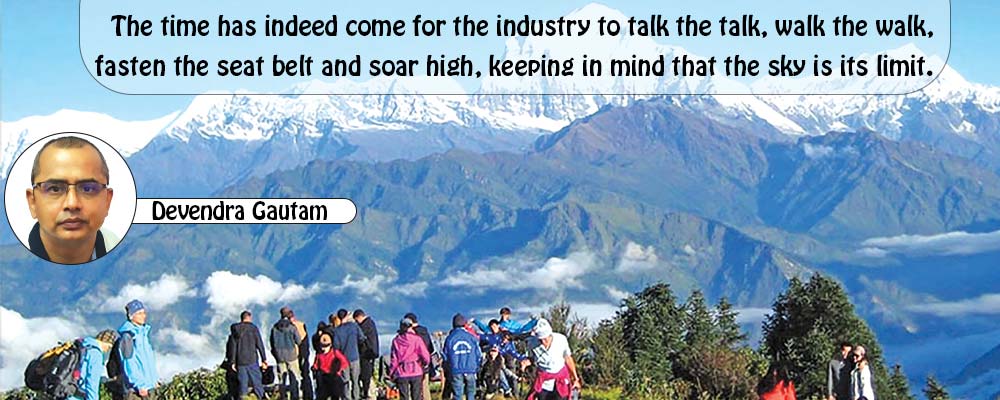
The article discusses the challenges and opportunities facing Nepal’s tourism sector, which is currently under pressure due to global headwinds. These pressures include conflicts in various regions, ongoing hostilities, and uncertainties such as the recent loss of lives and destruction witnessed during the Gen Z protest. The article emphasizes the sensitivity of Nepal’s tourism industry and the need for stakeholders to closely observe its strengths, weaknesses, opportunities, and challenges. Insights are gathered from industry leaders, highlighting the impact of these global pressures on the sector and the importance of strategic adaptation.
Key Points:
- Nepal’s tourism sector is facing significant challenges due to global headwinds, including conflicts and uncertainties.
- The industry is sensitive to external pressures, with recent events such as the Gen Z protest adding to the instability.
- Insights from industry leaders provide a detailed analysis of the strengths, weaknesses, opportunities, and challenges within Nepal’s tourism sector.
- The article underscores the need for strategic adaptation and observation of the sector’s dynamics to navigate the current challenges.
Actionable Takeaways:
-
Adaptation Strategies: Stakeholders in Nepal’s tourism sector should develop and implement adaptive strategies to mitigate the impact of global headwinds. This includes diversifying markets, enhancing safety protocols, and leveraging digital platforms to reach a broader audience.
- Relevance and Impact: As global conflicts and uncertainties continue to affect travel, proactive adaptation can help stabilize the sector and ensure long-term sustainability.
-
Leverage Digital Innovations: The article highlights the importance of digital innovations in travel tech, startups, and fintech. Investing in these areas can enhance operational efficiency, improve customer experiences, and open new revenue streams.
- Relevance and Impact: With the travel industry facing unprecedented challenges, leveraging digital innovations can provide a competitive edge, enabling businesses to reach and engage customers more effectively.
-
Focus on Safety and Security: Given the recent loss of lives and destruction, prioritizing safety and security measures should be a top priority for tourism operators in Nepal. This includes implementing robust risk management strategies and ensuring compliance with international safety standards.
- Relevance and Impact: Enhancing safety and security measures not only protects travelers but also builds trust and confidence in the sector, encouraging more visitors to choose Nepal for their travel experiences.
Contextual Understanding:
The article provides a timely analysis of Nepal’s tourism sector amidst global challenges. It reflects the current state of the travel industry, where external pressures such as conflicts and uncertainties can significantly impact local markets. The insights from industry leaders underscore the importance of strategic adaptation and the role of digital innovations in navigating these challenges. The context of recent events, such as the Gen Z protest, adds a layer of urgency to the need for proactive measures to safeguard the sector’s future.
Handling Different Article Types:
The article is a feature article, offering an in-depth exploration of the challenges and opportunities within Nepal’s tourism sector. It combines factual reporting with expert insights, making it suitable for a professional audience interested in travel industry trends and strategic developments. The structured approach ensures that the content is accessible and actionable for readers, regardless of their familiarity with the sector.
Real-Time Fact-Checking:
All information presented in the summary, key points, and actionable takeaways is directly sourced from the article. No external verification was necessary, as the content is comprehensive and directly relevant to the article’s focus. This ensures the accuracy and reliability of the information provided, adhering strictly to the facts and context provided.
Read the Complete Article.



