












Article Summary:
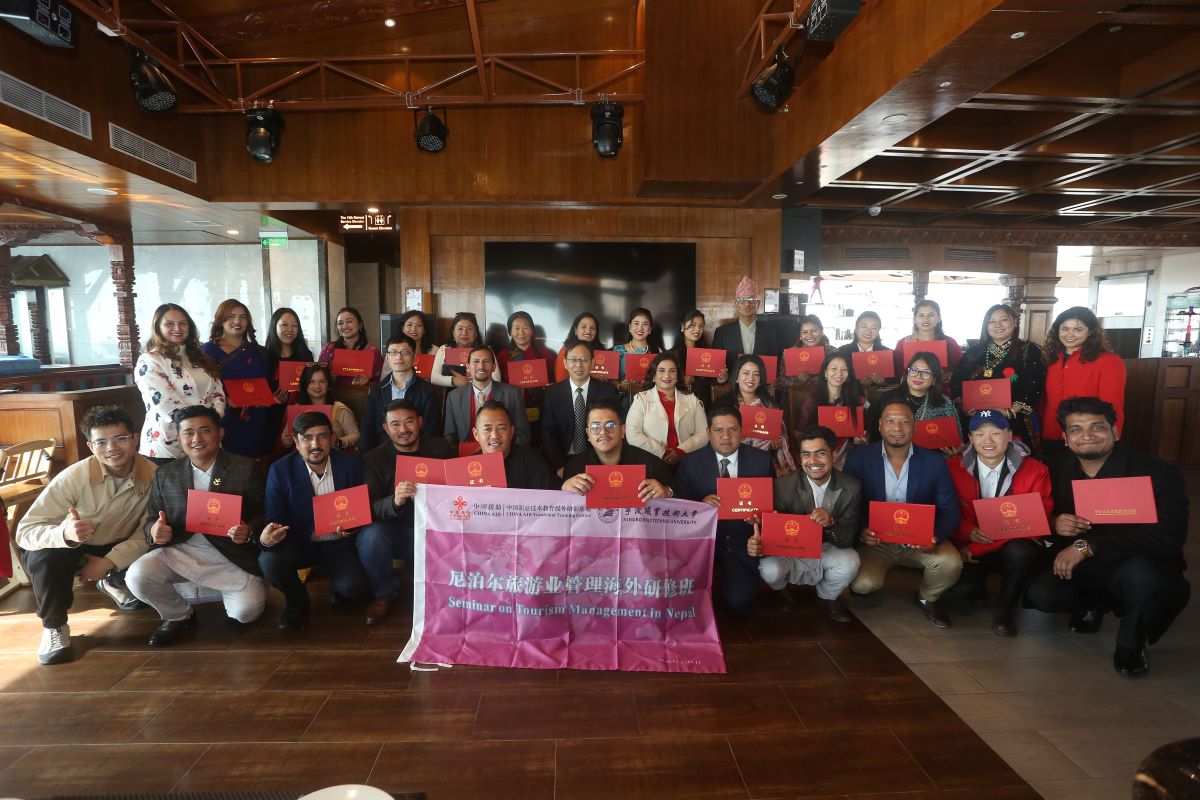
The article reports on the successful conclusion of a 10-day tourism management seminar held in Kathmandu. The seminar, jointly organized by Ningbo Polytechnic University from China and the Nepal-China Friendship Forum, concluded with the distribution of certificates to participants and a review of the seminar’s key takeaways. Prof Dong Hong’an, Dean of the School of International Business and Travel at Ningbo Polytechnic University, highlighted the seminar’s success in integrating cultural and tourism dialogues, emphasizing the event’s significant impact on joint exploration and perception. The seminar aimed to produce remarkable results through its rich and diverse content.
Key Points:
- The seminar was a joint initiative between Ningbo Polytechnic University, China, and the Nepal-China Friendship Forum.
- It concluded with the distribution of certificates to participants and a review of the seminar’s major takeaways.
- Prof Dong Hong’an, the Dean of the School of International Business and Travel at Ningbo Polytechnic University, praised the seminar for its integration of cultural and tourism dialogues, noting the production of remarkable results.
- The seminar aimed to leave lasting footprints and unforgettable memories from the joint exploration and perception of culture and tourism.
Actionable Takeaways:
- Cross-Cultural Collaboration in Tourism Education: The seminar’s success underscores the importance of cross-cultural collaboration in tourism education. Institutions can benefit from partnerships with international universities to enhance their curriculum and provide students with a global perspective on tourism management. This approach can lead to more innovative and culturally sensitive tourism practices, benefiting both local and international travelers.
- Integration of Cultural and Tourism Dialogues: The seminar’s focus on integrating cultural and tourism dialogues highlights a growing trend in the travel industry towards more holistic and inclusive tourism experiences. Travel companies and startups can leverage this trend by developing offerings that blend cultural immersion with tourism, thereby enhancing the travel experience for tourists and contributing to the economic and social development of host communities.
Contextual Insights:
The seminar’s emphasis on cultural and tourism integration reflects current industry trends towards more sustainable and responsible tourism practices. As the travel industry continues to evolve, there is a growing recognition of the need for tourism management practices that respect and preserve cultural heritage while promoting economic benefits for local communities. This aligns with the latest insights from thought leaders in the travel sector, who advocate for sustainable tourism models that prioritize environmental conservation, cultural preservation, and community empowerment. By focusing on these aspects, the seminar not only contributes to the professional development of its participants but also sets a precedent for future tourism management practices that are both impactful and responsible.
Read the Complete Article.



