












Comprehensive Summarization:
The article emphasizes the significant role of tourism in Nepal’s economy, accounting for approximately 6.7% of the country’s GDP. It highlights the challenges faced by the tourism sector during the winter season, where tourist numbers are notably lower compared to other seasons due to preference for sunny weather and clear skies. According to the Nepal Tourism Board, tourist numbers varied across seasons in 2025, with 324,393 tourists visiting in spring, 235,298 in summer, and 323,707 in autumn. The article also touches upon the broader context of travel trends and insights, reflecting on recent developments and expert opinions in the travel industry.
Key Points:
- Tourism constitutes about 6.7% of Nepal’s GDP, underscoring its importance to the country’s economy.
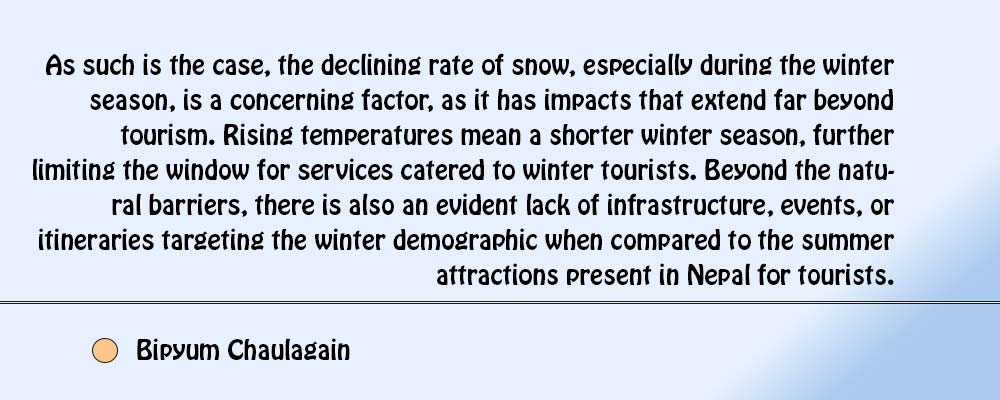
- Winter season tourism in Nepal is significantly lower than in other seasons, with tourists generally preferring warmer weather.
- In 2025, tourist numbers were 324,393 in spring, 235,298 in summer, and 323,707 in autumn.
- The article references recent travel trends and insights, indicating a dynamic and evolving travel landscape.
Actionable Takeaways:
-
Seasonal Marketing Strategies: Given the lower tourist numbers during the winter season, travel agencies and businesses in Nepal could develop targeted marketing campaigns to attract tourists during this period. This could involve promoting winter sports, cultural festivals, or other unique experiences available in Nepal during the colder months, thereby diversifying the appeal of the destination and potentially increasing winter tourism.
-
Leveraging Digital Platforms: The article’s emphasis on the importance of tourism to Nepal’s economy suggests a strong incentive for leveraging digital platforms for marketing and sales. Travel startups and businesses could invest in enhancing their online presence, utilizing social media, SEO, and targeted online advertising to reach potential tourists. This approach could help in overcoming the seasonal dip in tourist numbers by reaching out to a broader audience and offering tailored travel packages.
-
Focus on Unique Experiences: With the context of lower tourist numbers during the winter, there is an opportunity for Nepal to market its unique winter experiences more aggressively. This could include promoting winter sports like skiing in Pokhara, cultural festivals, or off-the-beaten-path destinations that offer a different perspective on Nepal. By highlighting these unique experiences, Nepal can attract a wider range of tourists, thereby increasing winter tourism numbers and contributing to the economy.
Contextual Insights:
The article’s focus on the seasonal variations in tourism highlights the cyclical nature of the travel industry and the importance of adapting strategies to seasonal trends. The emphasis on winter tourism challenges reflects a broader industry trend where destinations must innovate and diversify their offerings to remain attractive year-round. The inclusion of recent travel trends and insights underscores the need for travel businesses to stay abreast of market conditions and technological advancements. For instance, the rise of digital platforms and online travel agencies has transformed how tourists plan and book their trips, making it crucial for Nepal to invest in digital marketing and technology to remain competitive. Furthermore, the article’s reference to thought leaders suggests a forward-looking perspective, indicating that the travel industry in Nepal should be proactive in adopting emerging trends and innovations to sustain growth and attract a diverse range of tourists throughout the year.
Read the Complete Article.



