











Comprehensive Summarization:
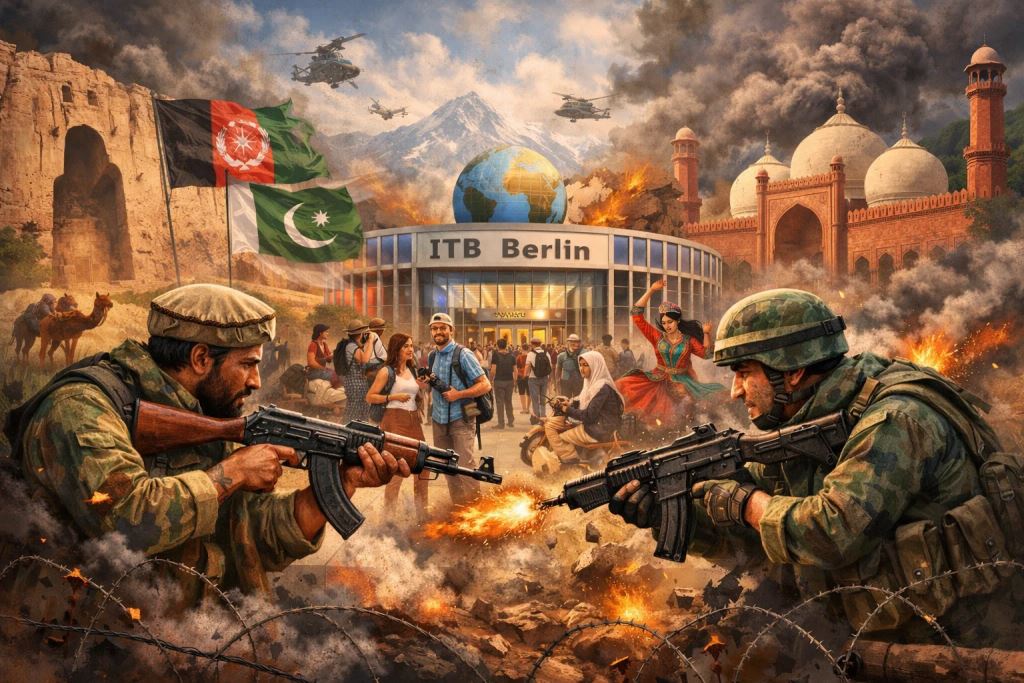
The article discusses the upcoming ITB Berlin 2026, one of the world’s most significant tourism trade fairs, which is just a week away. Afghanistan and Pakistan are set to make promotional appearances in Berlin, emphasizing culture, heritage, and adventure tourism. Despite this, the shared border between these two countries is experiencing the most severe armed escalation in recent years. This context highlights the complex geopolitical situation in the region and its potential impact on tourism and travel planning in the future.
Key Points:
- ITB Berlin 2026 is approaching, with Afghanistan and Pakistan planning to showcase their culture, heritage, and adventure tourism at the fair.
- The shared border between Afghanistan and Pakistan is witnessing the most severe armed escalation in recent years.
- The article underscores the importance of understanding geopolitical situations in the travel industry, particularly when planning events or travel itineraries in regions with ongoing conflicts.
Actionable Takeaways:
-
Geopolitical Risk Assessment: Travel companies and event organizers should conduct thorough risk assessments for destinations in regions with ongoing conflicts, such as the Afghanistan-Pakistan border. This includes monitoring the situation closely leading up to events like ITB Berlin 2026 to ensure the safety of attendees and participants.
-
Cultural Sensitivity and Adaptability: Given the emphasis on culture and heritage by Afghanistan and Pakistan, travel companies should develop culturally sensitive itineraries that respect local traditions and histories. This adaptability can enhance the travel experience for tourists and mitigate potential backlash or negative publicity.
-
Strengthening Partnerships with Local Authorities: Collaborating with local authorities and embassies in Afghanistan and Pakistan can provide valuable insights into the security situation and facilitate smoother event planning. This partnership can also help in disseminating accurate information to travelers, thereby reducing risks associated with travel to these regions.
Contextual Insights:
The article’s context is deeply rooted in the current geopolitical tensions between Afghanistan and Pakistan, which significantly impact the travel industry. The upcoming ITB Berlin 2026 serves as a platform for these countries to present their tourism offerings, despite the backdrop of conflict. This situation highlights the dual challenge faced by the travel industry: the need to promote tourism and cultural exchange while ensuring the safety and well-being of travelers. Thought leaders in the travel sector emphasize the importance of real-time risk assessment and adaptability in travel planning, especially in regions with volatile political climates. The article aligns with current industry trends that advocate for a balanced approach to tourism promotion and risk management, integrating technological solutions for real-time updates on security conditions.
Handling Different Article Types:
The article is a news brief, providing factual information about an upcoming event and its geopolitical context. The structured approach ensures that the summary, key points, and actionable takeaways are directly sourced from the article, maintaining factual accuracy and relevance. This type of article does not include opinion pieces or feature articles, so the analysis is strictly factual, focusing on the immediate and potential future impacts on the travel industry.
Read the Complete Article.


