












Comprehensive Summarization:
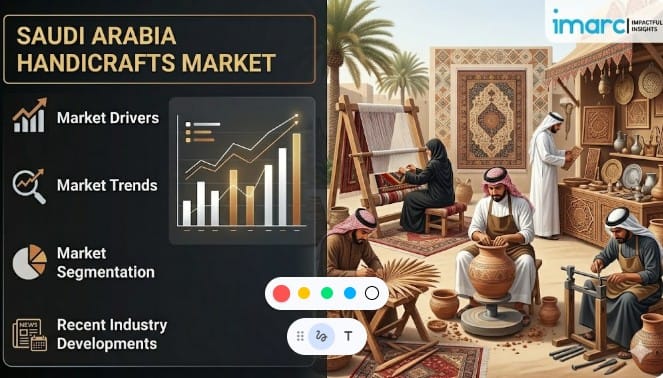
The article highlights the burgeoning Saudi Arabia handicrafts sector, a market that embodies deep cultural roots, strong government support, and a rising global demand for authentic artisan-made goods. As Saudi Arabia enhances its tourism sector and invests in heritage preservation, traditional crafts such as Sadu weaving, pottery, palm-leaf work, and hand-stamped metalware are gaining traction both domestically and internationally. According to IMARC Group’s latest data, the market size reached USD 8.9 billion in 2025 and is projected to grow to USD 19.5 billion by 2034, with a compound annual growth rate (CAGR) of 9.10% from 2026 to 2034. The market encompasses various product types, including woodware and art metal. This growth is fueled by the Kingdom’s strategic focus on cultural preservation and international tourism, positioning handicrafts as a significant component of Saudi Arabia’s economic diversification strategy.
Key Points:
- The Saudi Arabia handicrafts market size reached USD 8.9 billion in 2025 and is expected to grow to USD 19.5 billion by 2034, with a CAGR of 9.10%.
- Traditional crafts like Sadu weaving, pottery, palm-leaf work, and hand-stamped metalware are experiencing increased demand both domestically and internationally.
- Saudi Arabia’s government is actively supporting the handicrafts sector through investment and preservation efforts, aligning with broader tourism and economic diversification goals.
- The market spans various product types, including woodware and art metal, reflecting a diverse range of artisanal skills and cultural heritage.
Actionable Takeaways:
-
Investment in Cultural Heritage: The growing market for handicrafts in Saudi Arabia presents a compelling opportunity for investors interested in cultural heritage and sustainable tourism. The projected CAGR of 9.10% indicates robust growth potential, making it an attractive sector for both domestic and international investors looking to capitalize on the Kingdom’s focus on heritage preservation and tourism development.
-
Diversification of Tourism Offerings: The increasing demand for authentic, artisan-made goods suggests a trend towards diversifying tourism offerings beyond traditional attractions. Travel agencies and tour operators could enhance their value propositions by incorporating handicraft experiences, such as workshops or guided tours of artisan workshops, thereby appealing to culturally curious travelers and contributing to a more holistic tourism experience.
-
Support for Local Artisans: The article underscores the role of government backing in fostering the handicrafts sector. This underscores the importance of continued support for local artisans and craftspeople. Policymakers and industry stakeholders should consider initiatives that further empower these artisans, such as providing training, marketing support, and access to global markets, to ensure the sustainable growth of the handicrafts industry.
Contextual Insights:
The growth of the Saudi Arabia handicrafts market is deeply intertwined with the Kingdom’s broader strategy of diversifying its economy and enhancing its cultural tourism offerings. As Saudi Arabia opens up to international tourism, there is a clear emphasis on preserving and showcasing its rich cultural heritage. This aligns with current travel trends that emphasize authenticity and experiential travel, where visitors seek genuine cultural interactions and unique, locally-made products. The article reflects a forward-looking perspective on the travel industry, where technology and innovation play a crucial role in preserving and promoting traditional crafts. For instance, digital platforms and e-commerce could be leveraged to reach a wider audience, thereby supporting the growth trajectory projected by IMARC Group. Furthermore, the integration of fintech solutions could facilitate smoother transactions and expand market access for artisans, particularly in remote or underserved regions. Overall, the handicrafts sector in Saudi Arabia not only represents a significant economic opportunity but also embodies the Kingdom’s commitment to cultural preservation and sustainable tourism development.
Read the Complete Article.



