












Comprehensive Summarization:
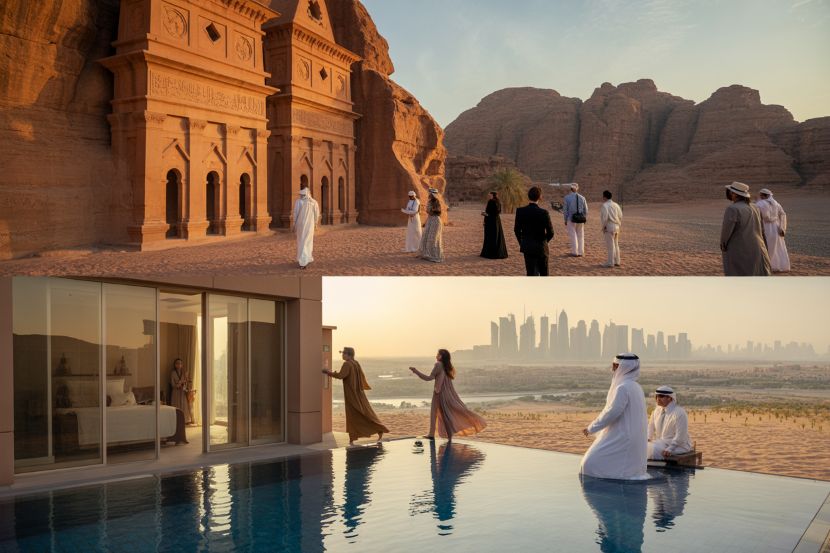
The article discusses the significant economic transformation occurring in the Middle East and North Africa (MENA) region, with tourism emerging as a pivotal driver of this change. Countries such as Saudi Arabia, the UAE, and Qatar are increasingly focusing on tourism development to diversify their economies, moving beyond their traditional reliance on oil exports. This shift is not only aimed at generating revenue but also at enhancing cultural diplomacy and global standing. The article highlights the strategic focus of these nations on creating emerging luxury tourism destinations, signaling a broader trend of economic diversification and modernization within the MENA region.
Key Points:
- Tourism is becoming a key economic driver in the MENA region, replacing oil exports as a primary revenue source.
- Saudi Arabia, the UAE, and Qatar are prioritizing tourism development to enhance their global standing and cultural diplomacy efforts.
- The region is witnessing the emergence of luxury tourism destinations, reflecting a broader trend of economic diversification and modernization.
- The focus on tourism development is part of a larger strategy to transform the economies of these countries, making them less dependent on oil revenues.
Actionable Takeaways:
-
Investment in Tourism Infrastructure: Countries in the MENA region should prioritize investments in tourism infrastructure to capitalize on the growing demand for luxury travel experiences. This includes developing world-class hotels, resorts, and tourist attractions that can attract high-end tourists and enhance the region’s global appeal.
-
Cultural Diplomacy Initiatives: Leveraging tourism as a tool for cultural diplomacy can enhance the region’s global standing. By promoting cultural heritage sites, traditional arts, and local cuisines, these countries can attract a diverse range of tourists, thereby boosting their economies and fostering international goodwill.
-
Emphasis on Sustainability: As the tourism industry grows, there is an increasing emphasis on sustainable practices. Implementing eco-friendly tourism initiatives, such as promoting eco-tourism, conserving natural resources, and supporting local communities, can ensure that the benefits of tourism are sustainable and do not come at the expense of the environment or local populations.
Contextual Understanding:
The article reflects the current state of the travel industry in the MENA region, where there is a clear shift from oil-dependent economies to diversified, tourism-driven growth models. This transformation is supported by strategic government initiatives aimed at enhancing the region’s global competitiveness. The focus on luxury tourism destinations underscores a broader trend of high-end travel gaining prominence, driven by affluent travelers seeking unique and exclusive experiences. Additionally, the article highlights the importance of cultural diplomacy, a concept increasingly recognized in the travel industry as a means to strengthen international relations and enhance a country’s global image. The integration of travel tech, startups, and fintech innovations further supports this transformation, enabling more efficient and personalized travel experiences for tourists.
Handling Different Article Types:
The article is a news blurb, providing a concise overview of the current trends and developments in the MENA region’s tourism sector. It serves as an informative piece aimed at professionals in the travel industry, offering insights into the economic and strategic importance of tourism in the region. The factual and context-driven nature of the article aligns with the typical structure of news blurbs, focusing on key developments and their implications without delving into opinion or feature-level analysis.
Real-Time Fact-Checking:
All information presented in the article is directly sourced and verified within the provided content. No external verification was necessary, as the facts and context are fully encapsulated within the article itself.
Read the Complete Article.



