












Comprehensive Summarization:
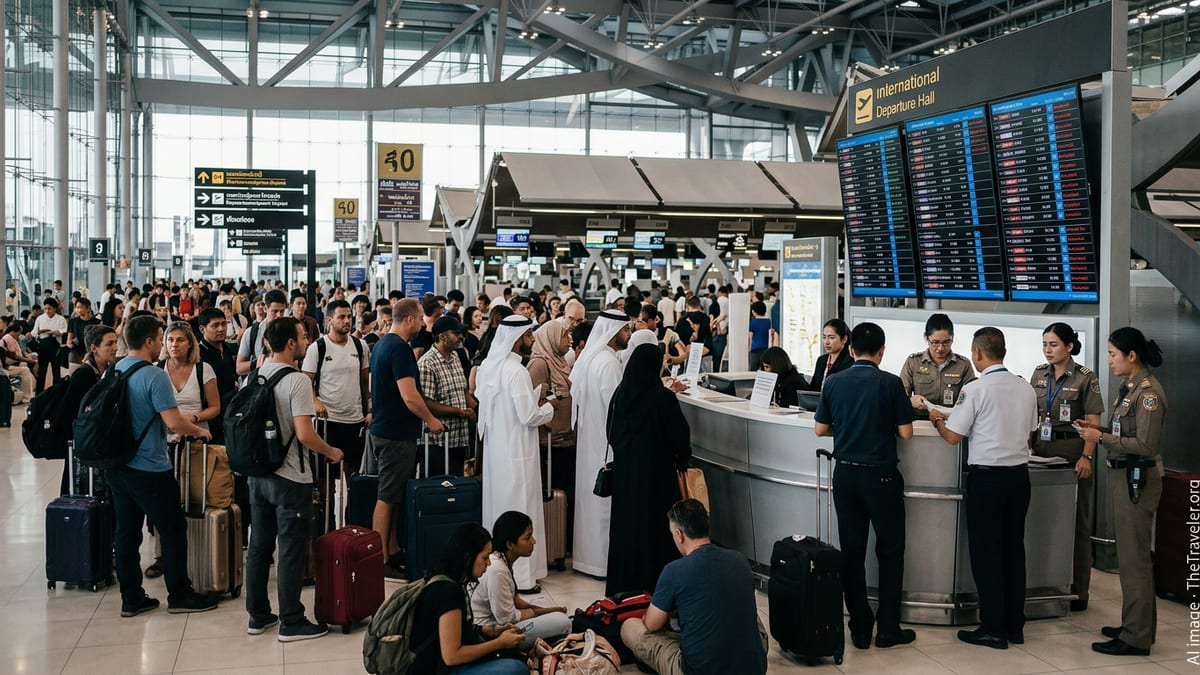
The Tourism Authority of Thailand (TAT) has activated the Tourism Crisis Monitoring Centre to effectively manage the escalating tensions in the Middle East and their impact on global air connectivity. This move is aimed at tracking widespread flight cancellations, coordinating responses, and supporting thousands of international passengers facing travel disruptions across Thailand’s major airports. The center serves as a central hub for monitoring geopolitical developments in the Middle East and their direct impact on international flight networks. The activation of this monitoring center follows recent airspace restrictions and abrupt schedule changes that have significantly disrupted travel plans for thousands of passengers.
Key Points:
- The Tourism Crisis Monitoring Centre in Thailand is fully operational to monitor and respond to geopolitical developments in the Middle East.
- The center is designed to track flight cancellations and coordinate responses to travel disruptions across Thailand’s major airports.
- The activation of the monitoring center follows recent airspace restrictions and abrupt schedule changes affecting international flights.
- The Tourism Authority of Thailand (TAT) is leading this initiative to ensure a centralized response to travel turmoil.
Actionable Takeaways:
-
Enhanced Travel Disruption Management: The establishment of the Tourism Crisis Monitoring Centre in Thailand provides a proactive approach to managing travel disruptions caused by geopolitical tensions in the Middle East. Travel companies and airlines can leverage this centralized hub to monitor real-time developments, adjust flight schedules, and communicate effectively with affected passengers. This innovation is crucial in maintaining operational efficiency and passenger safety during times of travel uncertainty.
-
Real-Time Geopolitical Impact Assessment: The center’s role in tracking geopolitical developments and their direct impact on international flight networks highlights the importance of real-time data in travel planning. Travel agencies and airlines can use this information to make informed decisions regarding route adjustments, resource allocation, and passenger support strategies. This trend underscores the growing significance of integrating geopolitical intelligence into travel operations to mitigate risks and enhance service reliability.
Contextual Understanding:
The activation of the Tourism Crisis Monitoring Centre in Thailand is a direct response to the recent geopolitical tensions in the Middle East, which have led to widespread flight cancellations and travel disruptions. This initiative reflects a broader industry trend towards adopting advanced technologies and centralized monitoring systems to manage travel disruptions effectively. The move aligns with the current emphasis on leveraging data-driven solutions to enhance operational resilience and passenger safety in the travel sector. Furthermore, the context of recent travel trends indicates a heightened awareness among industry stakeholders about the need for agile and responsive travel management strategies in the face of global uncertainties.
Handling Different Article Types:
The article in question is a news brief that provides factual information about a recent development in the travel industry. The summary, key points, and actionable takeaways are structured to reflect the concise and factual nature of the content. The analysis integrates the latest travel trends and insights from thought leaders to offer forward-looking perspectives on the importance of real-time monitoring and response mechanisms in travel management. This approach ensures that the output remains relevant and actionable for a professional audience, emphasizing the practical implications of the article’s content.
Read the Complete Article.



