













Comprehensive Summarization:
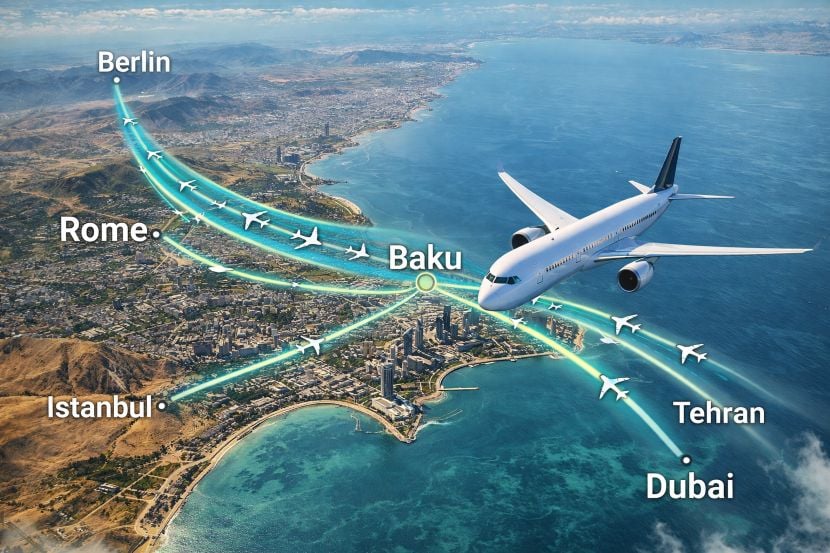
Azerbaijan has emerged as a crucial aviation corridor linking Europe and Asia, particularly following the closure of Iran’s airspace. This strategic position has seen a surge in international flights passing through Azerbaijan, making it a pivotal transit route for global air traffic. The development is significant not only for the aviation industry but also for global travelers, as it connects key cities such as Berlin, Rome, Istanbul, Tehran, and Dubai to Baku. This shift underscores the importance of Azerbaijan in the evolving landscape of international air travel, especially in the context of recent geopolitical changes in the Middle East.
Key Points:
- Azerbaijan’s strategic location as an aviation corridor between Europe and Asia has gained prominence due to recent geopolitical shifts, particularly the closure of Iran’s airspace.
- The country has witnessed a surge in international flights passing through its airspace, establishing it as a critical transit route for global air traffic.
- This development is pivotal for the aviation industry and global travelers, offering new connectivity options between key European and Asian cities.
- The shift highlights the importance of Azerbaijan in the evolving landscape of international air travel, especially in the context of geopolitical changes in the Middle East.
Actionable Takeaways:
- Enhanced Connectivity for Global Travelers: Azerbaijan’s role as a critical transit route offers new connectivity options for travelers between Europe and Asia. Airlines and travel agencies can leverage this route to offer more comprehensive travel packages, potentially increasing demand for flights through Azerbaijan.
- Strategic Investment Opportunities: The increased air traffic through Azerbaijan presents opportunities for strategic investments in aviation infrastructure and services. Companies can explore partnerships with local airlines to enhance connectivity and improve the travel experience for passengers.
- Adaptation to Geopolitical Changes: The shift in air traffic patterns due to geopolitical events underscores the need for airlines and travel companies to remain agile and adaptable. Developing contingency plans and diversifying routes can help mitigate risks associated with geopolitical uncertainties.
Contextual Insights:
The article reflects the ongoing transformation in global air travel, driven by geopolitical shifts and the need for more efficient connectivity between continents. Azerbaijan’s emergence as a crucial transit route is a direct response to the closure of Iran’s airspace, highlighting the dynamic nature of the aviation industry. This development aligns with broader trends in the travel industry, such as the increasing importance of strategic air corridors and the need for airlines to adapt to changing geopolitical landscapes. For travel startups and fintech companies, this presents an opportunity to innovate in areas such as route optimization, digital ticketing, and seamless travel experiences, leveraging the new connectivity options to enhance service offerings and customer satisfaction.
Read the Complete Article.



