













Comprehensive Summarization:
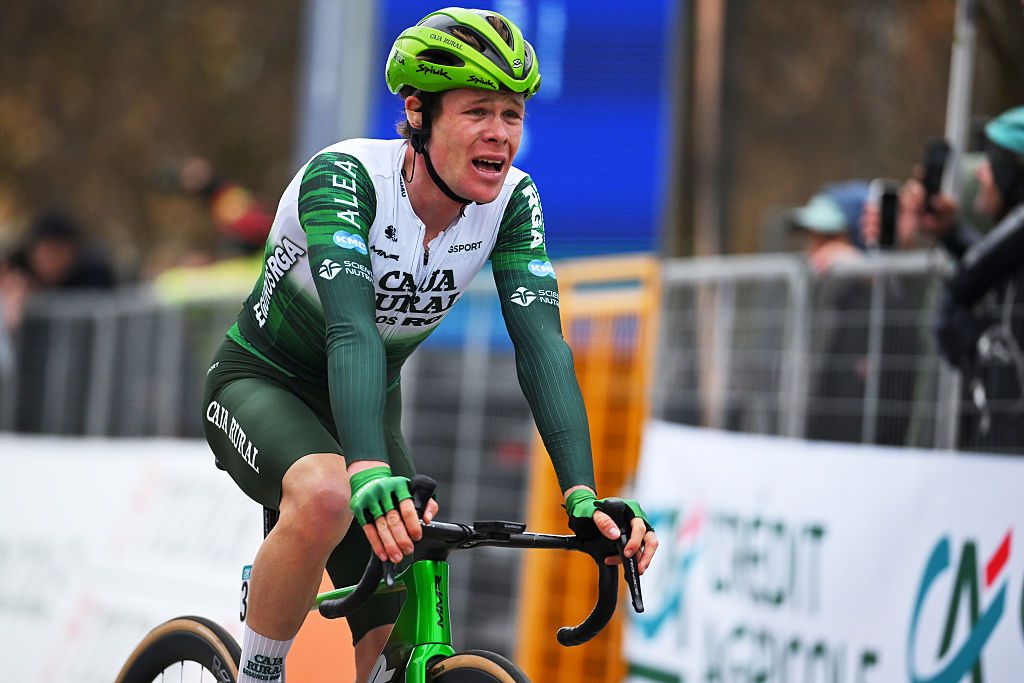
Christian Bagatin, a rider for MBH Bank CSB Telecom Fort, secured an unexpected victory in the Queen stage of the Tour of Turkey. This win occurred on a 21km climb to Feslikan, where Bagatin held off the General Classification (GC) battle. The Italian cyclist was part of a significant breakaway that started the final climb with a substantial lead. Despite the majority of the riders being caught by the chasing peloton, Bagatin capitalized on his head start to claim the victory. Sebastian Berwick of Caja Rural-Seguros RGA managed to climb into the race lead during the race.
Key Points:
- Christian Bagatin won the Queen stage of the Tour of Turkey, a surprise victory on a challenging 21km climb.
- Bagatin was part of a large breakaway that started the final climb with a significant lead, which he used to his advantage to secure the win.
- Despite the General Classification battle, Sebastian Berwick managed to climb into the race lead during the race.
Actionable Takeaways:
- Breakaway Strategy in High-Difficulty Climbs: The article highlights the importance of strategic breakaway formation in high-difficulty climbs. Teams can benefit from studying Bagatin’s approach to maintain a lead in such scenarios, potentially leading to innovative tactics in future races.
- Importance of Race Lead: The article underscores the value of climbing into the race lead, even if it’s not the General Classification lead. This insight could influence race strategies, encouraging teams to focus on securing a race lead as a stepping stone to higher positions.
Contextual Insights:
The Tour of Turkey is known for its challenging climbs, making the victory of Christian Bagatin particularly noteworthy. This win reflects the ongoing trend in professional cycling towards strategic breakaway formations, especially in races with demanding ascents. The article also hints at the importance of race positioning, suggesting that securing a race lead can be a valuable intermediate goal in competitive cycling. These insights are relevant to the broader travel and sports industry, as they demonstrate the strategic depth and tactical planning involved in high-level athletic competitions. Furthermore, the article aligns with current trends in cycling technology, where teams are increasingly leveraging data analytics and performance optimization to gain a competitive edge.
Read the Complete Article.


