












Article Summary:
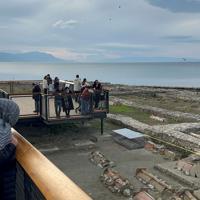
Foreign tourist arrivals to İznik, a historic town in Bursa, Turkey, have surged following Pope Leo XIV’s visit to mark the 1,700th anniversary of the Council of Nicaea. The visit, which took place on November 28, drew global attention to the town, known as a key center of early Christian history. According to İznik municipality data, the number of foreign visitors to the district reached 200,000 last year.
Key Points:
- Pope Leo XIV’s visit to İznik in November marked the 1,700th anniversary of the Council of Nicaea, a pivotal event in Christian theology.
- The Council of Nicaea, convened in A.D. 325, established foundational principles of Christian doctrine.
- İznik municipality reported a significant increase in foreign tourist arrivals, reaching 200,000 in the previous year.
- The town’s historical significance as a center of early Christian history contributed to the surge in tourism.
Actionable Takeaways:
- Tourism Growth Opportunity: The surge in foreign tourist arrivals to İznik presents a significant growth opportunity for local businesses, including hotels, restaurants, and tour operators. Investing in marketing campaigns and enhancing visitor experiences could capitalize on this trend.
- Cultural Heritage Tourism: The article highlights the importance of cultural heritage sites in driving tourism. Travel industry stakeholders should focus on promoting and preserving such sites, leveraging them as key attractions to attract global visitors.
- Leveraging Religious Events: The success of Pope Leo XIV’s visit underscores the potential of religious events in boosting tourism. Similar events or partnerships with religious institutions could be explored to further enhance tourism in historically significant locations.
Contextual Insights:
The article reflects a broader trend in the travel industry towards leveraging historical and cultural sites to attract tourists. Recent thought leaders have emphasized the importance of experiential travel, where visitors engage with the history and culture of destinations. This aligns with the surge in tourism to İznik, where the historical significance of the Council of Nicaea has become a major draw. Furthermore, the article’s context of Pope Leo XIV’s visit highlights the potential of religious and papal endorsements in driving tourism, a strategy that could be replicated in other historically rich locations. As the travel industry continues to evolve, integrating technological solutions for enhancing visitor experiences and promoting cultural heritage will be crucial. Startups focusing on virtual reality tours, augmented reality guides, and mobile apps for historical insights could find a receptive market in destinations like İznik, where such innovations can provide unique value to tourists.
Read the Complete Article.



