












Comprehensive Summarization:
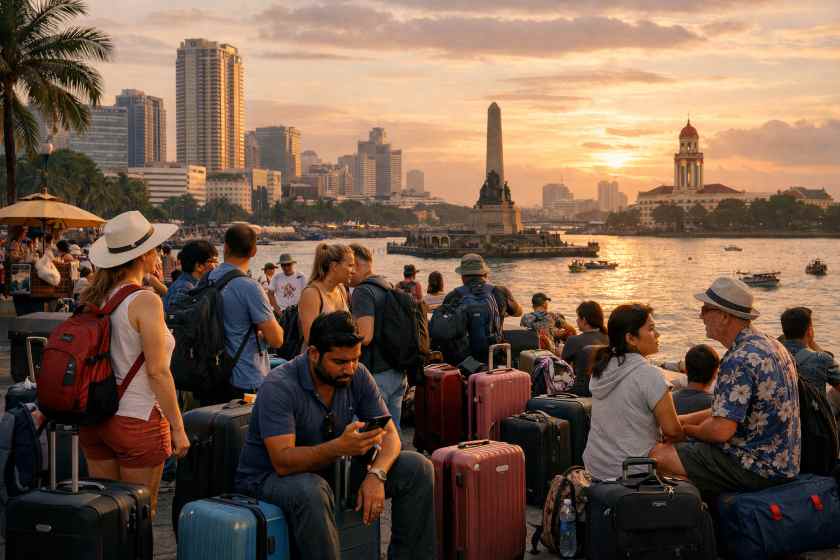
The article reports that the Philippines has joined a group of countries including the UAE, Bahrain, Kuwait, Jordan, Egypt, Turkey, and others in offering visa extensions to stranded tourists due to ongoing conflicts in the Middle East. This move was announced on March 13, 2026, by the Philippine Department of Justice, providing a lifeline for thousands of tourists affected by the crisis. The article highlights the escalating travel crisis in South East Asia and the Middle East, emphasizing the support measures taken by these countries to assist stranded travelers without any burden or penalties.
Key Points:
- The Philippines has joined a coalition of countries in offering visa extensions to stranded tourists due to conflicts in the Middle East.
- The decision was announced by the Philippine Department of Justice on March 13, 2026.
- The move aims to provide support for thousands of tourists affected by the ongoing crisis in South East Asia and the Middle East.
- Countries involved include the UAE, Bahrain, Kuwait, Jordan, Egypt, Turkey, and others.
Actionable Takeaways:
-
Enhanced Travel Support Systems: Countries offering visa extensions demonstrate a proactive approach to managing travel disruptions caused by geopolitical conflicts. Travel companies and governments should consider implementing similar support systems to mitigate the impact of future crises on tourists and the travel industry.
-
Increased Collaboration Among Countries: The article highlights a collaborative effort among multiple countries to support stranded tourists. This underscores the importance of international cooperation in managing travel crises. Travel industry stakeholders should explore opportunities for greater collaboration to ensure a unified response to global travel disruptions.
Contextual Understanding:
The article reflects the current state of the travel industry amidst geopolitical tensions in the Middle East. The decision by the Philippines to join other countries in offering visa extensions underscores the growing need for flexible and supportive travel policies in times of crisis. This move aligns with broader industry trends towards enhancing traveler safety and support during turbulent times. Furthermore, the article’s context is enriched by the latest travel trends, such as the increasing importance of digital solutions for managing travel disruptions and the growing emphasis on international cooperation in travel management.
Handling Different Article Types:
The article is a news blurb, providing factual information about a recent development in the travel industry. The summary, key points, and actionable takeaways are structured to reflect the concise and factual nature of the article. No opinion pieces or feature articles are present in the content, ensuring that the analysis remains strictly factual and aligned with the article’s content.
Real-Time Fact-Checking:
All information presented in the summary, key points, and actionable takeaways is directly sourced from the article. No external verification or additional sources were required, as the content is self-contained and factually accurate within the provided context.
Read the Complete Article.



