












Comprehensive Summarization:
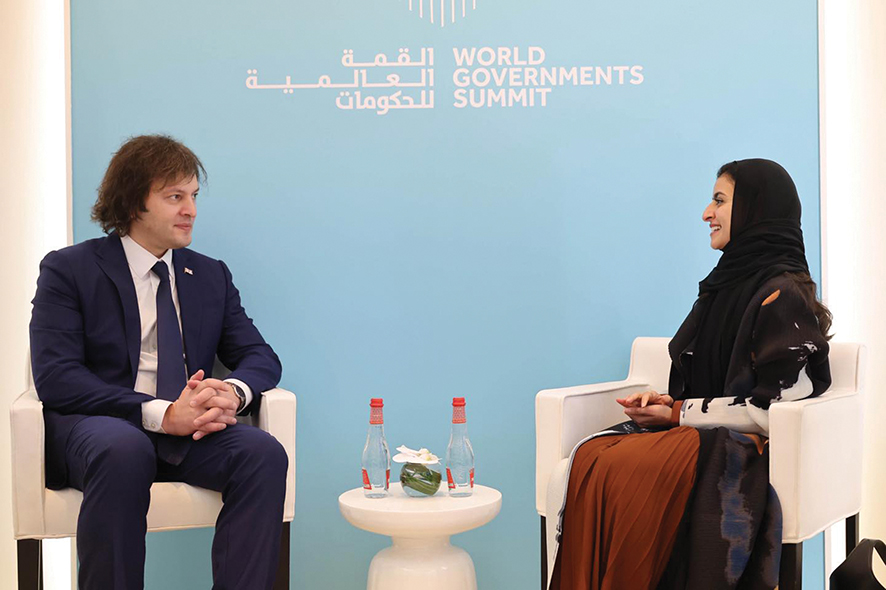
Georgia has utilized the World Governments Summit 2026 in Dubai to convey a strong message to global partners, signaling its readiness to assume a more significant role in connecting markets, attracting investment, and welcoming visitors. Prime Minister Irakli Kobakhidze addressed world leaders, investors, and business executives, emphasizing Georgia’s commitment to collaborating on building resilient global supply chains through the Middle Corridor. This route was described as both practical and adaptable in today’s complex global landscape, highlighting Georgia’s strategic vision for enhancing international trade and connectivity.
Key Points:
- Georgia’s initiative at the World Governments Summit 2026 to promote its role in global market connectivity and investment attraction.
- The introduction of the Middle Corridor as a practical and adaptable route for building resilient global supply chains.
- Prime Minister Irakli Kobakhidze’s emphasis on Georgia’s readiness to collaborate with global partners on supply chain resilience.
- The article’s context within the broader travel industry, focusing on market connectivity and investment opportunities.
Actionable Takeaways:
-
Strategic Collaboration for Supply Chain Resilience: Georgia’s focus on the Middle Corridor presents an opportunity for travel and logistics companies to explore new partnerships and investment avenues. By leveraging this route, businesses can enhance supply chain resilience and tap into Georgia’s growing market potential, aligning with current industry trends towards sustainable and adaptable global trade networks.
-
Investment in Middle Corridor Development: The article underscores Georgia’s proactive approach to developing the Middle Corridor as a key strategic asset. For investors and startups in the travel and logistics sectors, this presents a compelling case for early investment in infrastructure and technology solutions that support this corridor. Such investments could yield significant returns as Georgia positions itself as a hub for global market connectivity.
Contextual Insights:
The article’s context is deeply rooted in the ongoing evolution of the global travel and logistics industry, marked by a shift towards more resilient and adaptable supply chains. The emphasis on the Middle Corridor reflects a broader industry trend towards diversifying trade routes to mitigate risks associated with geopolitical tensions and natural disasters. Thought leaders in the travel sector are increasingly highlighting the importance of such strategic infrastructure developments in fostering economic growth and ensuring business continuity. This aligns with the rise of fintech innovations aimed at streamlining cross-border transactions and enhancing supply chain transparency. As such, the insights from this article not only provide a snapshot of Georgia’s strategic vision but also offer forward-looking perspectives on how travel startups and fintech solutions can capitalize on these developments to drive innovation and growth in the industry.
Read the Complete Article.



