









Sail Through Time: Discover the Timeless Wonders of Upper Egypt Aboard Kenzy Dahabeya
Experience the magic of the Nile aboard Kenzy Dahabeya, a luxury boutique sailing cruise that offers an unforgettable journey between...
Read moreDetails
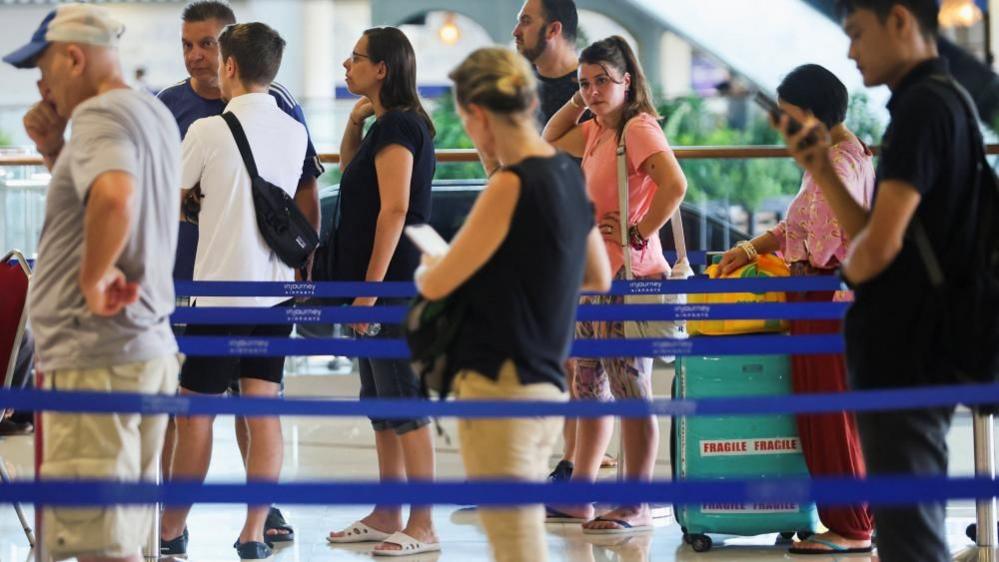
Passengers queue to speak with Qatar Airways staff amid flight disruption at I Gusti Ngurah Rai International Airport in Bali, Indonesia © Reuters
Comprehensive Summarization:
The article reports on the significant disruption to international aviation following the killing of Iran’s supreme leader on Sunday, March 1. This event led to US and Israel launching strikes on Saturday, Feb. 28, resulting in airspace closures and widespread flight disruptions. The situation has caused major challenges for the travel industry, with only a limited number of flights able to operate amidst the ongoing conflict. The disruption is evident at various airports, as illustrated by images of passengers queuing at blue barriers at I Gusti Ngurah Rai International Airport in Bali, Indonesia. The article underscores the immediate impact on travel operations and the broader implications for the travel industry, particularly in terms of safety, security, and operational logistics.
Key Points:
Actionable Takeaways:
Operational Preparedness: Travel companies must enhance their operational preparedness to swiftly adapt to sudden disruptions. This includes having contingency plans for airspace closures and ensuring real-time communication with passengers to manage expectations and minimize confusion. Relevance: Directly impacts the operational resilience of airlines and airports in the face of geopolitical events.
Enhanced Security Protocols: The incident underscores the importance of robust security protocols in aviation. Airlines and airports should invest in advanced security technologies and training for staff to handle potential threats more effectively. Relevance: Directly addresses the security concerns arising from geopolitical tensions and their impact on aviation safety.
Collaborative Risk Management: There is a need for greater collaboration among international aviation authorities, airlines, and governments to share real-time information and coordinate responses to such crises. Relevance: Enhances the industry’s ability to manage and mitigate the impact of geopolitical events on travel operations.
Contextual Understanding:
The article is situated within the context of heightened geopolitical tensions between Iran, the US, and Israel. The killing of Iran’s supreme leader and subsequent US and Israeli strikes have led to immediate and widespread disruptions in international aviation. This situation is reflective of the broader challenges faced by the travel industry in managing security and operational risks in an increasingly volatile global landscape. The disruption at airports like I Gusti Ngurah Rai International Airport in Bali serves as a concrete example of the challenges faced by travelers and the industry at large. The article also touches on the broader implications for travel tech, emphasizing the need for innovative solutions to enhance operational resilience and security in the face of such disruptions.
Handling Different Article Types:
The article in question is a news brief, providing factual information about a recent event and its immediate impact on the travel industry. The structured approach outlined above is tailored to such articles, ensuring that the summary, key points, and actionable takeaways are concise, fact-based, and directly relevant to the professional audience. The analysis integrates the latest travel trends and insights, such as the importance of operational preparedness and enhanced security protocols, to provide a forward-looking perspective on the current state of the travel industry.
Read the Complete Article.
Experience the magic of the Nile aboard Kenzy Dahabeya, a luxury boutique sailing cruise that offers an unforgettable journey between...
Read moreDetails



