












Comprehensive Summarization:
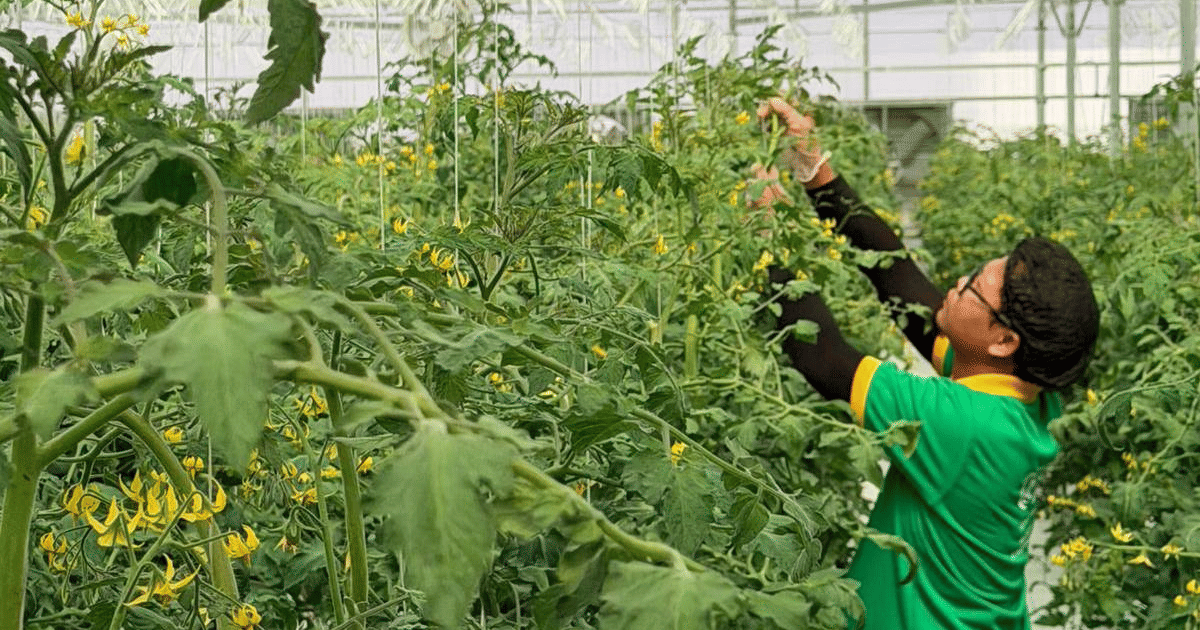
The article discusses UNS Farms’ success in controlled-environment agriculture, specifically with tomatoes, in the UAE. While 150,000 kilograms produced by a single facility may seem small at a national level, it represents a significant and efficient model for commercial scaling. The focus is on proving this model can be replicated across the country, highlighting the potential for commercial growth in controlled-environment agriculture within the UAE.
Key Points:
- UNS Farms has achieved notable success in growing tomatoes using controlled-environment agriculture in the UAE.
- The crop performs well in such environments, making it a strong candidate for commercial scaling.
- While 150,000 kilograms produced by a single facility is a small contribution nationally, it demonstrates a strong and efficient model.
- The importance lies in replicating this model across the country to address import gaps.
Actionable Takeaways:
-
Investment in Controlled-Environment Agriculture: Given the success of UNS Farms, there is a clear opportunity for further investment in controlled-environment agriculture in the UAE. This could lead to increased food security and reduced reliance on imports.
-
Replication of Successful Models: The article emphasizes the importance of replicating the successful model demonstrated by UNS Farms across the country. This suggests a strategic focus on scalable agricultural solutions that can be adapted to various regions within the UAE.
-
Focus on Efficiency and Replication: The emphasis on proving a model that can be replicated underscores the importance of efficiency in agricultural practices. Startups and investors in the travel and food sectors should consider how similar scalable models can be applied to other industries within the travel ecosystem.
Contextual Insights:
The success of UNS Farms in controlled-environment agriculture in the UAE reflects broader trends in agricultural technology and sustainability. As the world grapples with food security and environmental challenges, controlled-environment agriculture offers a promising solution. This aligns with the growing trend of integrating technology and sustainability in the travel industry, particularly in sectors like food tourism and eco-friendly travel experiences. The article also highlights the potential for startups and investors to capitalize on these innovations, suggesting a forward-looking perspective on the integration of technology in travel and agriculture.
Read the Complete Article.






