












Comprehensive Summarization:
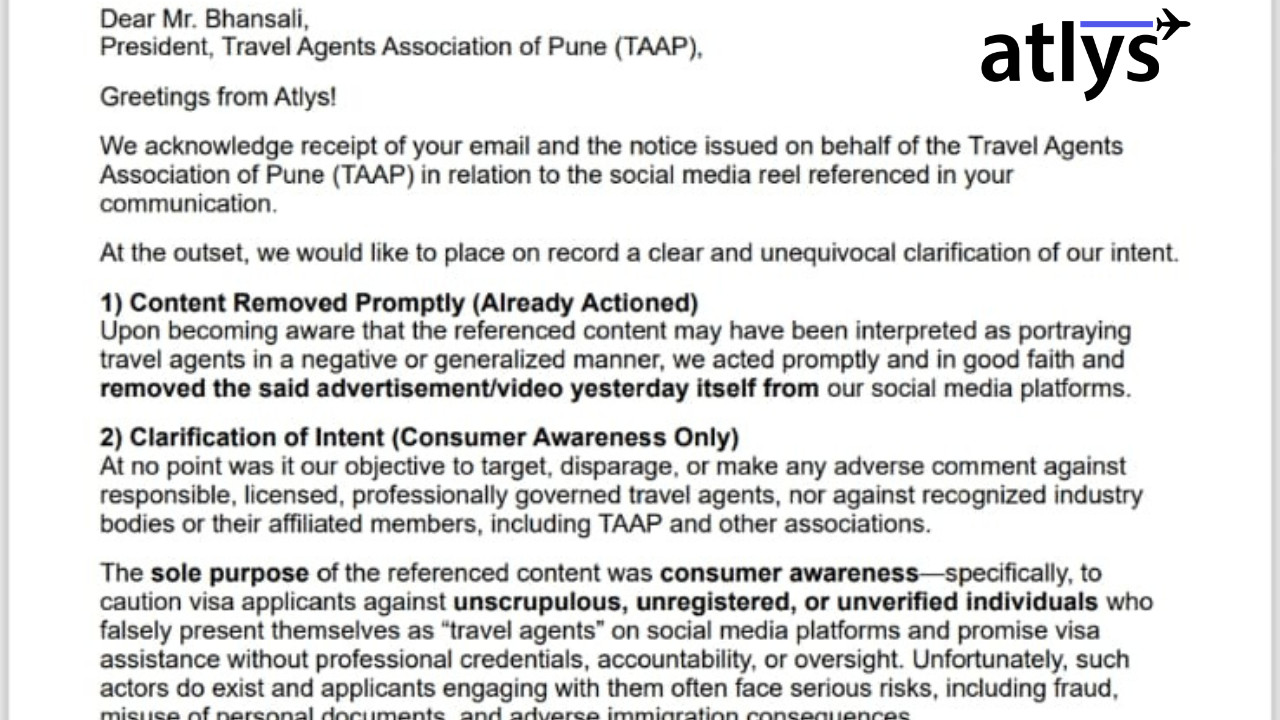
Atlys, a visa services company, has withdrawn a social media reel and issued a public apology after receiving objections from the Travel Agents Association of Pune (TAAP). The association alleged that the video unfairly portrayed travel agents in a negative and generalized manner. Atlys clarified that the content was never intended to target licensed, ethical, or professionally governed travel agents or recognized industry associations. The company stated that the advertisement was removed promptly from all social media platforms once the concern was brought to its attention. The sole intent of the content was consumer awareness, aimed at cautioning visa applicants against potential pitfalls.
Key Points:
- Atlys withdrew a social media reel and issued an apology following objections from TAAP.
- TAAP alleged that the video unfairly portrayed travel agents negatively.
- Atlys clarified that the content was not intended to target licensed travel agents or industry associations.
- The content was removed from social media platforms upon receiving the concern.
- Atlys stated that the intent was consumer awareness, cautioning visa applicants.
Actionable Takeaways:
-
Importance of Accurate Representation in Marketing: The incident highlights the critical need for travel-tech platforms to ensure their marketing content accurately represents industry stakeholders. Misrepresentation can lead to backlash and damage brand reputation. This takeaway is crucial for startups and established companies in the travel industry to avoid similar pitfalls.
-
Rapid Response to Feedback: Atlys’ swift action to remove the content upon receiving feedback demonstrates the importance of responsiveness in maintaining positive relationships with industry stakeholders. This takeaway underscores the value of proactive communication and customer-centric approaches in the travel tech sector.
Contextual Insights:
The incident reflects broader trends in the travel industry where trust and transparency are paramount. With increasing sensitivities among stakeholders, companies must navigate the fine line between marketing and misrepresentation. The rise of social media as a platform for both promotion and critique underscores the need for companies to be vigilant and responsive to feedback. Looking forward, this case serves as a reminder for travel startups and fintech innovations to prioritize ethical marketing practices and foster open communication channels with industry associations and professionals. This not only helps in building a positive brand image but also in fostering long-term trust and loyalty among stakeholders.
Read the Complete Article.



