












Comprehensive Summarization:
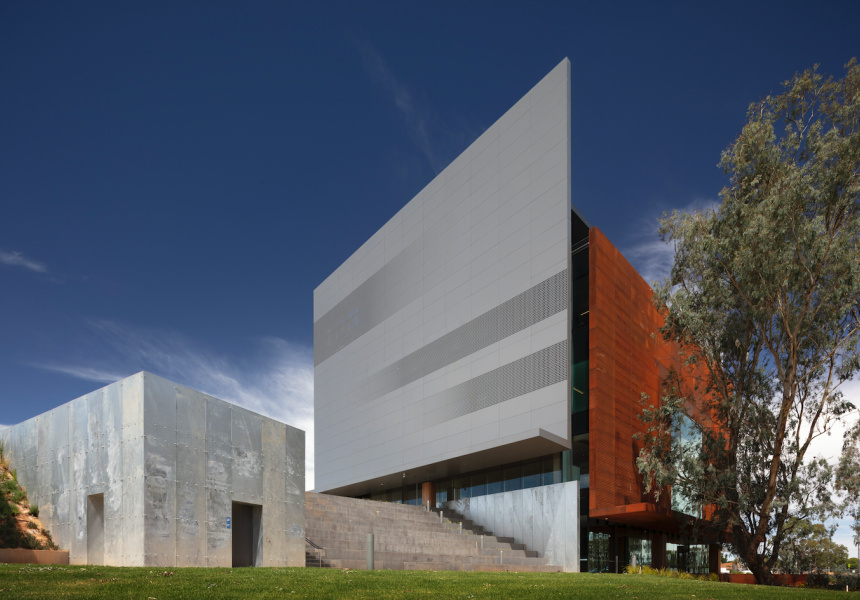
The article introduces the Shepparton Art Museum (SAM), a $50 million new development located around two hours’ drive from Melbourne, on the lands of the Yorta Yorta people. Designed by the renowned architects Denton Corker Marshall, SAM serves as the new home for the Shepparton Art Museum and Kaiela Arts, Shepparton’s local Aboriginal arts centre. The museum, known as SAM, features a striking cube-like structure with a rich, ochre-red facade, designed to harmonize with the surrounding red river gums and the river plain. According to Rebecca Coates, the outgoing artistic director and CEO of SAM, the building embodies hope and aspiration, offering a range of welcoming spaces for the public to meet, enjoy, and connect. The project, which also includes a visitor center, represents a significant investment in cultural and artistic development in the region.
Key Points:
- SAM is a $50 million new development located approximately two hours’ drive from Melbourne, on the lands of the Yorta Yorta people.
- Designed by Denton Corker Marshall, SAM serves as the new home for the Shepparton Art Museum and Kaiela Arts, Shepparton’s local Aboriginal arts centre.
- The museum features a distinctive cube-like structure with a rich, ochre-red facade, designed to blend with the surrounding natural environment.
- SAM is intended to embody hope and aspiration, offering a range of welcoming spaces for the public to connect and engage with art and culture.
- The project represents a significant investment in cultural and artistic development in the region.
Actionable Takeaways:
-
Investment in Cultural Infrastructure: The $50 million investment in SAM demonstrates a commitment to cultural and artistic development in the region. This type of investment can stimulate local economies, attract tourism, and enhance the quality of life for residents by providing access to cultural experiences. It highlights the importance of supporting local arts and cultural institutions in driving community development.
-
Integration of Indigenous Culture: By being located on the lands of the Yorta Yorta people and including Kaiela Arts as part of the museum, SAM exemplifies a commitment to integrating Indigenous culture into the cultural landscape. This approach not only enriches the cultural offerings of the museum but also promotes cultural awareness and respect. It sets a precedent for other cultural institutions to consider the inclusion of Indigenous perspectives and histories in their programming and design.
-
Design as a Cultural Statement: The cube-like structure with its ochre-red facade is designed to harmonize with the natural environment, reflecting a thoughtful approach to architecture that considers both cultural and environmental contexts. This design choice can influence future architectural projects in the region, encouraging a more sustainable and culturally sensitive approach to building design. It underscores the trend towards environmentally conscious and culturally resonant architectural solutions in the travel and tourism industry.
Contextual Insights:
The development of SAM reflects broader trends in the travel and cultural tourism industry, where there is an increasing emphasis on creating spaces that are not only aesthetically pleasing but also deeply connected to their cultural and environmental contexts. The use of local architects and the integration of Indigenous culture in the design and programming of SAM align with a growing movement towards culturally sensitive and sustainable tourism practices. This trend is supported by thought leaders in the industry who advocate for the importance of authentic cultural experiences in attracting and retaining visitors. As the travel industry continues to evolve, such projects serve as models for how cultural institutions can leverage modern architectural design to foster community engagement and economic growth. The focus on integrating Indigenous perspectives also aligns with the industry’s push towards inclusivity and diversity, ensuring that travel experiences are representative of the broader cultural tapestry of the regions they serve.
Read the Complete Article.



