












Article Summary:
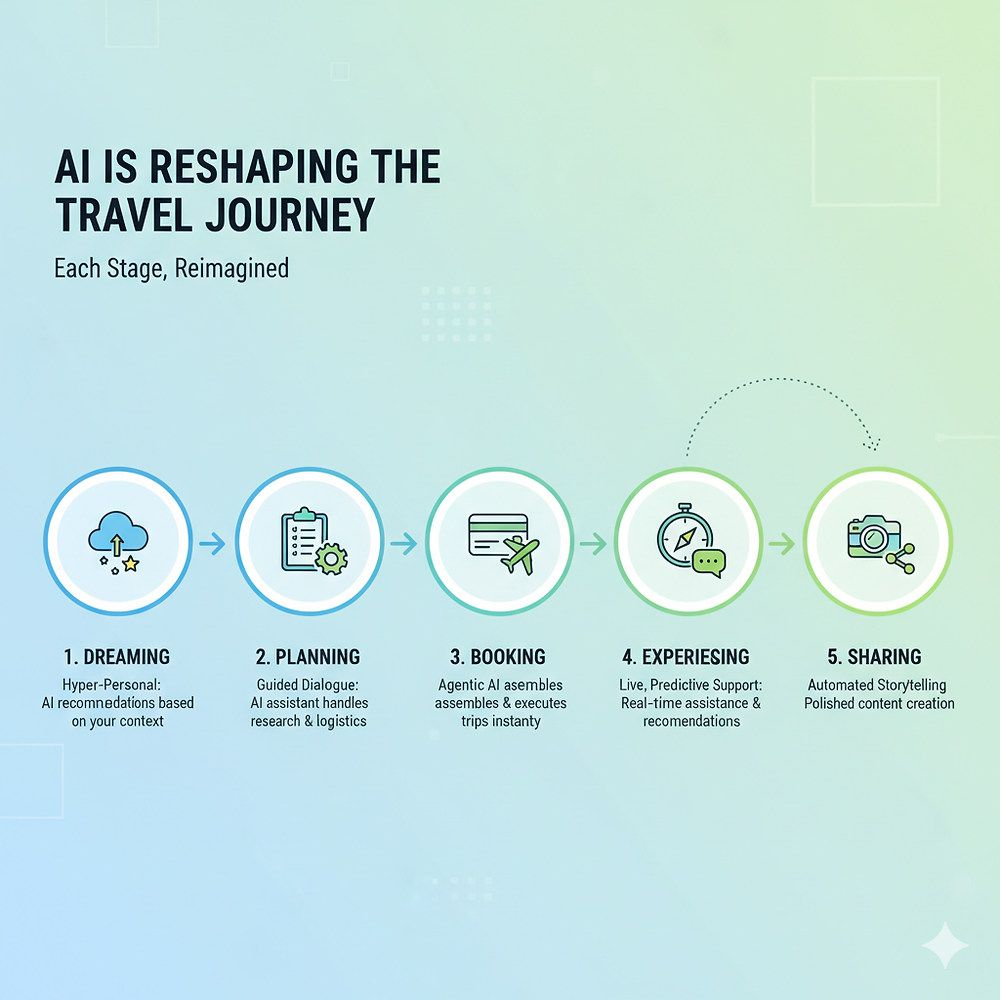
Google’s 5 Stages of Travel—Dreaming, Planning, Booking, Experiencing, and Sharing—are being significantly transformed by AI. This article outlines how AI is set to revolutionize each stage of the travel journey, making it more personalized, seamless, and interactive. The article emphasizes the shift from generic travel content to AI-curated recommendations based on individual preferences, real-time data, and comprehensive research across multiple platforms.
Key Points:
- Personalized Inspiration: AI will provide highly personalized and interactive travel inspiration, moving away from generic content to tailor-made recommendations based on user preferences, past trips, budget, and real-time signals like weather or events.
- Seamless Travel Journey: The traditionally fragmented travel stages will become more integrated and seamless. AI will handle extensive research across hundreds of travel sites, compare itineraries, and factor in real-time data to offer optimized travel plans.
- Interactive Travel Planning: The planning stage will evolve with AI-driven tools that offer interactive trip ideas, personalized suggestions, and real-time adjustments based on user input and changing conditions.
- Enhanced Travel Experiences: AI will enhance the travel experience by offering real-time insights, personalized recommendations, and interactive elements that adapt to user behavior and preferences.
- Dynamic Sharing and Feedback: Sharing travel experiences will become more dynamic, with AI facilitating real-time feedback, recommendations, and interactions among travelers, enhancing the overall sharing experience.
Actionable Takeaways:
- Leverage AI for Personalized Travel Recommendations: Travel companies should invest in AI-driven personalization tools to offer tailored travel recommendations. This will enhance customer satisfaction and engagement by providing unique, user-specific travel ideas based on individual preferences and past behavior.
- Integrate AI for Seamless Travel Planning: Develop AI systems that can aggregate and analyze data from multiple travel sources to offer seamless, integrated travel planning experiences. This will streamline the planning process, reduce decision fatigue, and provide users with optimized itineraries.
- Enhance Real-Time Travel Experiences: Implement AI technologies that can provide real-time insights and interactive elements during the travel experience. This could include dynamic itinerary adjustments, personalized recommendations based on real-time data, and interactive travel guides that adapt to user behavior and preferences.
- Focus on Seamless Sharing and Feedback Mechanisms: Develop AI-driven platforms that facilitate seamless sharing of travel experiences and real-time feedback among travelers. This will enhance the sharing aspect of travel, encourage user engagement, and provide valuable insights for continuous improvement of travel services.
Contextual Insights:
The article reflects the ongoing transformation of the travel industry, driven by rapid advancements in AI technology. As AI continues to reshape customer expectations and behaviors, travel companies must adapt to these changes to remain competitive. The shift towards personalized, seamless, and interactive travel experiences underscores the importance of integrating AI into every stage of the travel journey. This transformation not only enhances the user experience but also opens new opportunities for innovation in travel tech, startups, and fintech solutions. By embracing AI, travel companies can stay ahead of market trends, meet evolving customer demands, and unlock new avenues for growth and differentiation in the highly competitive travel sector.
Read the Complete Article.



