












Article Summary:
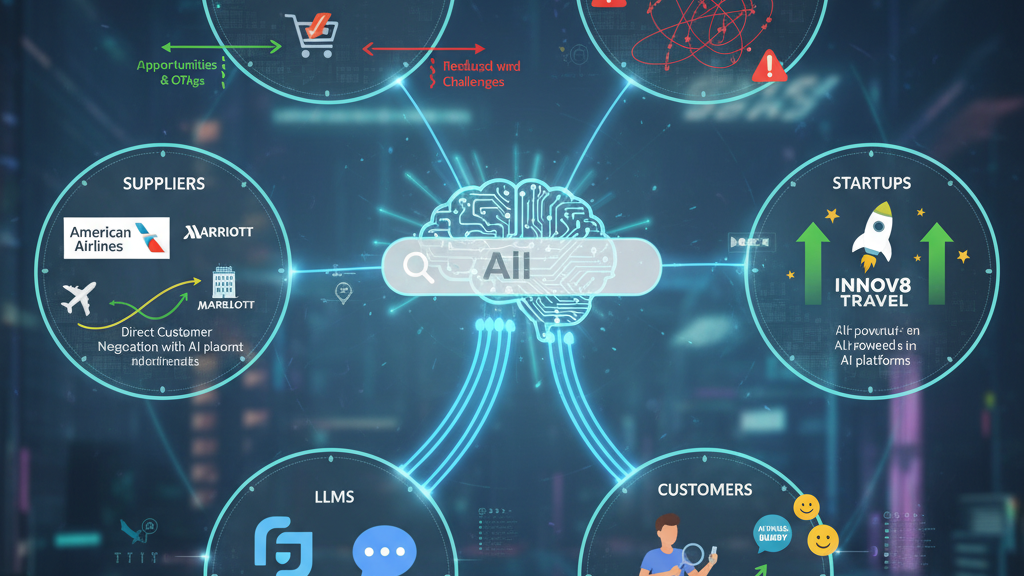
The article discusses the impending disruption in travel distribution due to the rapid advancement of AI search and discovery technologies, particularly focusing on Google’s evolving user experience (UX). It predicts that within a year, Google may undergo significant changes, potentially leading to a 30%, 50%, or higher decline in traffic for many travel websites. The article also explores the future landscape of AI agents and their potential impact on various sectors within the travel industry, including startups, fintech, and travel tech.
Key Points:
- The travel distribution sector is on the brink of a major disruption due to AI advancements, particularly in search and discovery technologies.
- Google’s user experience is expected to undergo substantial changes in the near future, which could significantly impact the traffic to travel websites.
- A majority of travel websites may experience declines in website traffic ranging from 30% to 50% or more due to these technological shifts.
- The future of AI agents and search technologies will determine the winners and losers in the travel industry.
- The article emphasizes the need for travel companies to adapt to these technological changes to remain competitive.
Actionable Takeaways:
- Adapt to AI-Driven Search: Travel companies must invest in AI-driven search and discovery technologies to maintain and improve their online visibility. This includes optimizing for AI search algorithms and ensuring their websites are compatible with future UX changes (e.g., Google’s potential UX overhaul).
- Focus on User Experience: Enhancing the user experience on travel websites will be crucial as AI technologies evolve. This includes improving site navigation, load times, and overall usability to retain user engagement in the face of potential traffic declines.
- Monitor and Leverage AI Innovations: Stay abreast of AI advancements in the travel sector, including new technologies and platforms that could offer competitive advantages. Early adoption of AI tools can position companies as leaders in the evolving travel landscape.
- Diversify Revenue Streams: Given the potential for significant traffic declines, travel businesses should explore diversifying their revenue streams. This could involve expanding into new markets, offering additional services (e.g., travel insurance, concierge services), or leveraging fintech innovations for payment solutions.
Contextual Insights:
The article reflects the ongoing transformation of the travel industry in response to technological advancements, particularly AI. As AI search and discovery technologies become more sophisticated, traditional distribution channels are at risk of being disrupted. Google’s evolving UX is a critical factor, as changes in search algorithms and UX design can significantly impact website traffic. The article highlights the importance of adaptability and innovation in navigating these changes. Travel companies must anticipate and prepare for potential traffic declines by enhancing their digital presence and exploring new technologies. The rise of AI agents also signals a shift in how consumers interact with travel services, necessitating a proactive approach to integrating AI into business models. Overall, the article underscores the necessity for the travel industry to remain agile and forward-thinking to thrive in an increasingly AI-driven environment.
Read the Complete Article.



