












Bangkok, Thailand — June 15, 2026
In short: Google Cloud introduces autonomous AI agents for personalized travel experiences.
Google Cloud AI Agents for Travel
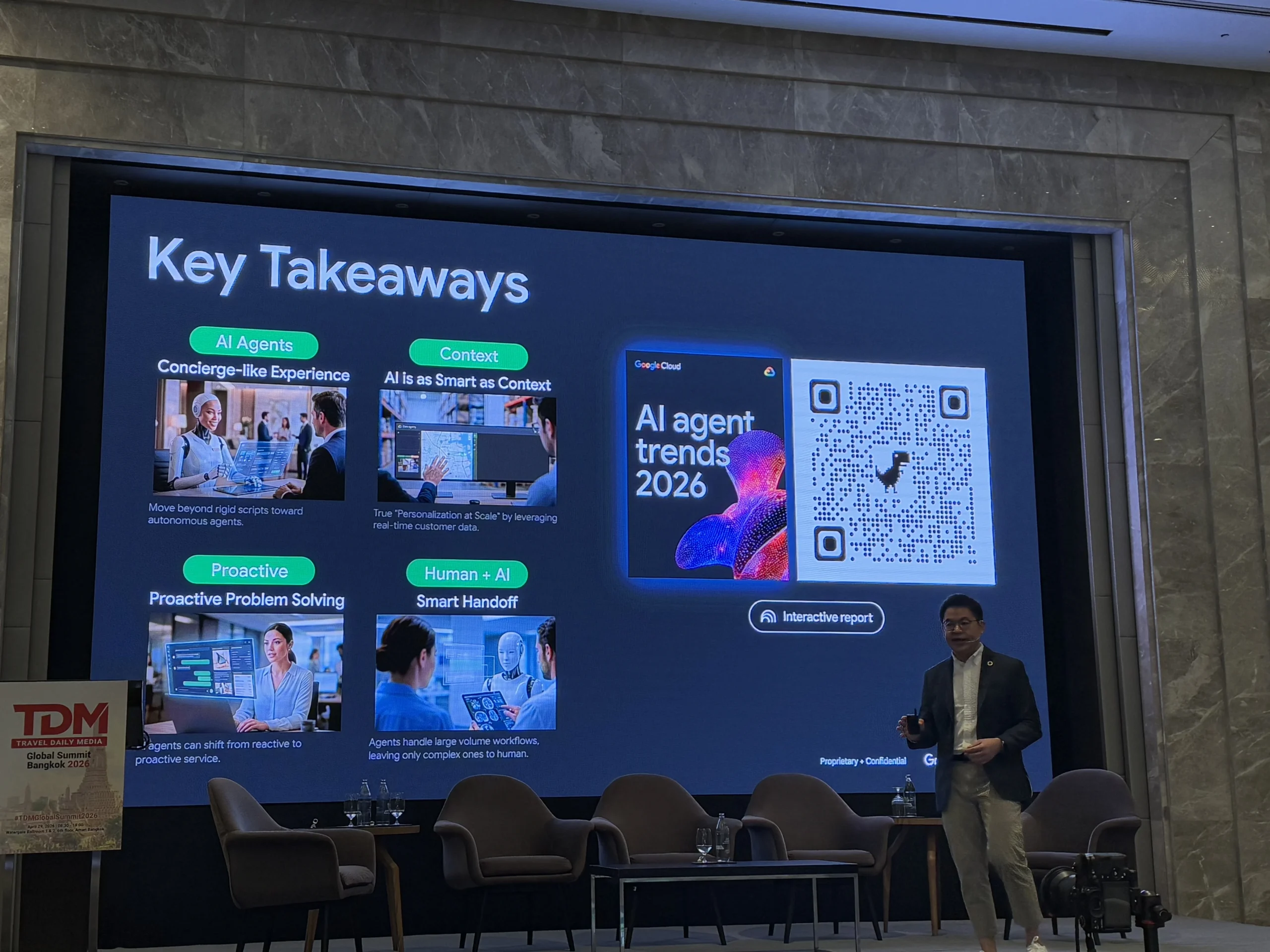
According to Ray Iramaneerat, AI Customer Engineer for Southeast Asia at Google Cloud, the company unveiled agentic AI capable of anticipating guest needs and executing tasks to deliver highly personalized travel experiences at scale. This marks a shift from traditional chatbots to intelligent agents that can make decisions and orchestrate seamless service.
Industry Context
Iramaneerat explained that this new AI capability represents a significant evolution from current AI applications in travel. While existing solutions focus on basic automation, Google Cloud’s agents are designed to proactively address guest requirements, a gap currently addressed by only a few forward-thinking travel management companies (TMCs) experimenting with similar technologies.
Key Details
- Product: Autonomous AI agents for travel service orchestration.
- Scope: Available to global travel service providers, with initial rollout in Southeast Asia.
- Timeline: Launch announced June 15, 2026, with beta access starting Q4 2026.
What Travel Professionals Should Know
TMCs managing corporate accounts in Southeast Asia should prepare for AI-driven personalization that anticipates client needs before they articulate them. This means integrating Google Cloud’s agents into existing workflows to automate itinerary adjustments, real-time issue resolution, and bespoke service recommendations, enhancing guest satisfaction and operational efficiency.
Frequently Asked Questions
What is Google Cloud’s AI agent system?
It is an autonomous AI platform that uses machine learning to predict guest preferences and execute actions to deliver customized travel experiences.
Which travel trade segments does this affect?
Primarily TMCs and large travel service providers operating in Southeast Asia, though the technology is scalable for global operations.
When does this take effect?
Beta access begins Q4 2026, with full rollout expected thereafter.
Read complete article.


