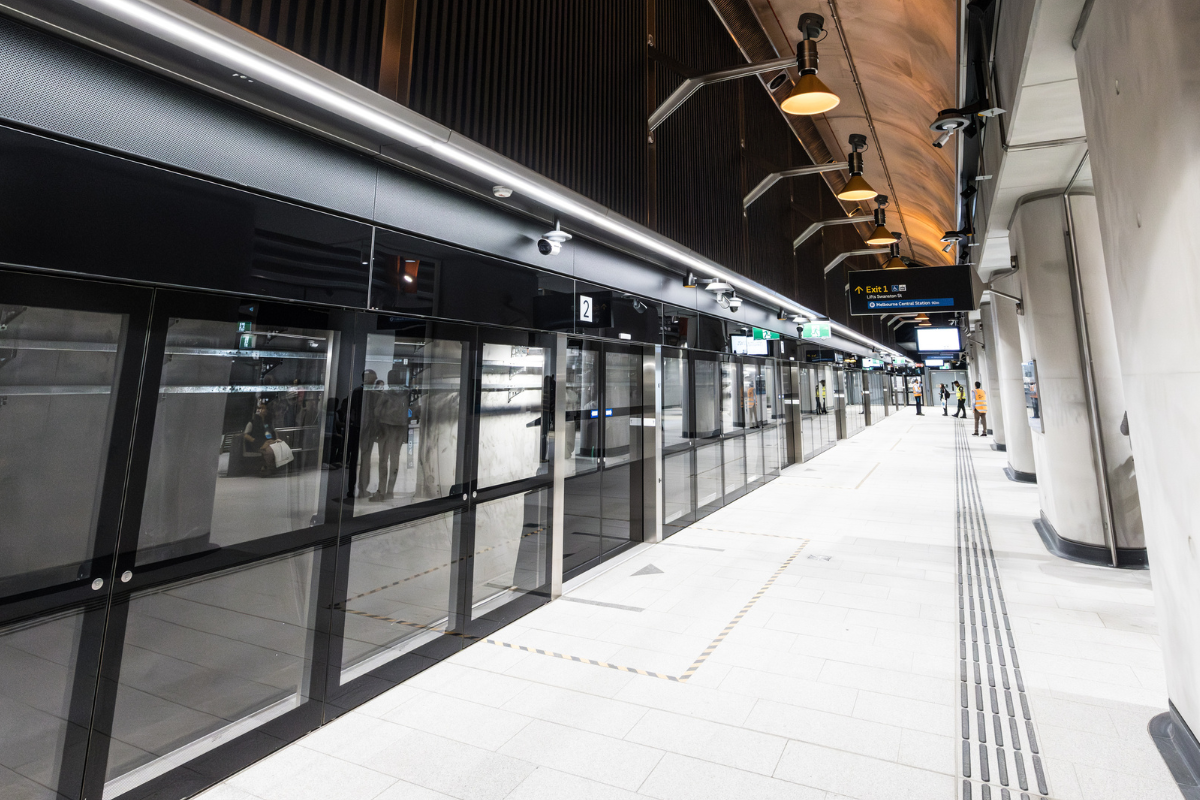














Article Summary:
The article discusses new technology being introduced at Metro Tunnel stations, aimed at easing peak-hour travel and enhancing commuter safety. Professor Andrew Butt from RMIT University explains that the introduction of such a new system necessitates changes in how people approach interchanges, reflecting broader global practices. The technology is intended to alter commuter attitudes towards these changes, potentially improving the overall travel experience during peak hours.
Key Points:
- New technology at Metro Tunnel stations is designed to ease peak-hour travel and improve safety.
- Professor Andrew Butt from RMIT University emphasizes the need for changing attitudes towards interchanging at new systems like the Metro Tunnel.
- The technology aims to alter commuter behavior and perceptions, facilitating smoother travel during peak times.
Actionable Takeaways:
- Enhanced Commuter Experience: Implementing new technology at Metro Tunnel stations can significantly improve the commuter experience during peak hours by reducing travel time and enhancing safety. This aligns with broader industry trends focusing on optimizing public transport systems to meet growing demand.
- Attitudinal Shifts: The introduction of new technology necessitates a shift in commuter attitudes towards interchanging and using new systems. Travel companies and transport authorities should focus on public education and awareness campaigns to facilitate this transition, ensuring a smoother adoption of new technologies.
- Innovation in Public Transport: The adoption of advanced technology in public transport systems, such as the Metro Tunnel, highlights a growing trend towards innovation in the travel industry. Companies should invest in research and development to stay ahead of technological advancements, potentially setting new standards for safety and efficiency in public transport.
Contextual Insights:
The introduction of new technology at Metro Tunnel stations reflects a broader industry trend towards enhancing commuter experiences through technological advancements. As urban populations continue to grow, the demand for efficient, safe, and reliable public transport systems is increasing. This article underscores the importance of not only technological innovation but also the need for changing public attitudes towards new systems. By focusing on both technological solutions and attitudinal shifts, the travel industry can better meet the evolving needs of commuters. Furthermore, the emphasis on changing interchanging attitudes aligns with global practices, suggesting that similar strategies could be effective in other metropolitan areas facing similar challenges. This forward-looking perspective suggests that continued investment in technology and public education will be crucial for the sustained growth and improvement of public transport systems.
Read the Complete Article.



