













Article Summary:
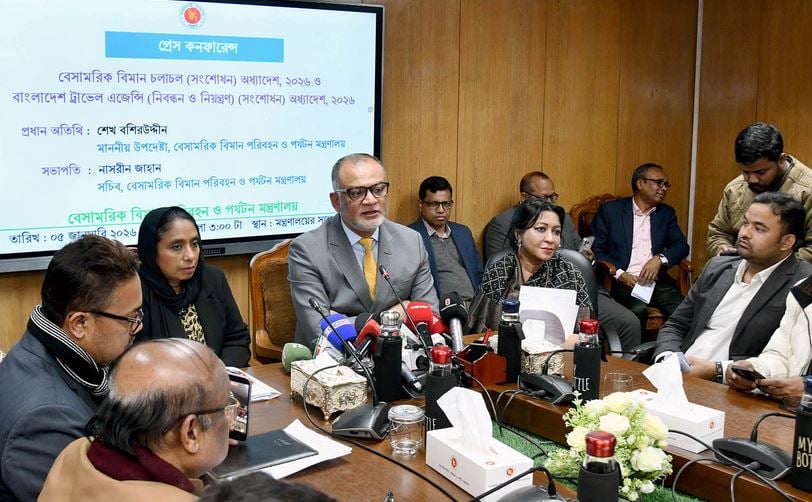
On January 5, 2026, Civil Aviation and Tourism Adviser Sheikh Bashir Uddin announced the promulgation of the new Travel Agency (Registration and Control) Ordinance, 2026, in Bangladesh. Speaking at a press conference, Uddin stated that this ordinance is designed to significantly curtail syndication and malpractice within the aviation ticketing business by complicating unethical processes. The new legal framework establishes a unified accountability structure encompassing airline operators, global distribution systems (GDS), new distribution capability (NDC), travel GSAs, and travel agents.
Key Points:
- The Travel Agency (Registration and Control) Ordinance, 2026, has been issued in Bangladesh.
- Its primary objective is to significantly reduce syndication and malpractice in the aviation ticketing business.
- The ordinance achieves this by making unethical practices more difficult to execute.
- It creates a single accountability structure that includes airline operators, Global Distribution Systems (GDS), New Distribution Capability (NDC) platforms, travel General Sales Agents (GSAs), and travel agents.
- Civil Aviation and Tourism Adviser Sheikh Bashir Uddin highlighted these developments at a press conference on January 5, 2026.
Actionable Takeaways:
- For Bangladeshi Travel Agencies and Aviation Stakeholders: Immediately review current operational procedures and business practices to ensure full compliance with the newly promulgated Travel Agency (Registration and Control) Ordinance, 2026. This is critical for avoiding penalties and adapting to the new “single accountability structure” which aims to eliminate unethical practices.
- For GDS and NDC Providers Operating in Bangladesh: Assess how existing platform functionalities and data sharing capabilities align with the ordinance’s requirements for a unified accountability structure. Proactive engagement to ensure seamless integration of compliance measures can support local partners and reinforce trust.
- For International Airlines and Tour Operators Partnering in Bangladesh: Understand the implications of the new ordinance on local partner operations and compliance. This regulatory shift may influence partnership agreements, due diligence processes, and the overall operational landscape, necessitating adapted strategies for market engagement.
Contextual Insights:
- Enhanced Industry Governance: This ordinance reflects a growing global trend, observed by thought leaders, towards stricter governance and regulatory oversight in the travel distribution sector. It aims to foster a more transparent and ethical marketplace, directly addressing issues of unfair competition and consumer exploitation that can undermine market confidence.
- Technological Integration in Regulation: By specifically naming GDS and NDC within the “single accountability structure,” the ordinance demonstrates an understanding of modern travel technology’s role in distribution. This suggests a forward-looking approach to regulation that seeks to integrate technological platforms into compliance frameworks, potentially influencing how travel tech providers design systems to support regulatory adherence.
- Combating Malpractice and Boosting Trust: The core aim of curbing syndication and malpractice aligns with broader industry calls from thought leaders for increased consumer protection and a level playing field. Such regulatory actions can enhance the reputation of the aviation sector, attract legitimate investment, and ultimately build greater trust among travelers, a critical factor for sustainable growth in the travel industry.
Read the Complete Article.


