












Comprehensive Summarization:
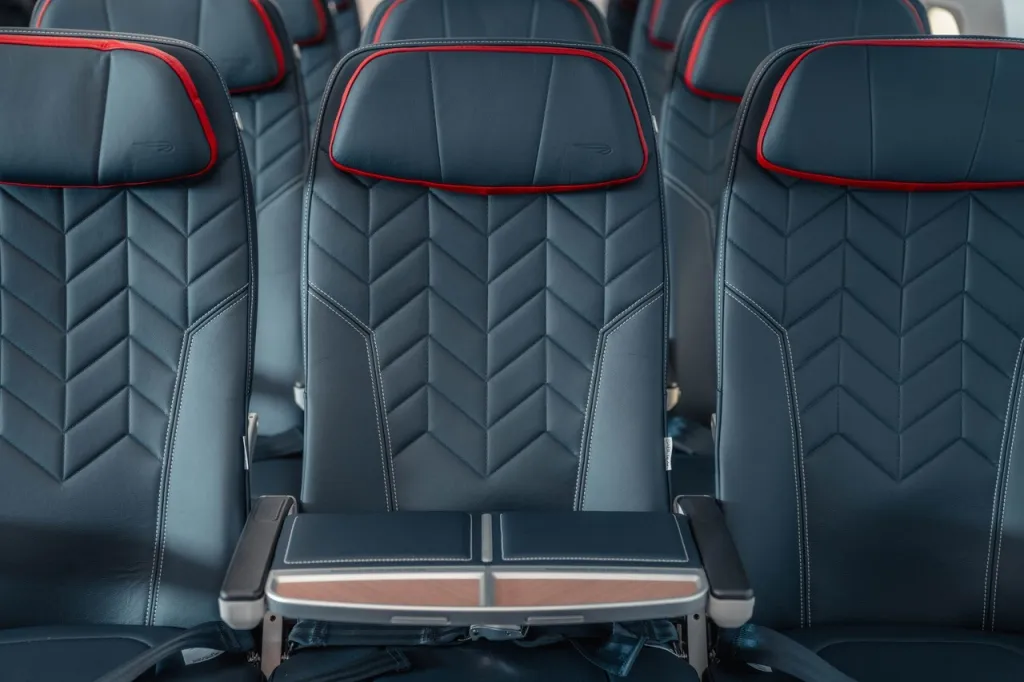
The article discusses the standard seating arrangement in short-haul business class across continental Europe, commonly referred to as “Eurobusiness.” This seating model involves standard economy seating with an empty adjacent seat to avoid neighbors, a policy that is widely adopted by network carriers in Europe. The article also highlights similar configurations in other regions, such as trans-Tasman routes by Air New Zealand and extra-space options by U.S. carriers like Frontier’s UpFront Plus. Low-cost airlines in Asia offer paid “space seat” concepts, indicating a trend towards more comfortable seating arrangements. The key differentiator in Europe is the normative adoption of this model, which is unapologetically branded and priced as a premium offering.
Key Points:
- The “Eurobusiness” seating model is standard across continental Europe, featuring a “no neighbor” policy.
- Similar configurations exist outside Europe, including trans-Tasman routes by Air New Zealand and extra-space options by U.S. carriers.
- Low-cost airlines in Asia offer paid “space seat” concepts, indicating a trend towards enhanced comfort.
- The normative adoption of the Eurobusiness model in Europe sets it apart from other regions.
Actionable Takeaways:
-
Adoption of Premium Seating Models: Airlines should consider adopting or enhancing premium seating models like Eurobusiness to cater to business travelers who prioritize comfort and privacy. This could involve blocking middle seats or offering similar configurations, potentially justifying higher pricing for these seats.
-
Regional Differentiation: Airlines operating in different regions should analyze and adapt seating models based on local market preferences. For instance, the success of paid “space seat” concepts in Asia suggests that similar innovations could be explored in other regions to meet diverse customer needs.
-
Innovation in Pricing and Packaging: There is an opportunity for airlines to innovate in pricing and packaging premium seating options. By offering flexible pricing structures or bundled services, airlines can attract a broader range of business travelers, including those who may not traditionally opt for business class but value enhanced comfort.
Contextual Insights:
The adoption of the Eurobusiness model in Europe reflects a broader trend in the travel industry towards enhancing passenger comfort and privacy, especially in short-haul flights where space is limited. This model aligns with the growing demand for more personalized and comfortable travel experiences, particularly among business travelers who value productivity and relaxation during flights. The article also highlights the trend of airlines experimenting with extra-space options, indicating a shift towards more premium offerings even in low-cost carriers. This trend is likely to continue as airlines seek to differentiate themselves in a competitive market. Furthermore, the article underscores the importance of regional differentiation in seating models, suggesting that airlines should tailor their offerings to meet the specific preferences and expectations of travelers in different markets. This contextual understanding positions airlines to leverage current industry trends and expert insights to enhance their service offerings and stay competitive.
Read the Complete Article.



