












Article Summary:
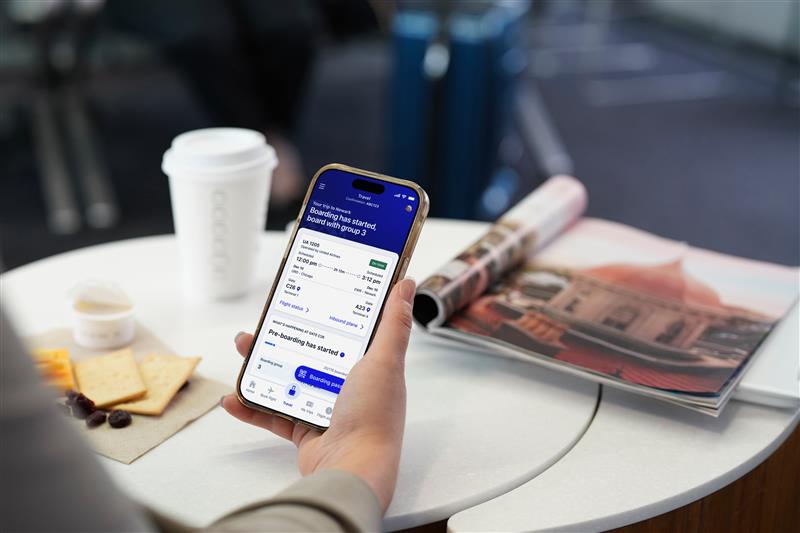
United Airlines has recently updated its mobile app with AI-driven navigation features, including Virtual Gate, a “closest and best” United Club tool, and a bag-tracking feature. These additions aim to transform the app into a comprehensive airport-level travel assistant, providing predictive navigation tools that guide travelers from check-in through arrival. The app prioritizes boarding status and gate details near departure, offers connection help during tight connections, and pushes live updates as customers land.
Key Points:
- United Airlines has introduced AI-driven navigation features in its mobile app to enhance the travel experience.
- Key features include Virtual Gate for locating the nearest United Club, a “closest and best” tool, and a bag-tracking feature.
- The app’s predictive navigation tools are designed to provide relevant information based on the traveler’s stage in the journey, from check-in to arrival.
- The focus is on improving the boarding process, managing tight connections, and providing live updates upon arrival.
Actionable Takeaways:
- Enhanced Travel Experience: The AI-driven navigation features in United Airlines’ app can significantly enhance the travel experience by providing real-time, context-specific assistance to passengers. This can lead to increased customer satisfaction and loyalty, as travelers benefit from personalized guidance throughout their journey.
- Integration of Predictive Technology: The app’s predictive navigation tools represent a forward-thinking approach to travel technology. By leveraging AI to anticipate traveler needs based on their journey stage, airlines can offer more efficient and tailored services. This innovation could set a benchmark for other airlines to follow, potentially driving a wave of technological advancements in the travel industry.
- Operational Efficiency: The inclusion of features like Virtual Gate and bag-tracking can streamline airport operations for airlines. By providing real-time information on gate locations and bag status, these features can reduce passenger stress and improve operational efficiency. This could lead to cost savings for airlines and a smoother travel experience for passengers.
Contextual Insights:
The introduction of AI-driven navigation features in United Airlines’ app aligns with the broader trend of digital transformation in the travel industry. As travelers increasingly rely on mobile apps for seamless journey management, airlines are under pressure to innovate and offer more integrated, user-friendly solutions. The use of AI to personalize travel assistance is a clear indication of this shift towards more intelligent, data-driven travel services.
Moreover, the focus on features like Virtual Gate and bag-tracking reflects the growing importance of operational efficiency in the travel sector. As airports become more crowded and travel demands more complex, airlines are seeking technological solutions to manage these challenges. The integration of predictive technology in travel apps not only enhances the passenger experience but also offers airlines a competitive edge by improving operational efficiency and customer satisfaction.
In the context of emerging travel trends, the emphasis on AI-driven navigation and predictive tools underscores the industry’s move towards more personalized and proactive travel services. This trend is likely to be further accelerated by advancements in machine learning and data analytics, which will enable airlines to offer even more tailored and efficient travel experiences. For startups and fintech companies operating in the travel sector, this presents an opportunity to develop complementary technologies that can enhance the capabilities of travel apps, such as real-time pricing tools, dynamic route optimization, and integrated payment solutions.
Read the Complete Article.



