












Comprehensive Summarization:
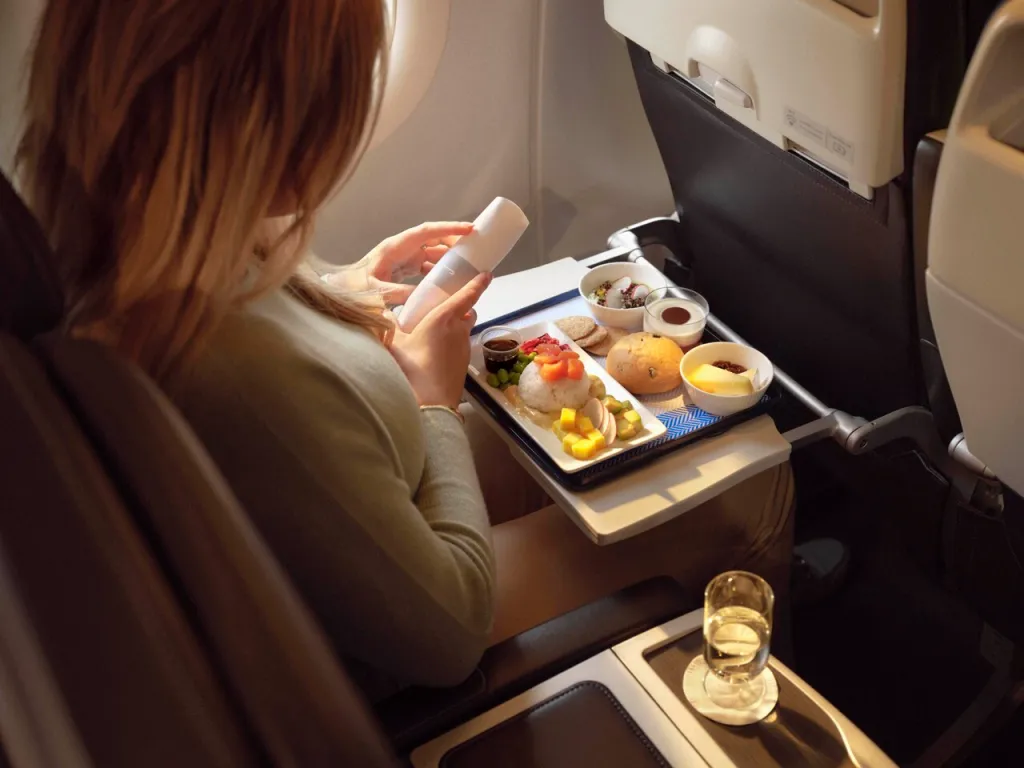
The article discusses the standardization of short-haul airline catering across Europe, where business class passengers typically receive a tray containing a main dish, dessert, and a bread roll with butter. This model is consistent and predictable, meeting passengers’ expectations for a snack rather than a full meal. The author suggests that while this approach ensures safety and satisfaction, it lacks the richness of a traditional meal. The piece also touches on broader travel industry trends, emphasizing the need for innovation and improvement in the dining experience to enhance passenger satisfaction and potentially differentiate airlines in a competitive market.
Key Points:
- Short-haul European airlines serve a standardized catering model for business class passengers, including a main dish, dessert, and bread roll with butter.
- The catering model is consistent across different sectors and aircraft capabilities, reflecting a convergence in service standards.
- The article argues that this standardized model, while safe and reliable, often falls short of providing a full meal experience, effectively functioning more as a snack.
- There is an implication that airlines could innovate beyond this standard to enhance the dining experience and potentially set themselves apart in a crowded market.
Actionable Takeaways:
-
Innovation in Airline Catering: Airlines should explore diversifying their catering offerings beyond the standard tray service to include more substantial meal options. This could involve incorporating locally sourced ingredients, offering a wider variety of desserts, or introducing interactive dining experiences. Such innovations could enhance passenger satisfaction, differentiate airlines in a competitive market, and potentially increase revenue through premium services.
-
Focus on Passenger Experience: There is a clear opportunity for airlines to invest in improving the dining experience, moving beyond the snack model to something more akin to a full meal. This could involve training staff to provide better service, using more appealing packaging, or even introducing themed dining options that cater to different cultural preferences. Such improvements could lead to higher passenger loyalty and positive word-of-mouth, which are crucial in the travel industry.
-
Adoption of Sustainable Practices: Given the increasing consumer preference for sustainability, airlines could adopt eco-friendly practices in their catering operations. This could include sourcing ingredients locally to reduce carbon footprint, using biodegradable packaging, or offering plant-based meal options. Such initiatives align with broader travel industry trends towards sustainability and could appeal to environmentally conscious travelers.
Contextual Understanding:
The article reflects the current trend in the travel industry towards standardization and efficiency, particularly in short-haul flights where operational constraints necessitate a streamlined service model. The emphasis on a consistent catering model across different airlines and routes highlights the industry’s focus on reliability and safety. However, the critique of this model as merely a snack rather than a meal points to a growing expectation among passengers for a more comprehensive dining experience. This aligns with broader industry trends where passenger experience is becoming a key differentiator. The article also touches on the potential for innovation in catering, which is a recurring theme in the travel sector as airlines seek to enhance their value proposition and compete on service quality.
Handling Different Article Types:
The article is a news brief that provides factual information about a specific aspect of the airline catering industry. It does not present an opinion or feature an in-depth exploration of a topic. Therefore, the analysis and takeaways are grounded strictly in the facts presented, focusing on the operational aspects of airline catering and the potential for innovation to enhance the passenger experience.
Read the Complete Article.



