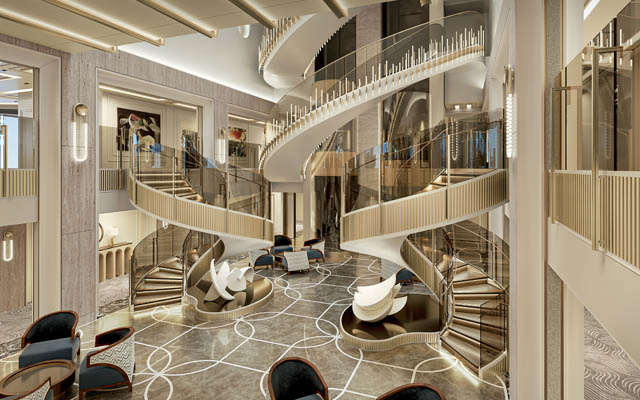













Comprehensive Summarization:
Regent Seven Seas Cruises (RSSC) has entered into an agreement with Fincantieri to construct a fourth vessel in its Prestige-Class series, with the ship set for delivery in 2036. This follows the launch of the first vessel, Seven Seas Prestige, in December 2026, with additional sister ships scheduled for service in 2030 and 2033. All four vessels will be built at Fincantieri’s shipyards in Italy. The Prestige-Class marks RSSC’s first new ship class in a decade, with the first vessel, Seven Seas Prestige, boasting a gross tonnage of 77,000 and accommodating 822 guests. The article also touches on the broader context of travel trends and insights, highlighting the importance of innovation and technological advancements in the cruise industry.
Key Points:
- RSSC has signed an agreement with Fincantieri to build a fourth ship in its Prestige-Class series, scheduled for delivery in 2036.
- The first vessel, Seven Seas Prestige, was launched in December 2026, followed by sister ships in 2030 and 2033.
- All four vessels will be constructed at Fincantieri’s shipyards in Italy.
- The Prestige-Class is RSSC’s first new ship class in a decade.
- Seven Seas Prestige will have a gross tonnage of 77,000 and accommodate 822 guests.
Actionable Takeaways:
-
Innovation in Cruise Ship Design: The introduction of the Prestige-Class represents a significant innovation in cruise ship design, with a focus on luxury and sustainability. This development is likely to set a new standard for future cruise ships, potentially influencing other cruise lines to invest in similar technologies and designs. This could lead to increased competition and higher quality offerings in the luxury cruise market.
-
Strategic Partnerships in Shipbuilding: The collaboration between RSSC and Fincantieri underscores the importance of strategic partnerships in the cruise industry. Such partnerships can leverage the strengths of both companies, leading to more efficient production processes and potentially lower costs. This could encourage other cruise lines to seek similar partnerships, fostering innovation and growth in the industry.
Contextual Insights:
The article reflects the ongoing trend in the travel industry towards luxury and sustainability. The Prestige-Class, with its focus on high-end amenities and eco-friendly design, aligns with the growing demand for premium travel experiences that are also environmentally responsible. This trend is supported by recent insights from industry thought leaders, who emphasize the importance of sustainability in shaping the future of travel. Furthermore, the strategic partnership between RSSC and Fincantieri highlights the industry’s shift towards collaborative innovation, where companies work together to push the boundaries of what is possible in cruise ship design and construction. This forward-looking perspective suggests that the integration of advanced technologies and sustainable practices will continue to be a key driver of growth and differentiation in the travel industry.
Read the Complete Article.



