






Sail Through Time: Discover the Timeless Wonders of Upper Egypt Aboard Kenzy Dahabeya
Experience the magic of the Nile aboard Kenzy Dahabeya, a luxury boutique sailing cruise that offers an unforgettable journey between...
Read moreDetails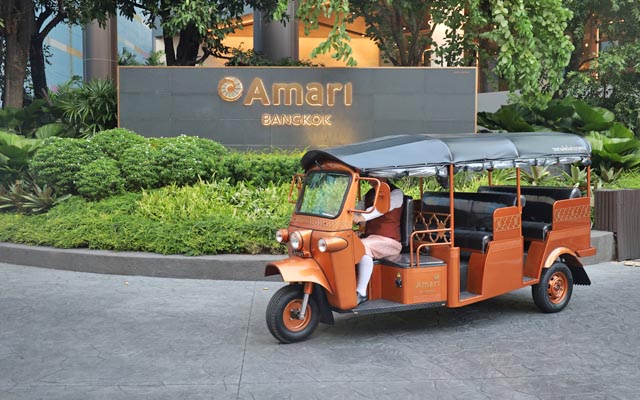
Guests at Amari Bangkok can enjoy the EV Tuk Tuk as part of their stay, adding a sustainable and distinctive dimension to their Bangkok visit
Article Summary:
Amari Bangkok, a property of the Onyx Hospitality Group, has introduced an Electric Vehicle (EV) Tuk-Tuk as part of its sustainable travel initiative. This modern version of Thailand’s traditional three-wheeler allows guests to explore popular Bangkok neighborhoods like Pratunam and Ratchaprasong in an eco-friendly manner. The EV Tuk-Tuk service offers convenient drop-offs at key city landmarks, including the Four Face Buddha, Siam Square, Bangkok Art and Culture Centre, and the Jim Thompson House. Each ride is guided by a city explorer who shares insights into Bangkok’s culture and hidden gems, aligning with Amari’s commitment to enhancing guest experiences while minimizing environmental impact.
Key Points:
Actionable Takeaways:
Contextual Insights:
The launch of the EV Tuk-Tuk by Amari Bangkok is reflective of broader industry trends towards sustainability and technological integration. Recent data indicates a significant shift in consumer preferences towards eco-friendly travel options, with a growing number of travelers seeking to minimize their environmental footprint. This trend is supported by thought leaders in the travel industry who emphasize the importance of sustainable practices in maintaining long-term market relevance and brand loyalty.
Moreover, the integration of technology, such as guided tours by city explorers, aligns with the broader adoption of digital experiences in travel. As highlighted by industry experts, the convergence of technology and travel is creating new opportunities for enhancing guest engagement and personalization. The EV Tuk-Tuk service not only showcases a commitment to sustainability but also leverages technology to offer a unique, educational, and memorable travel experience.
In the context of current market conditions, where environmental concerns and technological advancements are at the forefront, Amari Bangkok’s initiative serves as a forward-looking example. It underscores the importance of balancing environmental responsibility with innovative service offerings, a strategy that is likely to resonate with both travelers and industry stakeholders. As the travel industry continues to evolve, such initiatives will play a crucial role in shaping the future of sustainable tourism.
Read the Complete Article.
Experience the magic of the Nile aboard Kenzy Dahabeya, a luxury boutique sailing cruise that offers an unforgettable journey between...
Read moreDetails



