











Comprehensive Summarization:
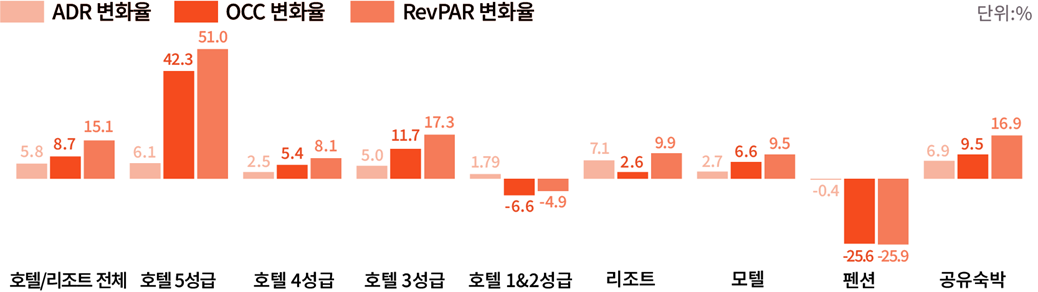
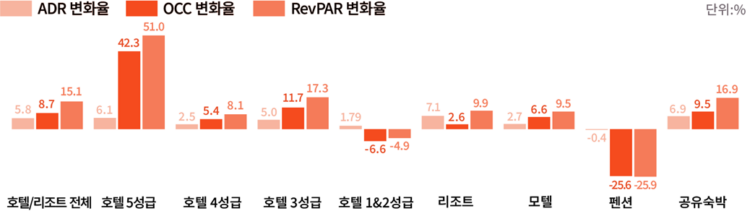
The article discusses the evolving landscape of the hotel and pension market in China, influenced by the “Korea-Japan-Ryeong” trend. It highlights an increase in the number of hotels and a decrease in the number of pensions. The demand for hotels and cities in China is rising due to this trend. The article also mentions that sales increased in places frequented by foreigners, while domestic accommodation markets, relying on domestic demand, showed a mixed recovery trend in the first quarter of 2026. Yanolja Research, a travel and tourism research institute, released a report analyzing the performance of hotels, motels, pensions, and shared accommodations, pointing out the demand after China’s “Korea-Ilryong.” The article concludes with a visual representation of room unit price (ADR), room share (OCC), and sales (RevPAR) compared to the same period in 2025, categorized by accommodation type.
Key Points:
- The hotel and pension market in China is experiencing significant changes, with an increase in hotel numbers and a decrease in pension numbers.
- The demand for hotels and cities in China is increasing due to the influence of the “Korea-Japan-Ryeong” trend.
- Sales in places frequented by foreigners have increased, while accommodation relying on domestic demand has slowed down.
- The domestic accommodation market showed an overall recovery trend in the first quarter of 2026, but the recovery was uneven depending on the type and region of accommodation.
- Yanolja Research released a report analyzing the performance of hotels, motels, pensions, and shared accommodations, pointing out the demand after China’s “Korea-Ilryong.”
Actionable Takeaways:
-
Market Diversification: The shift from pensions to hotels indicates a diversification in the accommodation market. Travel businesses should consider expanding their offerings to include hotels to capitalize on the rising demand, especially in cities influenced by the “Korea-Japan-Ryeong” trend.
-
Regional Variations in Recovery: The uneven recovery of the domestic accommodation market suggests that businesses should focus on regional analysis to identify areas with strong recovery potential. This targeted approach can help allocate resources more effectively and maximize returns.
-
Influence of Foreign Tourism: The increase in sales in foreign-frequented places highlights the importance of foreign tourism in the Chinese market. Businesses should enhance their strategies to attract and cater to foreign tourists, potentially through improved services, marketing, and partnerships with international travel agencies.
Contextual Insights:
The article reflects the current trends in the Chinese travel industry, where there is a noticeable shift from pensions to hotels. This trend is likely driven by changing consumer preferences and the growing influence of international tourism, particularly from Korea, Japan, and Ryeong. The data from Yanolja Research underscores the importance of regional analysis in understanding market dynamics, as recovery in the accommodation market is not uniform across all regions. This insight is crucial for travel businesses and startups looking to navigate the evolving landscape. Furthermore, the emphasis on foreign tourism suggests that there is a growing global interest in Chinese destinations, presenting opportunities for businesses to enhance their international appeal and service offerings.
Read the Complete Article.






