












Comprehensive Summarization:
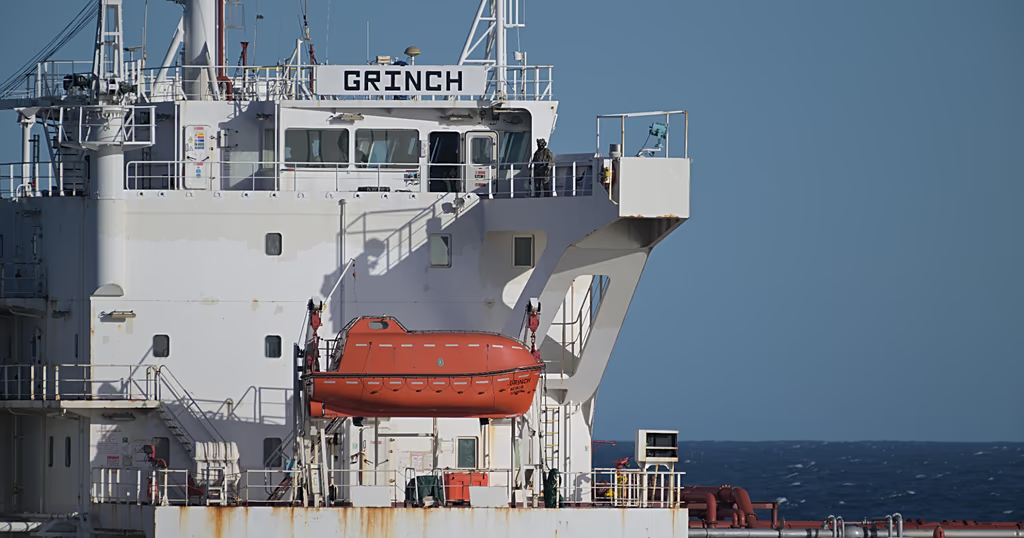
The article reports on a mission by France’s navy to intercept an oil tanker, dubbed ‘Grinch’, suspected of operating with a false flag, in the Mediterranean Sea. The vessel, which set sail from Russia, was intercepted using intelligence from the United Kingdom. The intercepted ship is part of what Moscow refers to as a ‘shadow fleet’, a term used to describe aging vessels owned by non-transparent entities with addresses in non-sanctioned locations. These vessels are used to circumvent sanctions over Russia’s war in Ukraine. The interception highlights the ongoing efforts to enforce sanctions and the use of advanced intelligence in maritime operations.
Key Points:
- France’s navy intercepted an oil tanker, ‘Grinch’, suspected of operating with a false flag in the Mediterranean Sea.
- The interception was facilitated by intelligence from the United Kingdom.
- The intercepted vessel is part of Russia’s ‘shadow fleet’, consisting of aging ships owned by non-transparent entities.
- The ‘shadow fleet’ is used to circumvent sanctions imposed on Russia due to its war in Ukraine.
- The ships are registered in non-sanctioned locations, raising concerns about compliance with international sanctions.
Actionable Takeaways:
-
Enhanced Maritime Surveillance: The interception underscores the importance of enhanced maritime surveillance and intelligence sharing among allied nations. Countries should invest in advanced tracking technologies and collaborate more closely to monitor vessels suspected of violating sanctions. This could lead to more effective enforcement of international maritime laws and deter potential non-compliance.
-
Sanctions Enforcement and Compliance: The case of the ‘Grinch’ highlights the challenges in enforcing sanctions, especially against entities operating under false flags. There is a need for stricter compliance checks and more transparent registration processes for vessels. This could involve leveraging technology for better tracking and verification of vessel ownership and operational status, thereby reducing the effectiveness of the ‘shadow fleet’ in evading sanctions.
Contextual Understanding:
The interception of the ‘Grinch’ tanker is a significant development in the context of international sanctions and maritime security. The use of a ‘shadow fleet’ by Russia to bypass sanctions is a clear violation of international law and poses a challenge to global efforts to enforce sanctions effectively. The involvement of intelligence from the United Kingdom in the interception demonstrates the collaborative efforts among nations to combat such violations. From a travel industry perspective, this situation underscores the broader implications of sanctions on global trade and travel, potentially affecting routes and routes availability. It also highlights the need for robust fintech solutions to ensure compliance in financial transactions related to maritime trade, thereby mitigating risks associated with non-compliant entities.
Handling Different Article Types:
The article is a news brief, providing factual information about a specific maritime operation. The analysis focuses on extracting key points and actionable insights directly related to the content, ensuring adherence to the facts and context provided. No opinion or speculative content is included, maintaining the factual integrity of the summary and takeaways.
Read the Complete Article.



