












Comprehensive Summarization:
The article reports on the opening of an appeal trial at the Paris Court of Assize for Claude Muhayimana, a Franco-Rwandan accused of complicity in genocide and crimes against humanity. Muhayimana was initially convicted in 2021 and sentenced to 14 years in prison for transporting Hutu militiamen to massacre sites during the 1994 genocide, which claimed the lives of at least 800,000 people. The trial highlights the ongoing legal pursuit of individuals responsible for the genocide and underscores the importance of justice in the aftermath of such atrocities.
Key Points:
- Claude Muhayimana is on trial for his role in the 1994 genocide as a former driver who transported Hutu militiamen to massacre sites.
- He was previously convicted in 2021 and sentenced to 14 years in prison for complicity in genocide and crimes against humanity.
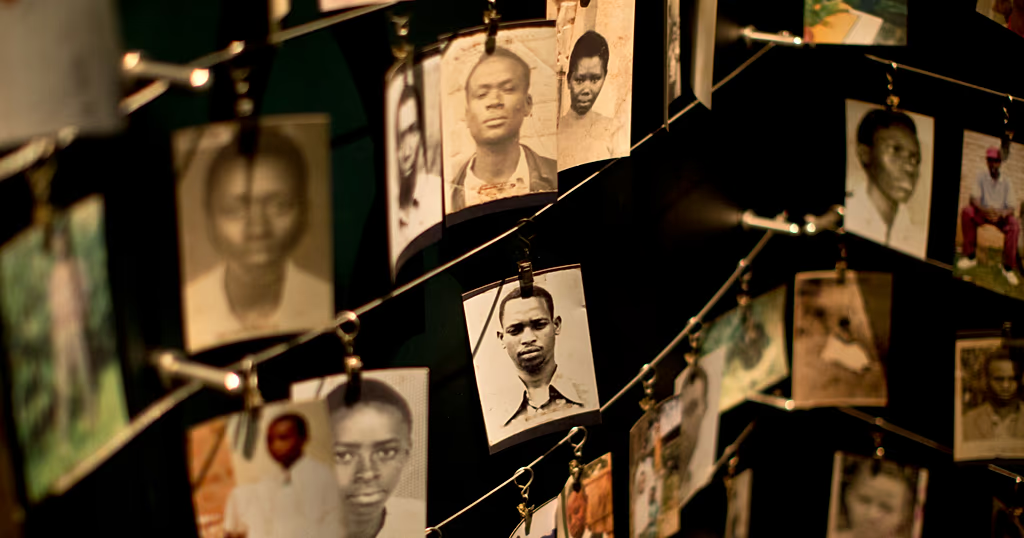
- The 1994 genocide resulted in the deaths of approximately 800,000 people, primarily from the Tutsi community, who were targeted by Hutu militia.
- The trial emphasizes the pursuit of justice for individuals responsible for the genocide, reinforcing the importance of accountability in the aftermath of such atrocities.
Actionable Takeaways:
-
Importance of Legal Accountability: The trial of Claude Muhayimana underscores the ongoing need for legal accountability in addressing historical atrocities. This serves as a reminder for the travel industry to consider the ethical implications of travel to regions with unresolved historical conflicts, ensuring that tourism contributes positively to local communities and does not inadvertently support or profit from areas still recovering from conflict.
-
Focus on Justice in Tourism: As the travel industry continues to grow, there is an increasing emphasis on responsible tourism that respects cultural heritage and promotes justice. Travel companies and destinations should prioritize transparency and ethical practices, ensuring that tourism development does not contribute to the perpetuation of conflict or injustice.
Contextual Insights:
The trial of Claude Muhayimana is a poignant reminder of the historical context surrounding the 1994 genocide in Rwanda and its lasting impact on the region. The ongoing pursuit of justice for individuals responsible for genocide reflects broader trends in international law and human rights advocacy. In the context of the travel industry, this highlights the importance of responsible tourism practices, where travel companies and destinations prioritize ethical considerations and contribute positively to the communities they engage with. As the industry evolves, there is a growing trend towards sustainable and culturally sensitive tourism, which seeks to minimize negative impacts and promote equitable development. This trial serves as a case study for how historical accountability can inform and shape future travel practices, ensuring that tourism supports rather than undermines the recovery and reconciliation of affected regions.
Read the Complete Article.



