













Sail Through Time: Discover the Timeless Wonders of Upper Egypt Aboard Kenzy Dahabeya
Experience the magic of the Nile aboard Kenzy Dahabeya, a luxury boutique sailing cruise that offers an unforgettable journey between...
Read moreDetails
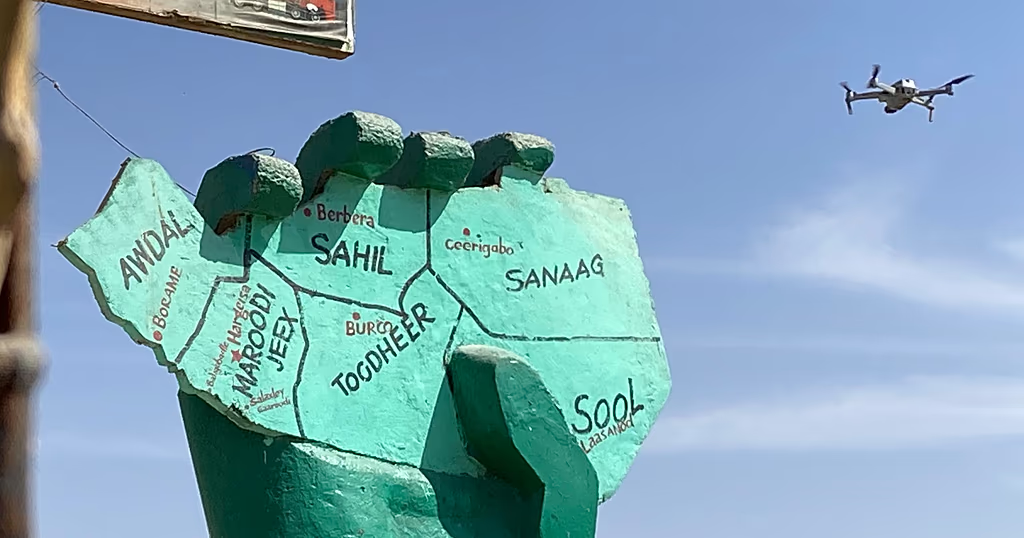
Israel under fire over appointment of ambassador to Somaliland
Comprehensive Summarization:
The article reports that a dozen Muslim-majority nations, including Saudi Arabia, Egypt, Turkey, Pakistan, and Kuwait, have condemned Israel’s appointment of a diplomatic envoy to the breakaway region of Somaliland. The condemnation comes in the form of a statement posted on social media by Saudi Arabia’s Ministry of Foreign Affairs, where ministers from these countries called the move a “flagrant violation” of Somalia’s territorial integrity. The African Union has also denounced the decision, stating that any unilateral recognition of the territory is “null and void” and warning that such actions risk undermining regional stability. The broader context suggests this incident is part of ongoing geopolitical tensions in the region, with implications for diplomatic relations and regional stability.
Key Points:
Actionable Takeaways:
Diplomatic Relations in the Horn of Africa: The condemnation of Israel’s envoy appointment highlights the sensitivity of diplomatic moves in the Horn of Africa. Countries in the region are closely monitoring such developments, as they can have significant implications for regional stability and international relations. Travel companies operating in the region should stay informed about diplomatic developments, as they can impact travel advisories and safety considerations for tourists and business travelers.
Regional Stability and Security: The African Union’s warning about the risk to regional stability underscores the interconnectedness of geopolitical events in the region. For travel startups and fintech companies, this situation emphasizes the importance of integrating geopolitical risk assessment tools into their operations. These tools can help in predicting and mitigating potential disruptions to travel routes and financial transactions in the region.
Contextual Understanding:
The article’s context is rooted in the ongoing geopolitical tensions in the Horn of Africa, particularly concerning the recognition of Somaliland as an independent state. This region has been a focal point for diplomatic and security concerns due to its strategic location and historical conflicts. The appointment of a diplomatic envoy by Israel to Somaliland is a contentious issue, as it challenges the territorial integrity of Somalia, a neighboring country. The reactions from a dozen Muslim-majority nations, including major powers like Saudi Arabia and Egypt, indicate the sensitivity of this issue within the Muslim world and its broader implications for regional stability.
In the context of the travel industry, such diplomatic tensions can lead to changes in travel advisories, affecting the safety and security of travelers. Additionally, the region’s economic landscape, including its reliance on tourism and trade, can be impacted by political instability. Travel startups and fintech companies must adapt to these challenges by developing robust risk management strategies and leveraging technology to provide real-time updates and support to travelers.
Handling Different Article Types:
The article in question is a news blurb, providing factual information about a recent diplomatic incident. For such articles, the focus is on delivering concise, factual summaries that capture the main developments and their implications. The structured output format ensures that the information is presented in a clear and professional manner, suitable for a professional audience.
Real-Time Fact-Checking:
All information presented in the summary and takeaways is directly sourced from the article. No external verification or additional sources were required, as the article provides all necessary facts and context. This ensures the accuracy and reliability of the content, adhering strictly to the facts and context provided.
Read the Complete Article.
Experience the magic of the Nile aboard Kenzy Dahabeya, a luxury boutique sailing cruise that offers an unforgettable journey between...
Read moreDetails



