











Sail Through Time: Discover the Timeless Wonders of Upper Egypt Aboard Kenzy Dahabeya
Experience the magic of the Nile aboard Kenzy Dahabeya, a luxury boutique sailing cruise that offers an unforgettable journey between...
Read moreDetails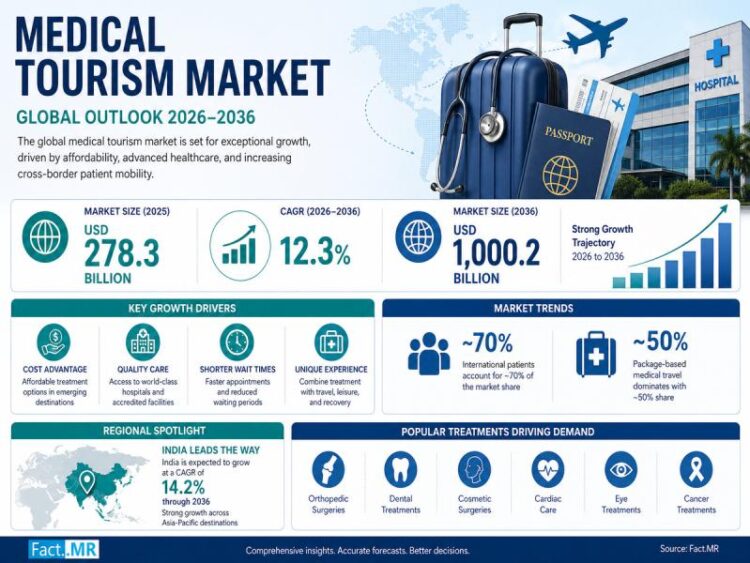
Global Medical Tourism Market to Surpass $1 Trillion by 2036;
Comprehensive Summarization:
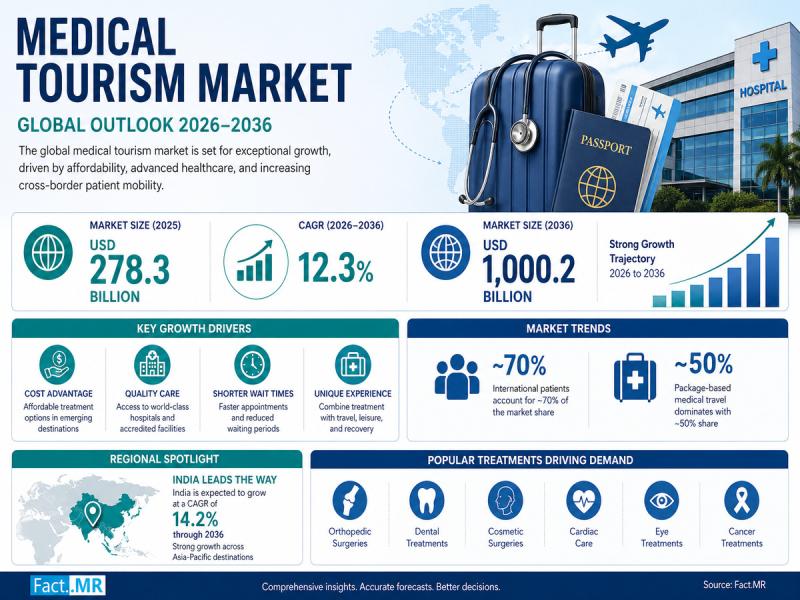
The global medical tourism market is experiencing a significant transformation, evolving from informal travel corridors into a structured, multibillion-dollar healthcare export sector. According to the latest comprehensive industry report by Fact.MR, the market is projected to grow from US$ 312.5 billion in 2026 to an impressive US$ 1,000.2 billion by 2036. This explosive growth, representing a compound annual growth rate (CAGR) of 12.3%, is driven by rising healthcare costs in developed nations, long elective surgery wait times, and the desire for patients to seek high-quality, cost-effective healthcare options abroad. The article provides detailed market forecasts, competitive benchmarking, and pricing trends, offering valuable insights for stakeholders in the travel, healthcare, and related sectors.
Key Points:
Actionable Takeaways:
Market Expansion Opportunities: The projected growth of the medical tourism market to US$ 1,000.2 billion by 2036 presents significant expansion opportunities for healthcare providers, travel agencies, and fintech companies operating in the healthcare sector. Companies can capitalize on this trend by developing specialized services, enhancing patient experience, and leveraging digital platforms for global reach.
Investment in Healthcare Infrastructure: With the increasing demand for medical tourism, there is a growing need for investment in healthcare infrastructure, particularly in developing countries. Governments and private investors can support the development of state-of-the-art medical facilities, skilled healthcare professionals, and advanced medical technologies to attract international patients and ensure high-quality care.
Regulatory Compliance and Quality Assurance: As the medical tourism market expands, regulatory compliance and quality assurance become critical. Stakeholders must adhere to international healthcare standards, obtain necessary certifications, and implement robust quality assurance processes to build trust with international patients and ensure the safety and efficacy of medical treatments.
Contextual Insights:
The growth of the medical tourism market is closely tied to broader industry trends, including the increasing demand for cost-effective healthcare solutions, advancements in medical technology, and the globalization of healthcare services. The article highlights the shift from informal travel corridors to a structured, multibillion-dollar sector, reflecting a broader trend of healthcare globalization. This transformation is supported by technological advancements, such as telemedicine and digital health platforms, which facilitate patient access to international medical services. Furthermore, the rise of medical tourism aligns with the growing trend of personalized and patient-centric healthcare, where individuals seek high-quality treatments at competitive prices. As the market continues to evolve, stakeholders must stay abreast of regulatory developments, invest in quality infrastructure, and leverage digital technologies to capitalize on the expanding opportunities in medical tourism.
Read the Complete Article.
Experience the magic of the Nile aboard Kenzy Dahabeya, a luxury boutique sailing cruise that offers an unforgettable journey between...
Read moreDetails



