












Article Summary:
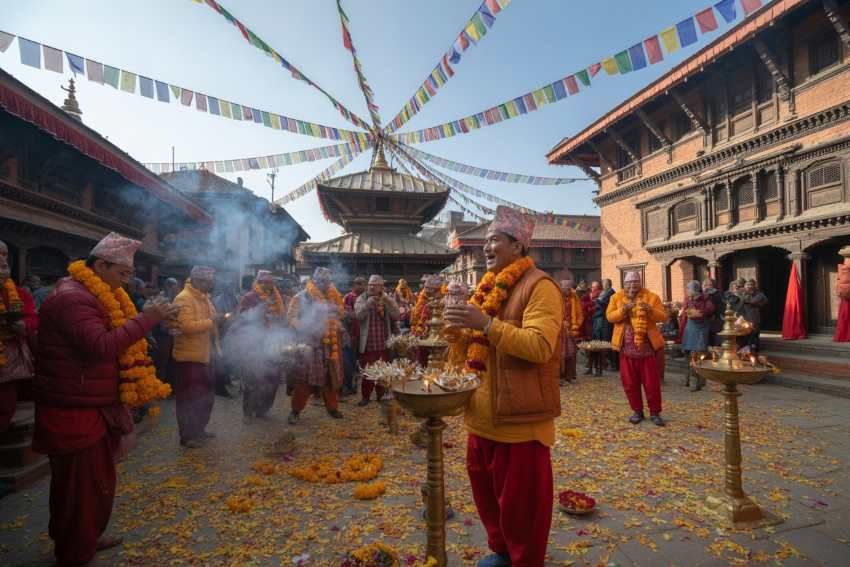
The Sakela festival, a vibrant celebration of the Kirat Rai community in Nepal, showcases a rich cultural tapestry rooted in spiritual traditions, ancestral respect, and nature-centered beliefs. Celebrated twice a year—Ubhauli in spring and Udhauli in winter—the festival, with its winter edition Udhauli recently beginning in Gaighat, the headquarters of Udayapur, is one of the oldest surviving cultural traditions in the region. This article provides an inside look at the festival’s cultural depth, rituals, tourism impact, and growing appeal for the Kirat Rai community.
Key Points:
- The Sakela festival is a significant cultural celebration of the Kirat Rai community in Nepal, reflecting deep-rooted spiritual traditions and ancestral respect.
- The festival is celebrated twice a year—Ubhauli in spring and Udhauli in winter, with the winter edition, Udhauli, recently beginning in Gaighat, Udayapur.
- Udhauli, the winter edition of the festival, is drawing communities from across the Kirat heartland, indicating a growing tourism appeal for the Kirat Rai community.
- The festival stands as one of the oldest surviving cultural traditions in the region, highlighting its historical significance and enduring appeal.
Actionable Takeaways:
-
Cultural Tourism Growth: The increasing interest in the Udhauli edition of the Sakela festival suggests a growing market for cultural tourism in Nepal. Travel agencies and tour operators could capitalize on this trend by developing specialized packages that highlight the festival’s unique cultural and spiritual aspects, potentially boosting local economies in regions like Udayapur.
-
Community Engagement and Economic Development: The festival’s growing appeal indicates a strong community interest in preserving and promoting their cultural heritage. Local communities can leverage this interest to engage in sustainable tourism practices, which can lead to economic development and job creation in the region. This could also encourage further investment in infrastructure and services that support tourism, benefiting the broader local economy.
Contextual Insights:
The Sakela festival’s resurgence and growing appeal for the Kirat Rai community reflect broader trends in cultural tourism, where there is a heightened interest in authentic, culturally rich experiences. This aligns with the current travel industry’s shift towards experiential travel, where tourists seek immersive and meaningful experiences over mere sightseeing. The festival’s focus on spiritual traditions, ancestral respect, and nature-centered beliefs resonates with this trend, offering tourists a deeper understanding of the Kirat Rai community’s way of life.
Moreover, the festival’s growing tourism appeal underscores the importance of preserving and promoting cultural heritage in the travel industry. As more tourists seek out unique and culturally significant experiences, destinations that can offer such experiences stand to benefit. This presents an opportunity for travel startups and fintech companies to innovate in areas such as cultural tourism packages, digital ticketing, and community-based tourism platforms, thereby tapping into the growing demand for authentic travel experiences.
In conclusion, the Sakela festival exemplifies the intersection of cultural heritage, tourism, and economic development. By capitalizing on the festival’s growing appeal, stakeholders in the travel industry can not only enhance the cultural experience for tourists but also contribute to the sustainable development of the Kirat Rai community and the broader region.
Read the Complete Article.



