











Comprehensive Summarization:
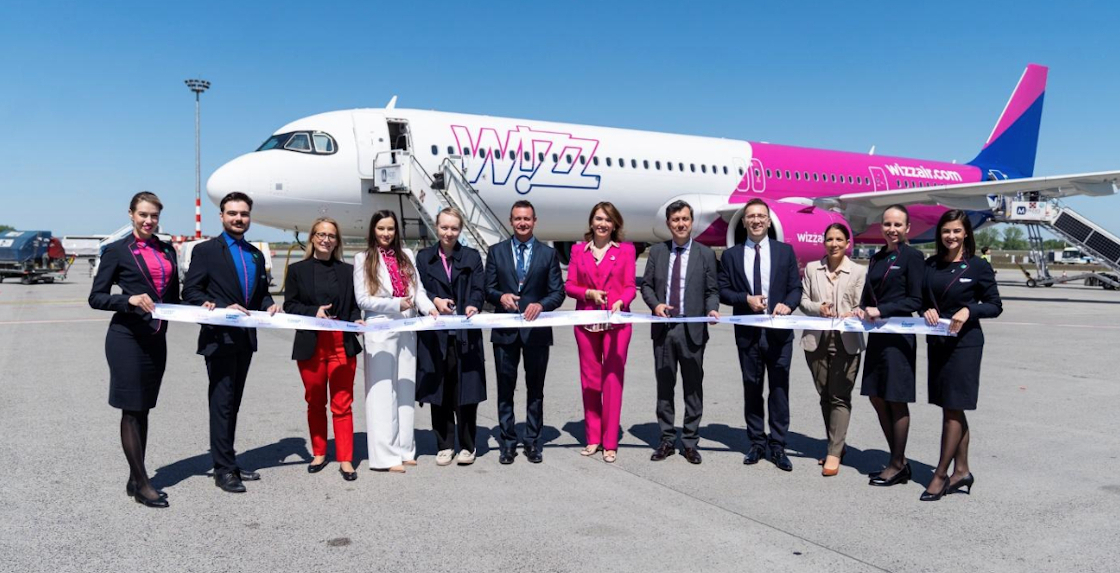
Budapest Airport, operated by VINCI Airports, has announced the launch of Wizz Air’s new service connecting Budapest to Ankara, Turkey. This marks the first direct link between the Hungarian capital and Türkiye, expanding the airport’s Turkish network alongside existing routes to Antalya, Istanbul, and Izmir. The new route is expected to contribute to over 300,000 seats in 2026, significantly boosting the airport’s capacity to Türkiye to 900,000 annual seats. This development underscores the growing connectivity between Central Europe and Türkiye, potentially opening new opportunities for tourism, business, and cultural exchanges.
Key Points:
- Wizz Air’s new service from Budapest to Ankara represents the first direct flight between Hungary and Türkiye.
- The new route is set to increase Budapest Airport’s annual seat capacity to 900,000 for Türkiye.
- The expansion of the Turkish network includes existing connections to Antalya, Istanbul, and Izmir.
- The launch is part of VINCI Airports’ ongoing efforts to enhance connectivity and passenger experience.
Actionable Takeaways:
-
Increased Connectivity Opportunities: The new route between Budapest and Ankara opens new avenues for tourism and business travel between Central Europe and Türkiye. Travel agencies and tour operators can capitalize on this by developing new itineraries and promotional campaigns targeting Hungarian and Turkish markets.
-
Strategic Partnership Potential: VINCI Airports’ expansion of its network could attract strategic partnerships with airlines and travel tech companies. Businesses in the travel sector may explore collaborations to enhance the passenger experience, optimize operations, or leverage data analytics for better market insights.
-
Market Expansion for Local Businesses: With the increase in annual seats to Türkiye, local businesses in Budapest, such as hotels, restaurants, and tour operators, can expect a surge in demand. This presents an opportunity for these businesses to invest in marketing and customer engagement strategies to attract more Turkish tourists.
Contextual Insights:
The launch of Wizz Air’s service from Budapest to Ankara is a strategic move that aligns with broader trends in the travel industry towards expanding connectivity and enhancing passenger experience. As global travel resumes and borders reopen, airports are increasingly focusing on diversifying their route networks to capture new market segments. This development reflects a growing interest in intra-European and intra-continental travel, driven by factors such as improved safety protocols, economic recovery, and the desire for more diverse travel experiences.
Moreover, the expansion of Budapest Airport’s Turkish network aligns with the broader trend of digital transformation in the travel industry. With the rise of travel tech solutions, airports are leveraging data analytics, mobile apps, and AI-driven services to improve operational efficiency and passenger satisfaction. For instance, the integration of Wizz Air’s new route into VINCI Airports’ existing digital platforms could enhance real-time flight information, seamless booking processes, and personalized travel experiences for passengers.
In the context of emerging travel trends, the new route may also stimulate innovation in fintech solutions, particularly in the areas of digital payments and currency exchange. As more travelers opt for multi-destination trips, there is a growing demand for seamless, secure payment solutions that cater to diverse currencies and payment preferences. Travel startups focusing on fintech innovations could explore partnerships with airlines and airports to develop integrated payment systems, offering travelers a hassle-free experience from booking to post-trip transactions.
Overall, the introduction of Wizz Air’s service from Budapest to Ankara is a significant development that underscores the evolving dynamics of the travel industry. It not only enhances connectivity between key European and Turkish cities but also presents a range of opportunities for businesses and startups to innovate and capitalize on the growing demand for cross-border travel.
Read the Complete Article.






