












Comprehensive Summarization:
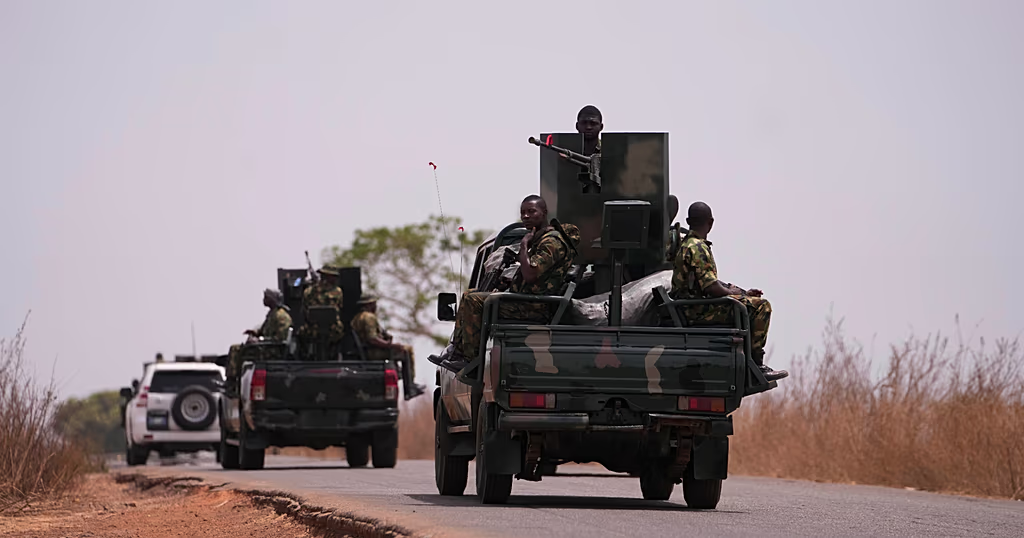
Nigeria’s armed forces reported on Sunday that Abu Khalid, a key commander of the Islamist organization Boko Haram, was killed in a night raid in Borno State. Abu Khalid was the second-in-command for the group’s logistics and operations in Sambisa Forest. The military operation resulted in the death of Abu Khalid and ten other Boko Haram members. The article does not provide additional travel-related insights or trends.
Key Points:
- Abu Khalid, a prominent figure in Boko Haram, was killed in a military operation in Borno State, Nigeria.
- Abu Khalid was the second-in-command for the group’s logistics and operations in Sambisa Forest.
- Ten other Boko Haram members were killed in the same operation.
Actionable Takeaways:
-
Impact on Boko Haram Operations: The death of Abu Khalid and the ten other Boko Haram members killed in the operation could significantly disrupt the group’s logistics and operational capabilities in Borno State. This could potentially weaken their ability to carry out attacks and may lead to a reduction in terrorist activities in the region.
-
Security Implications for Travel: The reduction in Boko Haram’s operational capacity in Borno State may improve security conditions for travelers in the area. However, it is essential to note that Boko Haram operates primarily in Nigeria’s north, and the impact on travel in other regions may be limited.
Contextual Insights:
The killing of Abu Khalid and the subsequent operation by Nigeria’s armed forces highlight the ongoing efforts to combat terrorism in the region. While this development may have implications for security and stability in Borno State, it does not directly relate to travel trends or innovations in the travel industry. However, the broader context of security improvements in Nigeria could indirectly influence travel decisions, particularly for those considering visiting the region. As the travel industry continues to adapt to emerging threats and security challenges, staying informed about such developments remains crucial for both travelers and industry stakeholders.
Read the Complete Article.



