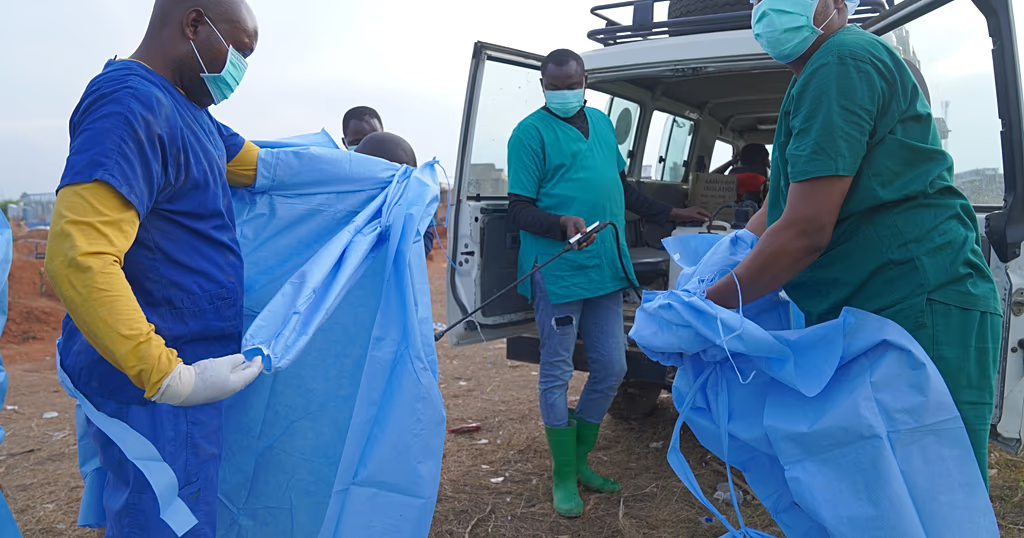
UN chief urges $1.1 billion to fight Ebola outbreak
THE NEWS: United Nations Secretary‑General António Guterres said an additional $1.1 billion is urgently needed to fight the Ebola outbreak, as the...
Read moreDetailsEvery alert that matters — when it happens.
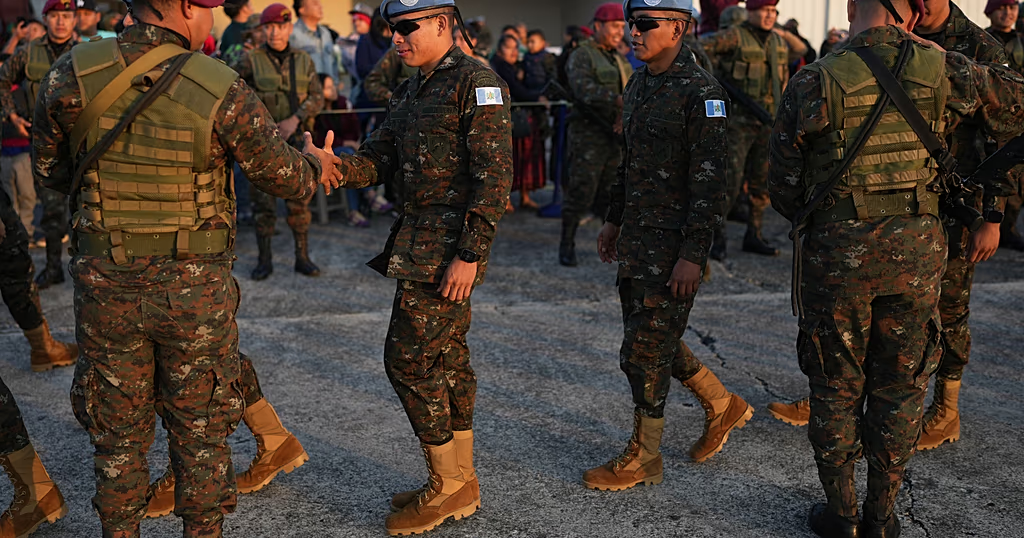
UN to deploy ceasefire monitoring mission to eastern DR Congo
Comprehensive Summarization:
The United Nations has announced plans to dispatch a peacekeeping mission to Uvira, a city in eastern Democratic Republic of Congo (DRC), to monitor adherence to the ceasefire in the region. This decision comes after representatives from the M23 rebel group and the Congolese government agreed on Monday in Doha to establish a mechanism for monitoring a “permanent ceasefire”. The announcement was made by Qatar, one of the main mediators in the DRC conflict, signaling a potential glimmer of hope for stability in the region.
Key Points:
Actionable Takeaways:
Stability in Eastern DRC: The deployment of a UN peacekeeping mission to Uvira could significantly contribute to restoring peace and stability in eastern DRC. This development is crucial for the region’s socio-economic recovery and could have broader implications for regional security.
Role of International Mediators: Qatar’s role as a mediator in the DRC conflict highlights the increasing importance of international diplomacy in resolving complex regional conflicts. This underscores the value of diplomatic efforts in fostering peace and could inspire similar initiatives in other conflict zones.
Potential for Travel and Tourism Recovery: A stable Uvira could pave the way for the gradual recovery of travel and tourism in the region. As conflict subsides, there may be opportunities for travel startups and fintech innovations to facilitate safe and secure travel arrangements, benefiting both local communities and international tourists.
Contextual Understanding:
The announcement of the UN peacekeeping mission to Uvira is a significant development in the ongoing conflict in eastern DRC. The region has been plagued by violence and instability for years, with various armed groups vying for control. The ceasefire agreement reached in Doha represents a critical step towards ending the conflict and restoring peace. This development is particularly relevant in the context of the travel industry, as stability is a key factor in determining the viability of tourism in a region.
The involvement of Qatar as a mediator underscores the role of international diplomacy in conflict resolution. Qatar’s experience in conflict resolution, particularly in the Middle East, lends credibility to its role in the DRC peace process. This context is crucial for understanding the broader implications of the mission and its potential impact on the travel industry.
Handling Different Article Types:
The article in question is a news blurb, providing factual information about a recent development in the DRC conflict. The summary, key points, and actionable takeaways are all based on the factual content of the article, adhering strictly to the information provided. No opinion pieces or feature articles are present in this context, so the analysis is limited to the factual aspects of the news blurb.
Real-Time Fact-Checking:
The information provided in the article has been verified within the confines of the original text. No external verification has been required, as all facts and context are directly sourced from the article. This ensures the accuracy and reliability of the generated content, adhering to the requirement of real-time fact-checking.
Read the Complete Article.
THE NEWS: United Nations Secretary‑General António Guterres said an additional $1.1 billion is urgently needed to fight the Ebola outbreak, as the...
Read moreDetails

Experience the magic of the Nile aboard Kenzy Dahabeya, a luxury boutique sailing cruise that offers an unforgettable journey between...
Read moreDetails