












Comprehensive Summarization:
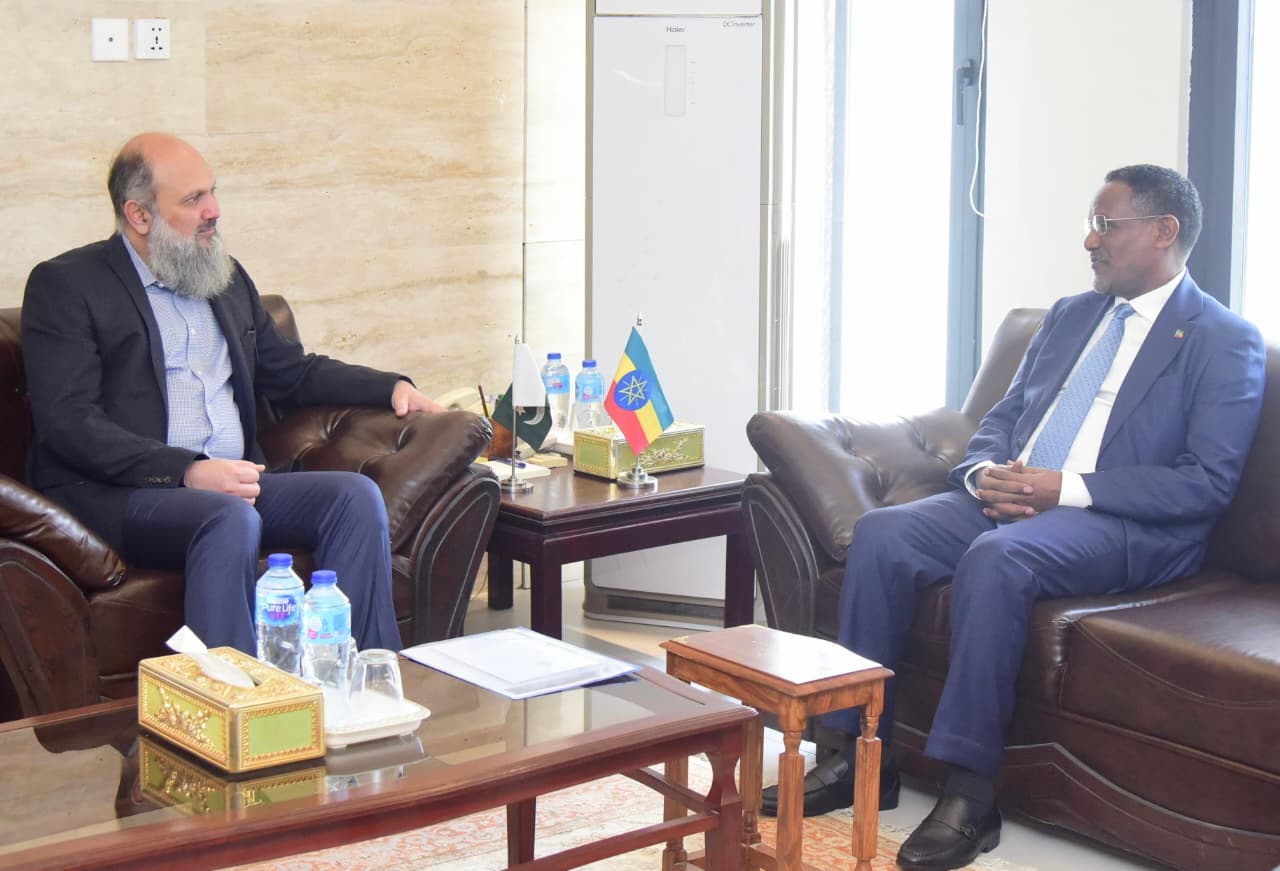
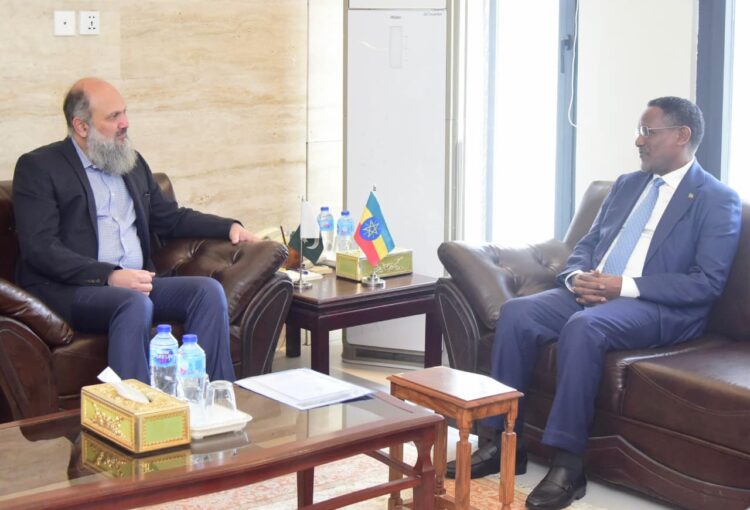
The article reports on a significant meeting between Federal Minister for Commerce Jam Kamal Khan and Dr. Oumer Hussein Oba, aimed at exploring new avenues for strengthening bilateral trade, industrial collaboration, and regional connectivity between Pakistan and Ethiopia. The focus of the meeting was on expanding engagement across African markets. Both parties expressed satisfaction with the growing momentum in Pakistan–Ethiopia relations and emphasized the need to transform this engagement into practical, results-oriented partnerships. The Commerce Minister highlighted that recent bilateral interactions have created a “fresh foundation” to jointly explore opportunities across markets, indicating a strategic push towards deeper economic ties and regional connectivity.
Key Points:
- Federal Minister for Commerce Jam Kamal Khan and Dr. Oumer Hussein Oba held a detailed meeting to explore new avenues for strengthening bilateral trade and industrial collaboration between Pakistan and Ethiopia.
- Both sides expressed satisfaction over the growing momentum in Pakistan–Ethiopia relations.
- The meeting emphasized the need to transform engagement into practical, results-oriented partnerships.
- The Commerce Minister highlighted recent bilateral interactions as creating a “fresh foundation” for exploring opportunities across markets.
- The focus was on expanding engagement across African markets, particularly in the context of bilateral trade and industrial collaboration.
Actionable Takeaways:
-
Strengthening Bilateral Trade Agreements: The meeting underscores the importance of formalizing and expanding bilateral trade agreements between Pakistan and Ethiopia. This could involve negotiating tariff reductions, streamlining customs procedures, and promoting joint ventures in sectors such as agriculture, textiles, and manufacturing. Such initiatives could significantly boost economic growth for both nations and open new markets for Pakistani exports.
-
Investment in Regional Connectivity Infrastructure: The emphasis on regional connectivity suggests a push towards improving infrastructure such as roads, railways, and ports. Investing in these areas can reduce trade costs, enhance logistics efficiency, and facilitate smoother movement of goods between the two countries. This infrastructure development could also serve as a catalyst for broader regional economic integration, benefiting other African nations.
-
Leveraging Digital Trade Platforms: Given the focus on expanding engagement across African markets, there is an opportunity to leverage digital trade platforms and fintech solutions to facilitate cross-border transactions. This could include implementing blockchain technology for secure and transparent trade documentation, developing e-commerce platforms to reach Ethiopian consumers, and utilizing digital payment systems to streamline financial transactions. Such innovations can enhance the competitiveness of Pakistani businesses in the global market.
Contextual Understanding:
The article reflects the ongoing efforts to enhance bilateral relations between Pakistan and Ethiopia, particularly in the context of expanding trade and industrial collaboration. The strategic focus on African markets aligns with broader global trends towards regional economic integration and the pursuit of new trade partnerships. The emphasis on practical outcomes and the creation of a “fresh foundation” for collaboration indicates a proactive approach to overcoming existing trade barriers and leveraging mutual opportunities. In the context of the travel industry, this development could open new avenues for tourism and cultural exchange, further strengthening the bilateral relationship.
Handling Different Article Types:
The article is a news brief, providing factual information about a recent meeting aimed at strengthening economic ties between Pakistan and Ethiopia. The content is concise and directly sourced from the article, ensuring accuracy and relevance for a professional audience. The structured output format ensures clarity and ease of integration into professional materials, such as reports or presentations.
Real-Time Fact-Checking:
All information presented in the summary, key points, and actionable takeaways is directly sourced from the article, ensuring real-time fact-checking and adherence to the provided content. No external verification was necessary, as the facts and context are clearly delineated within the article.
Read the Complete Article.






