












Comprehensive Summarization:
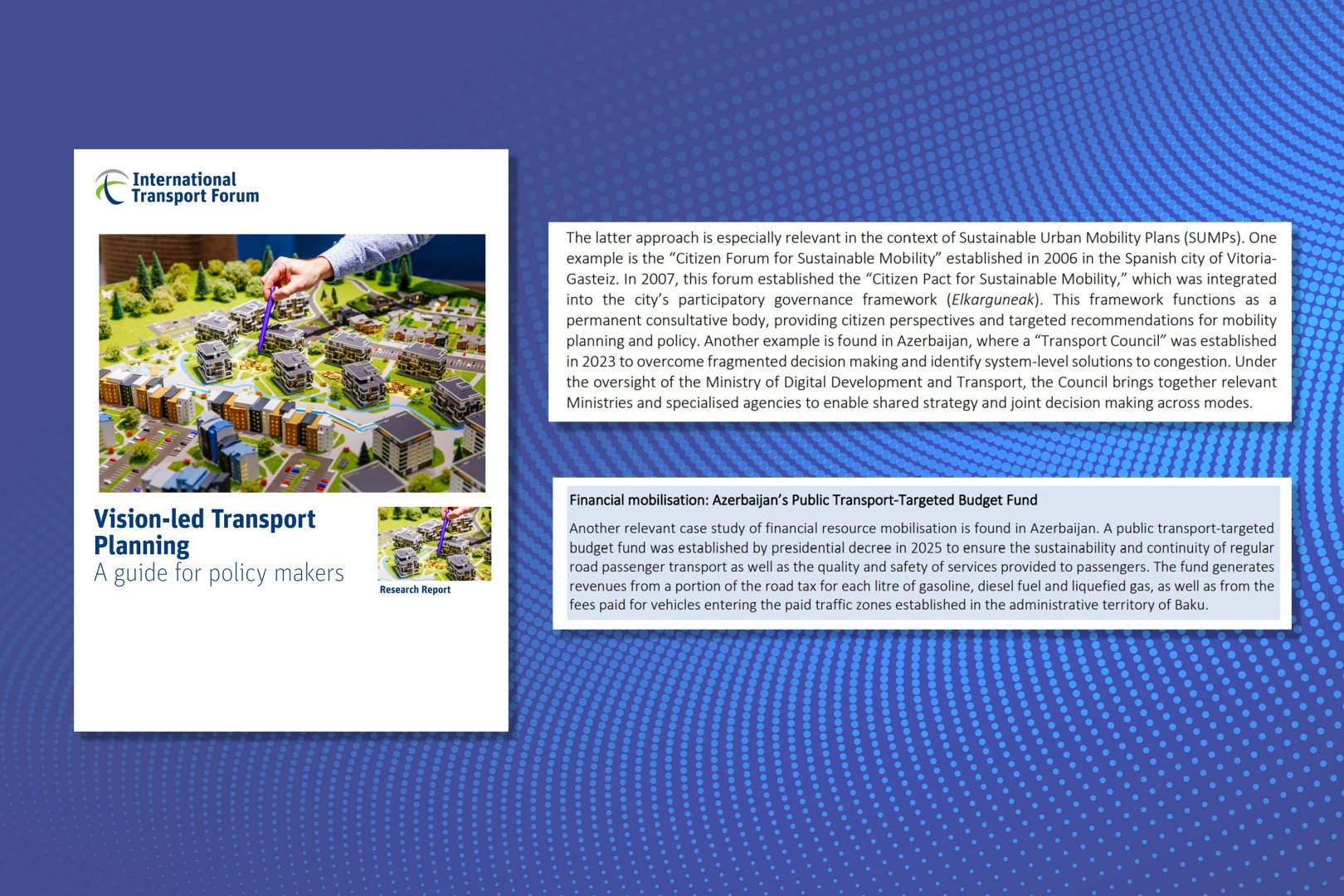
The article discusses an international report titled “Vision-led transport planning: A guide for policy makers” by the International Transport Forum (ITF). The report highlights Azerbaijan’s transport reforms as a positive example, emphasizing that modern transport planning should not be limited to infrastructure projects alone but should be based on a long-term strategic vision. The report recommends strengthening institutional coordination, improving financial mechanisms, and applying data-based decision-making to make transport systems more sustainable, accessible, and effective. The statement of the Ministry of Digital Development and Transport supports these findings, as reported by Trend.
Key Points:
- The ITF report advocates for a long-term strategic vision in transport planning, moving beyond infrastructure projects.
- Key recommendations include strengthening institutional coordination, enhancing financial mechanisms, and adopting data-driven decision-making.
- Azerbaijan’s transport reforms are cited as a positive example of successful implementation of these recommendations.
- The report underscores the importance of sustainability, accessibility, and effectiveness in modern transport systems.
Actionable Takeaways:
-
Adopt Long-Term Strategic Vision: Transport authorities should shift focus from isolated infrastructure projects to a comprehensive, long-term strategic vision for transport planning. This approach ensures sustainability, accessibility, and effectiveness in transport systems, aligning with global best practices highlighted in the ITF report.
-
Enhance Institutional Coordination: Strengthening coordination among different institutions involved in transport planning can lead to more cohesive and effective policy implementation. This recommendation is crucial for ensuring that all aspects of transport planning are aligned and complementary, enhancing overall system performance.
-
Leverage Data-Driven Decision-Making: Implementing data-based decision-making processes can significantly improve the sustainability and efficiency of transport systems. By utilizing data analytics, transport authorities can make informed decisions that address current challenges and anticipate future needs, thereby enhancing the overall effectiveness of transport infrastructure.
Contextual Insights:
The article reflects current industry trends emphasizing the need for strategic, data-driven, and coordinated approaches in transport planning. The emphasis on long-term vision and sustainability aligns with the growing trend of integrating technology and data analytics into transport systems. This shift is crucial for addressing the challenges of urbanization, climate change, and the increasing demand for efficient and accessible transport solutions. The positive example of Azerbaijan’s reforms underscores the potential benefits of adopting these strategies, which can serve as a model for other countries in the region and beyond. As the travel industry continues to evolve, these insights highlight the importance of forward-thinking approaches to ensure the resilience and adaptability of transport systems in the face of ongoing challenges and opportunities.
Read the Complete Article.






