












Article Summary:
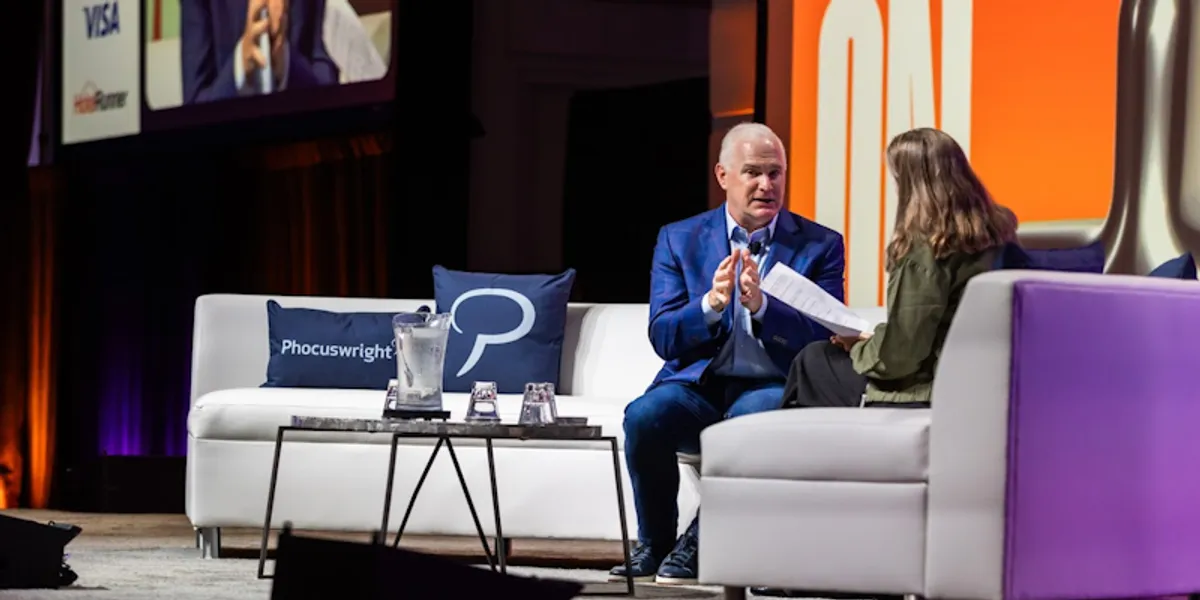
The article discusses Kurt Ekert, the president and CEO of Sabre, a company that views itself as a “scrappy challenger” in the travel industry. Ekert highlights the company’s progress in deleveraging its balance sheet and driving growth through innovation. During an interview at The Phocuswright Conference, Ekert shared that Sabre has paid down $1 billion in debt in the past year. He also touched on a cultural shift within the company, focusing on research and development and solutions that are customer-centric. Ekert supports calls for a significant overhaul of the current airline distribution model, such as Edifact, indicating a willingness to disrupt traditional practices in the industry.
Key Points:
- Sabre’s CEO, Kurt Ekert, describes the company as a “scrappy challenger” in the travel industry.
- Sabre has successfully paid down $1 billion in debt within the past year.
- The company is investing in research and development, focusing on solutions that are customer-centric.
- Ekert supports the idea of disrupting the current airline distribution model, including elements like Edifact.
- The article reflects recent developments in the travel industry, emphasizing innovation and cultural shifts within companies like Sabre.
Actionable Takeaways:
- Invest in Innovation: Companies should prioritize research and development to create customer-centric solutions, as evidenced by Sabre’s strategic focus. This approach can drive growth and maintain competitiveness in a rapidly evolving industry.
- Deleveraging and Financial Health: Paying down significant debt can enhance a company’s financial stability and flexibility, enabling it to invest in future growth opportunities. Sabre’s success in reducing its debt by $1 billion is a positive indicator for financial management in the travel sector.
- Challenge Traditional Models: There is a growing trend towards disrupting traditional distribution models in the airline industry. Companies should be open to rethinking and innovating their distribution strategies to remain relevant and competitive.
- Adopt Customer-Centric Solutions: Focusing on solutions that directly benefit customers can lead to increased satisfaction and loyalty. This aligns with broader industry trends towards personalized and efficient travel experiences.
Contextual Insights:
The article reflects current industry trends where financial prudence, innovation, and customer-centricity are paramount. The emphasis on paying down debt and investing in R&D aligns with broader industry movements towards financial stability and technological advancement. The call to disrupt traditional airline distribution models, such as Edifact, indicates a shift towards more agile and customer-focused approaches. These insights are crucial for travel startups and fintech innovations, as they highlight the importance of adapting to changing market demands and technological advancements. By focusing on these areas, companies can position themselves for sustained success in a competitive landscape.
Read the Complete Article.



