










Comprehensive Summarization:
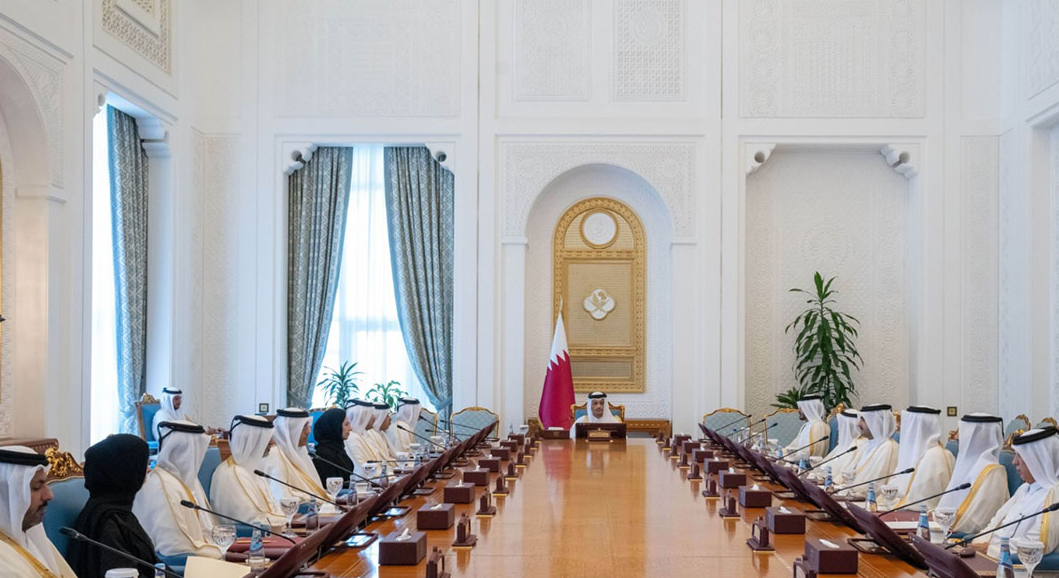
The article reports on a regular meeting chaired by Prime Minister and Minister of Foreign Affairs of Qatar, HE Sheikh Mohammed bin Abdulrahman bin Jassim Al-Thani, at the Amiri Diwan. During the meeting, the Cabinet commended the efforts of HH the Amir Sheikh Tamim bin Hamad Al-Thani in de-escalating tensions and promoting diplomatic solutions to resolve disputes. These efforts were highlighted for their contribution to enhancing security and stability at regional and international levels, as well as ensuring the smooth flow of energy supply chains. The article also touches on the latest travel trends and insights from thought leaders, although specific details are not provided in the given excerpt.
Key Points:
- The Cabinet praised HH the Amir Sheikh Tamim bin Hamad Al-Thani’s efforts in de-escalating tensions and promoting diplomatic solutions.
- These diplomatic efforts are seen as crucial for strengthening security and stability at both regional and international levels.
- The focus on diplomatic solutions aims to ensure the smooth flow of energy supply chains.
- The article mentions the latest travel trends and insights from thought leaders, though specific details are not included in the excerpt.
Actionable Takeaways:
-
Enhanced Diplomatic Efforts in Travel Industry: The emphasis on diplomatic solutions and de-escalation of tensions can serve as a model for the travel industry in navigating geopolitical challenges. Travel companies may benefit from adopting similar strategies to mitigate risks and ensure smooth operations in volatile regions. This approach can enhance the stability and reliability of travel services, particularly in areas where diplomatic relations are sensitive.
-
Focus on Energy Supply Chains: The importance of ensuring the smooth flow of energy supply chains underscores the need for travel and logistics companies to develop robust supply chain management strategies. This includes diversifying energy sources and investing in technologies that ensure energy security, which is critical for maintaining operational continuity in the travel sector.
Contextual Insights:
The article reflects the ongoing global emphasis on diplomatic solutions and stability, particularly in regions where travel and trade are heavily influenced by geopolitical factors. In the context of the travel industry, this highlights the importance of strategic partnerships and risk management to navigate international relations effectively. The focus on energy supply chains also aligns with broader industry trends towards sustainability and resilience, suggesting that travel companies should invest in technologies and practices that ensure energy security and reduce environmental impact. As the travel industry continues to evolve, staying attuned to diplomatic developments and adopting forward-thinking strategies will be crucial for sustained growth and success.
Read the Complete Article.






