










Comprehensive Summarization:
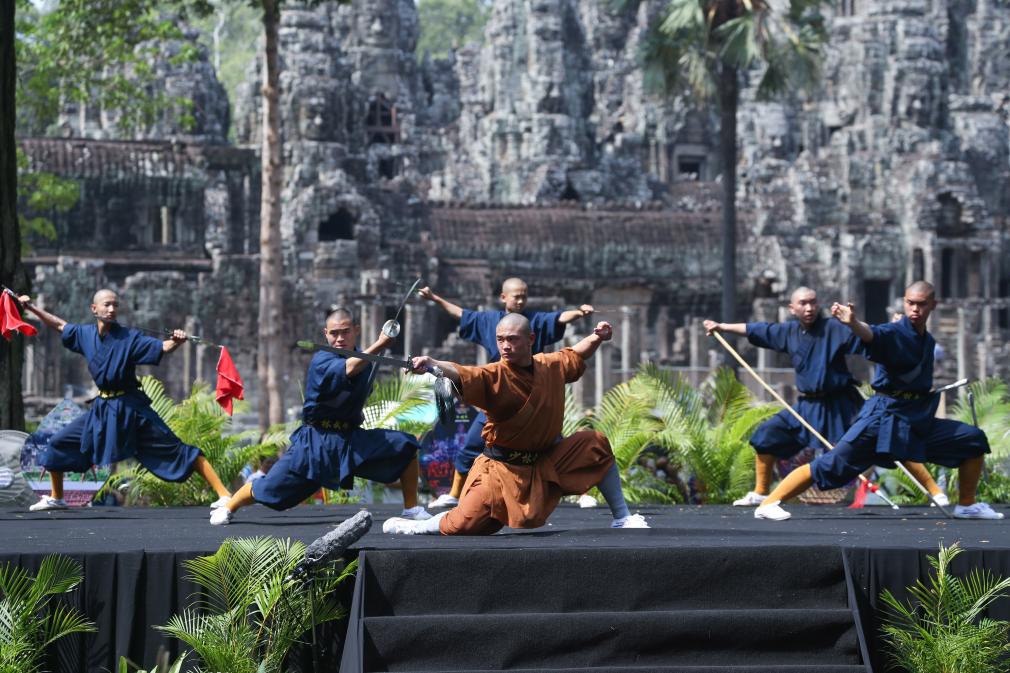
The article reports on a Cambodia-China martial arts performance held at the Angkor Archaeological Park in Siem Reap, Cambodia, on April 30, 2026. The event, which took place at the UNESCO-listed Bayon Temple, featured traditional Cambodian martial arts such as Bokator, Yuthakun Khom, and Kun Khmer boxing, alongside Chinese martial arts including Shaolin Kung Fu and Tai Chi. The performance attracted a significant number of both domestic and foreign tourists, highlighting the growing interest in cultural and martial arts tourism in Cambodia. The event underscores the potential for cultural exchange and tourism promotion through such joint performances, especially in regions with rich historical and cultural heritage.
Key Points:
- The Cambodia-China martial arts performance was held at the Angkor Archaeological Park, showcasing traditional Cambodian and Chinese martial arts.
- The event was held at the Bayon Temple, a UNESCO-listed site, attracting a large number of tourists.
- The performance included Bokator, Yuthakun Khom, Kun Khmer boxing from Cambodia, and Shaolin Kung Fu and Tai Chi from China.
- The event attracted both domestic and foreign tourists, indicating a growing interest in cultural and martial arts tourism in Cambodia.
Actionable Takeaways:
-
Cultural Tourism Growth: The success of the Cambodia-China martial arts performance suggests a growing trend in cultural tourism, particularly in regions with historical and cultural significance. Travel companies and destinations should consider developing similar events to attract tourists and boost local economies.
-
International Collaboration in Tourism: The collaboration between Chinese and Cambodian artists highlights the potential for international partnerships in the tourism sector. Travel startups and organizations could explore similar collaborations to create unique cultural experiences, leveraging the global appeal of martial arts and traditional arts.
-
Promoting UNESCO Sites: The event’s success at a UNESCO-listed site demonstrates the value of promoting such sites for tourism. Destinations with UNESCO World Heritage status should focus on leveraging their historical and cultural assets to attract international visitors, potentially through themed events and performances.
Contextual Insights:
The article reflects current travel trends by emphasizing the appeal of cultural and martial arts tourism, which has gained traction in recent years. As travelers seek authentic and immersive experiences, destinations that offer unique cultural exchanges are likely to see increased interest. The collaboration between Chinese and Cambodian artists also underscores the importance of international cultural exchanges in the travel industry. This trend aligns with the growing emphasis on sustainable and responsible tourism, where cultural preservation and community engagement are key. Travel startups and fintech companies can capitalize on this trend by developing platforms that facilitate such cultural exchanges, offering packages that include participation in traditional arts performances, guided tours of UNESCO sites, and other culturally enriching experiences. This not only enhances the travel experience for tourists but also supports local economies and cultural preservation efforts.
Read the Complete Article.






