












Comprehensive Summarization:
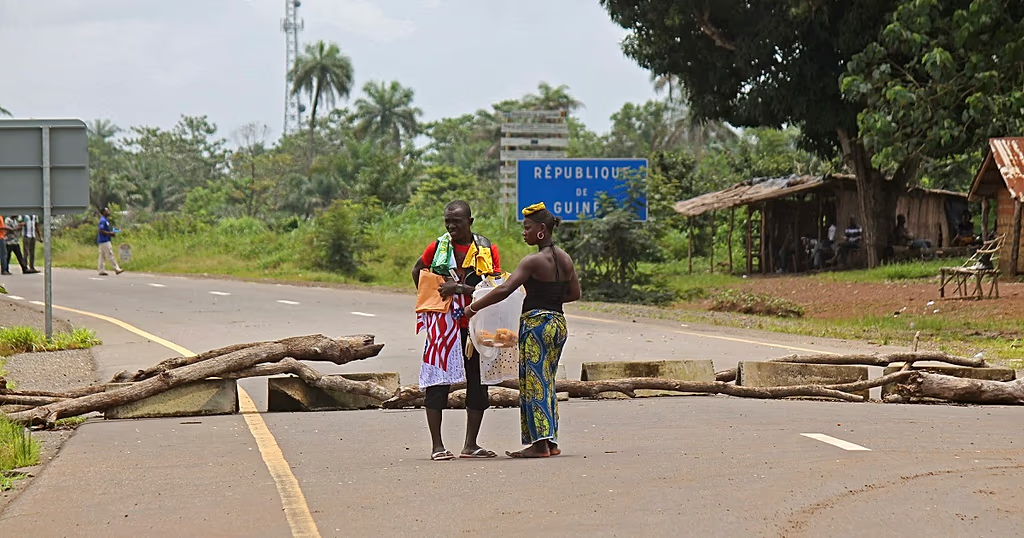
The article reports on a recent territorial dispute between Guinea and Sierra Leone, where Guinea’s military has detained 16 Sierra Leonean soldiers accused of crossing the border and raising their flag on Guinean soil. The soldiers were found in the district of Koudaya in the Faranah border region, approximately 1.4 kilometers inside Guinea, where they set up a tent and raised their national flag. Sierra Leone maintains that their troops were constructing a border post within their own territory. This incident marks the latest flare-up in a decades-old territorial dispute between the two countries. The Guinean Ministry of National Defense has seized the soldiers’ equipment and supplies, and an investigation has been initiated.
Key Points:
- Guinea’s military has detained 16 Sierra Leonean soldiers accused of crossing the border and raising their flag on Guinean soil.
- The soldiers were found in the district of Koudaya in the Faranah border region, approximately 1.4 kilometers inside Guinea.
- Sierra Leone claims their troops were constructing a border post within their own territory.
- The incident is the latest flare-up in a decades-old territorial dispute between Guinea and Sierra Leone.
- Guinea’s Ministry of National Defense has seized the soldiers’ equipment and supplies, and an investigation has been opened.
Actionable Takeaways:
-
Border Security and Diplomatic Relations: The incident highlights the importance of robust border security measures and the need for effective diplomatic relations to resolve territorial disputes. For travel companies operating in these regions, understanding the geopolitical landscape is crucial for risk assessment and operational planning. This could lead to increased investment in border security technologies and more proactive engagement with diplomatic channels to mitigate risks associated with cross-border operations.
-
Impact on Travel and Tourism: Territorial disputes can significantly impact travel and tourism in affected regions. Travel agencies and tour operators may need to reassess their itineraries and risk management strategies for destinations in or near disputed borders. This could drive innovation in travel tech, such as the development of more sophisticated risk assessment tools and real-time travel advisories, helping travelers make informed decisions and reducing the likelihood of disruptions due to political tensions.
Contextual Insights:
The territorial dispute between Guinea and Sierra Leone is rooted in historical claims over border territories, reflecting broader regional tensions in West Africa. Recent trends in travel tech, such as the use of satellite imagery and AI-driven border monitoring systems, could play a pivotal role in addressing such disputes. These technologies offer real-time monitoring and data analytics, enabling governments and travel companies to better understand and respond to border security challenges. Furthermore, the ongoing advancements in fintech, particularly in cross-border payment solutions, could help mitigate economic impacts on travel and tourism by facilitating smoother financial transactions across disputed borders. As the travel industry continues to evolve, staying abreast of these technological advancements and geopolitical developments will be essential for navigating the complexities of international travel.
Read the Complete Article.



