












Comprehensive Summarization:
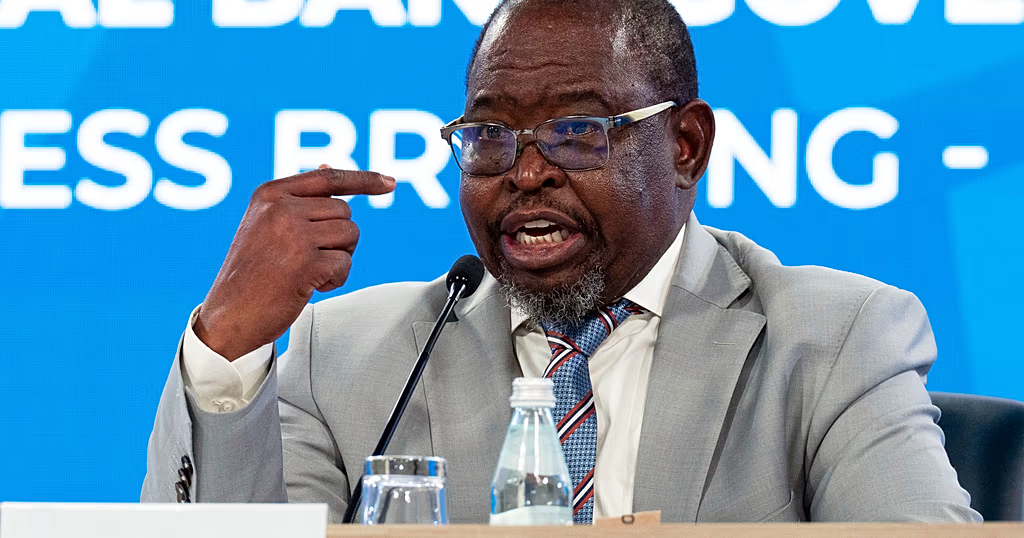
South Africa’s Finance Minister, Enoch Godongwana, announced in his budget speech that the country’s debt burden is stabilizing for the first time in nearly two decades. This development comes as the African economy shows cautious signs of recovery and pledges increased spending on security. Debt, which had reached a record high of nearly 80% of GDP, is expected to ease to 77.3% in the 2026/27 fiscal year and further to 76.5% in the following year. The stabilization of debt is seen as a positive sign for the economy’s recovery and stability.
Key Points:
- South Africa’s debt burden is stabilizing after 17 years of increase, reaching a record high near 80% of GDP.
- The stabilization is expected to continue, with debt projected to fall to 77.3% in 2026/27 and further to 76.5% in the following year.
- The Finance Minister, Enoch Godongwana, announced these developments during his budget speech in parliament.
- Despite the stabilization, the economy is showing cautious signs of recovery and is pledging increased spending on security.
Actionable Takeaways:
-
Debt Management Strategy: The stabilization of South Africa’s debt burden presents an opportunity for the country to focus on economic recovery and security investments. This could potentially lead to increased investor confidence and economic growth, which are crucial for the travel industry’s recovery and expansion in the region.
-
Increased Spending on Security: The pledge to increase spending on security could enhance the safety and security of travel within South Africa. This could be particularly beneficial for international tourists, thereby boosting the travel sector’s recovery and growth.
Contextual Insights:
The stabilization of South Africa’s debt burden is a significant development in the country’s economic landscape. It reflects a positive trend in the country’s fiscal management and could potentially pave the way for economic recovery. In the context of the travel industry, this could mean a more stable economic environment for businesses to operate in, leading to increased investments and growth opportunities. The pledge to increase spending on security is also noteworthy, as it could enhance the safety and attractiveness of South Africa as a travel destination, potentially boosting tourism and related sectors. However, it’s important to note that while these developments are positive, the travel industry’s recovery will also depend on other factors such as global health conditions, geopolitical stability, and consumer confidence.
Read the Complete Article.



