












Comprehensive Summarization:
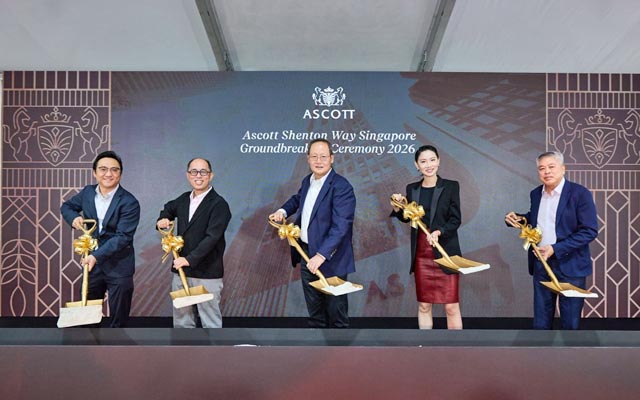
Ascott, a leading global hotelier, has achieved a record 19,000 new units across 102 properties in 2025, marking a 27% year-on-year growth in new signings. This expansion has increased Ascott’s global footprint to over 230 cities in more than 40 countries, with more than 1,000 properties currently operational or under development, totaling over 176,000 units. The growth was primarily driven by asset-light expansion in higher-fee segments, including resorts, supported by franchise momentum and strong conversion activity. Notably, more than a quarter of the units signed during the year were under franchise agreements, while over 38% were conversions. The article highlights Ascott’s continued global expansion and brand evolution, particularly through the groundbreaking ceremony for the Ascott Shenton Way Singapore, set to open in Q4 2029.
Key Points:
- Ascott secured a record 19,000 units across 102 properties in 2025, representing a 27% year-on-year growth in new signings.
- The expansion brings Ascott’s global footprint to over 230 cities in more than 40 countries, with more than 1,000 properties in operation and development, totaling over 176,000 units.
- Growth was driven by asset-light expansion across higher-fee segments, including resorts, supported by franchise momentum and strong conversion activity.
- More than a quarter of units signed during the year were under franchise agreements, while over 38% were conversions.
- The groundbreaking ceremony for Ascott Shenton Way Singapore, set to open in Q4 2029, was highlighted as part of Ascott’s continued global expansion and brand evolution.
Actionable Takeaways:
-
Asset-Light Expansion Strategy: Ascott’s focus on asset-light expansion in higher-fee segments, such as resorts, indicates a strategic shift towards higher-margin properties. This approach could be a valuable model for other travel companies looking to maximize profitability without significant capital investment in property acquisition.
-
Franchise Momentum and Conversion Activity: The significant role of franchise agreements (more than a quarter of units signed) and conversions (over 38%) in driving growth suggests that leveraging existing brand strength and converting existing properties can be highly effective strategies for expansion. Travel companies should consider how they can enhance their franchise relationships and conversion strategies to drive growth.
Contextual Insights:
The article reflects the ongoing trend of global expansion in the travel industry, particularly in higher-fee segments that offer greater profitability. Ascott’s strategy of asset-light expansion, supported by franchise momentum and conversion activity, aligns with broader industry trends towards maximizing revenue through strategic partnerships and property optimization. This approach is particularly relevant in today’s travel market, where cost efficiency and revenue optimization are critical for sustained growth. Furthermore, the emphasis on higher-fee segments and franchise agreements highlights the importance of brand strength and strategic alliances in driving expansion, a perspective that is increasingly valued by travel industry thought leaders.
Handling Different Article Types:
The article provided is a news blurb, offering factual information about Ascott’s recent growth and expansion strategy. The structured output format above is designed to accommodate such factual summaries, ensuring clarity and relevance for a professional audience. If the article were an opinion piece or feature, the analysis would need to adapt to incorporate viewpoints, expert insights, and deeper explorations of the topic, while still adhering to the facts and context provided.
Read the Complete Article.



